
IL21 Antibodies
Background
IL-21 is a cytokine mainly secreted by activated CD4+ T cells and natural killer T cells, belonging to the member of the shared γ-chain receptor family. This protein activates the JAK-STAT signaling pathway by binding to the receptor complex composed of IL-21 receptor and the common γ-chain, thereby regulating the proliferation, differentiation and function of various immune cells. IL-21 plays a crucial role in the differentiation of B cells into plasma cells, the formation of germinal centers, and antibody production. It also participates in the enhancement of the effector functions of CD8+ T cells and natural killer cells. It was initially discovered and identified simultaneously by two independent research teams in 2000. The discovery of IL-21 filled the gap in understanding the molecular mechanism of T cell assistance to B cell functions. Subsequent extensive research has revealed that IL-21 plays a dual role in autoimmune diseases, chronic infections and tumor immunity. It can both promote inflammatory responses and, in certain cases, inhibit immune responses, making it an important potential target for immunotherapy.
Structure of IL21
Interleukin-21 (IL-21) is a cytokine mainly secreted by activated CD4+ T cells and natural killer T cells. Its molecular weight is approximately 15.4 kDa. There are certain differences in the molecular weight and structural characteristics of IL-21 among different species.
| Species | Human | Mouse | Rat |
| Molecular Weight (kDa) | 15.4 | 15.0 | 15.1 |
| Primary Structural Differences | Contains four alpha helix beam, constitute a typical Ⅰ type structure of cytokines | The genetic similarity to humans is approximately 57%, and the functions are similar but species-specific | High homologous to rats and mice immune regulating function and similar |
The IL-21 protein is composed of approximately 131 amino acids and its three-dimensional structure exhibits a typical short-chain four-α-helix bundle configuration. This structure is stabilized by disulfide bonds between the helix bundles, ensuring a high affinity binding with the receptor complex. The receptor binding site of IL-21 is mainly composed of specific amino acid residues on helices A and C, and these regions show high conservation among different species. The hydrophobic interactions in the core region of the helix bundle are crucial for maintaining the stability of the protein's overall structure, while the polar residues on the surface determine its specific binding to the α chain and common γ chain of the IL-21 receptor.
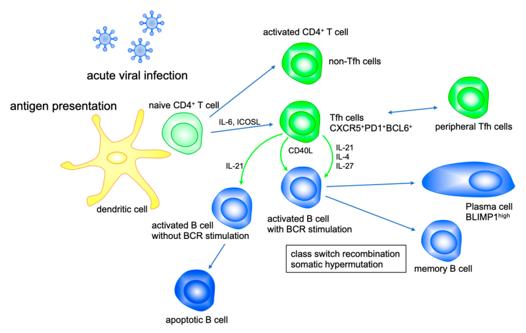 Fig. 1 IL-21 modulates B cell function.1
Key structural properties of IL21:
- Typical short-chain cytokine structure consisting of four α-helical bundles
- The hydrophobic core formed by helices A and C is responsible for receptor binding
- Disulfide bonds stabilize the spatial conformation between the helices
- Cysteine residues form intramolecular disulfide bonds to maintain the stability of protein folding
- Specific glutamine and arginine residues determine the binding specificity to the IL-21 receptor α chain
Functions of IL21
The main function of IL-21 is to regulate the activity and differentiation of various immune cells. In addition, it also participates in the regulation of inflammatory responses, antibody production, and anti-tumor immunity, among other physiological processes.
| Function | Description |
| B-cell differentiation promotion | Inducing B cells to differentiate into antibody-producing plasma cells and promoting the formation of germinal centers, it is a key regulatory factor for antibody class switching. |
| T Cell Function Regulation | It synergistically promotes the proliferation and cytotoxicity of CD8+ T cells, and regulates the differentiation of CD4+ T cell subtypes, playing a core role especially in the development of Th17 and follicular helper T cells. |
| Activation of NK cells | Enhances the cytotoxic activity and interferon-γ secretion of natural killer cells, and improves the innate immune response capability. |
| Inflammation Response Regulation | In chronic inflammation, it can both promote the inflammatory response and, in certain circumstances, inhibit excessive immune responses, exerting a bidirectional regulatory effect. |
| Anti-tumor immunity | By enhancing the functions of cytotoxic T cells and NK cells, it participates in the immune surveillance and elimination of tumor cells in the body. |
IL-21 mainly binds to the IL-21 receptors expressed on the surface of target cells, activating the JAK-STAT signaling pathway, especially the phosphorylation of STAT3, thereby initiating the transcription of downstream genes.
Applications of IL21 and IL21 Antibody in Literature
1. Asao, Hironobu. "Interleukin-21 in viral infections." International Journal of Molecular Sciences 22.17 (2021): 9521. https://doi.org/10.3390/ijms22179521
The article indicates that IL-21 is mainly produced by CD4⁺ T cells (especially Tfh cells), which can regulate the function of lymphocytes and plays a crucial role in anti-viral and anti-tumor immune responses, especially in chronic viral infections where it can restore the function of exhausted CD8⁺ T cells.
2. Hao, Kangning, et al. "IL21 inhibits miR-361-5p to promote MAP3K9 and further aggravate the progression of shoulder arthritis." Aging (Albany NY) 16.9 (2024): 7915. https://doi.org/10.18632/aging.205793
The article indicates that in shoulder arthritis, IL-21 levels increase while miR-361-5p decreases. The latter targets MAP3K9 and regulates the ERK/NF-κB pathway. IL-21 inhibits miR-361-5p, leading to an increase in MAP3K9, promoting chondrocyte apoptosis and MMP expression, and facilitating the progression of arthritis.
3. Abhiraman, Gita C., et al. "A structural blueprint for interleukin-21 signal modulation." Cell reports 42.6 (2023). https://doi.org/10.1016/j.celrep.2023.112657
The article indicates that by analyzing the structure of the IL-21-receptor complex, researchers designed mutants targeting the interface between IL-21 and the γc subunit. These analogues can act as partial agonists, differently regulating the pSTAT signals in T and B cells, and regulating antibody production in human tonsil organoids, providing a new strategy for precisely regulating humoral immunity.
4. Isvoranu, Gheorghita, and Marioara Chiritoiu-Butnaru. "Therapeutic potential of interleukin-21 in cancer." Frontiers in Immunology 15 (2024): 1369743. https://doi.org/10.3389/fimmu.2024.1369743
The article indicates that IL-21 can activate T cells and NK cells, and plays a crucial role in anti-tumor immunity. Preclinical studies have shown that it is effective when used alone or in combination with monoclonal antibodies, immune checkpoint inhibitors, etc. Clinical trials have also confirmed that IL-21 has anti-tumor effects on advanced cancer patients with few side effects, making it a promising immunotherapy drug.
5. Zeng, Xiandong, et al. "The effects of interleukin-21 in the biology of transplant rejection." Frontiers in Immunology 16 (2025): 1571828. https://doi.org/10.3389/fimmu.2025.1571828
The article indicates that IL-21 is mainly secreted by Tfh cells and can regulate the functions of T and B cells. It also promotes acute and antibody-mediated chronic rejection reactions in organ transplantation. Therefore, targeting the IL-21 signaling pathway is expected to become a new therapeutic strategy for inhibiting rejection reactions and inducing immune tolerance, providing a reference for clinical immunosuppressive regimens.
Creative Biolabs: IL21 Antibodies for Research
Creative Biolabs specializes in the production of high-quality IL21 antibodies for research and industrial applications. Our portfolio includes monoclonal and polyclonal antibodies tailored for ELISA, Flow Cytometry, Western blot, immunohistochemistry, and other diagnostic methodologies.
- Custom IL21 Antibody Development: Tailor-made solutions to meet specific research requirements.
- Bulk Production: Large-scale antibody manufacturing for industry partners.
- Technical Support: Expert consultation for protocol optimization and troubleshooting.
- Aliquoting Services: Conveniently sized aliquots for long-term storage and consistent experimental outcomes.
For more details on our IL21 antibodies, custom preparations, or technical support, contact us at email.
Reference
- Asao, Hironobu. "Interleukin-21 in viral infections." International Journal of Molecular Sciences 22.17 (2021): 9521. Distributed under Open Access license CC BY 4.0, without modification. https://doi.org/10.3390/ijms22179521
Anti-IL21 antibodies
 Loading...
 Compare




Hot products 
-
Mouse Anti-BLK Recombinant Antibody (CBYY-0618) (CBMAB-0621-YY)

-
Mouse Anti-EIF4G1 Recombinant Antibody (2A9) (CBMAB-A2544-LY)

-
Mouse Anti-AAV9 Recombinant Antibody (V2-634029) (CBMAB-AP023LY)

-
Mouse Anti-CRTAM Recombinant Antibody (CBFYC-2235) (CBMAB-C2305-FY)

-
Mouse Anti-AAV8 Recombinant Antibody (V2-634028) (CBMAB-AP022LY)

-
Mouse Anti-CD33 Recombinant Antibody (P67.6) (CBMAB-C10189-LY)

-
Mouse Anti-BIRC7 Recombinant Antibody (88C570) (CBMAB-L0261-YJ)

-
Mouse Anti-C5B-9 Recombinant Antibody (CBFYA-0216) (CBMAB-X0304-FY)

-
Rat Anti-(1-5)-α-L-Arabinan Recombinant Antibody (V2-501861) (CBMAB-XB0003-YC)

-
Mouse Anti-FN1 Monoclonal Antibody (71) (CBMAB-1241CQ)

-
Mouse Anti-AAV-5 Recombinant Antibody (V2-503417) (CBMAB-V208-1369-FY)

-
Mouse Anti-ENO1 Recombinant Antibody (CBYC-A950) (CBMAB-A4388-YC)

-
Mouse Anti-F11R Recombinant Antibody (402) (CBMAB-0026-WJ)

-
Mouse Anti-APOH Recombinant Antibody (4D9A4) (CBMAB-A3249-YC)

-
Mouse Anti-8-oxoguanine Recombinant Antibody (V2-7719) (CBMAB-1898CQ)

-
Mouse Anti-GSDMA Recombinant Antibody (CBLG1-2983) (CBMAB-G5128-LY)

-
Mouse Anti-C4B Recombinant Antibody (CBYY-C2996) (CBMAB-C4439-YY)

-
Mouse Anti-NSUN6 Recombinant Antibody (D-5) (CBMAB-N3674-WJ)

-
Rabbit Anti-ALDOA Recombinant Antibody (D73H4) (CBMAB-A2314-YC)

-
Mouse Anti-ALPL Antibody (B4-78) (CBMAB-1009CQ)

- AActivation
- AGAgonist
- APApoptosis
- BBlocking
- BABioassay
- BIBioimaging
- CImmunohistochemistry-Frozen Sections
- CIChromatin Immunoprecipitation
- CTCytotoxicity
- CSCostimulation
- DDepletion
- DBDot Blot
- EELISA
- ECELISA(Cap)
- EDELISA(Det)
- ESELISpot
- EMElectron Microscopy
- FFlow Cytometry
- FNFunction Assay
- GSGel Supershift
- IInhibition
- IAEnzyme Immunoassay
- ICImmunocytochemistry
- IDImmunodiffusion
- IEImmunoelectrophoresis
- IFImmunofluorescence
- IGImmunochromatography
- IHImmunohistochemistry
- IMImmunomicroscopy
- IOImmunoassay
- IPImmunoprecipitation
- ISIntracellular Staining for Flow Cytometry
- LALuminex Assay
- LFLateral Flow Immunoassay
- MMicroarray
- MCMass Cytometry/CyTOF
- MDMeDIP
- MSElectrophoretic Mobility Shift Assay
- NNeutralization
- PImmunohistologyp-Paraffin Sections
- PAPeptide Array
- PEPeptide ELISA
- PLProximity Ligation Assay
- RRadioimmunoassay
- SStimulation
- SESandwich ELISA
- SHIn situ hybridization
- TCTissue Culture
- WBWestern Blot
