
ODAM Antibodies
Background
The ODAM gene encodes a secretory calcium-binding protein mainly expressed in tooth enamel and certain epithelial tissues. Its products participate in the biomineralization process by regulating mineral crystallization and cell adhesion. This protein is specifically enriched in the late stage of enamel development, which can promote the ordered arrangement of hydroxyapatite crystals and maintain the integrity of the epithelial barrier. Research has found that ODAM gene mutations are closely related to enamel hypoplasia, and its abnormal expression is also seen in the microenvironment reconstruction process of various glandular tumors. After being first identified through genomic alignment in 2006, this gene has become an important model molecule in developmental biology and pathology research due to its dual role in hard tissue formation and tumor biology, providing a key perspective for understanding the regulation of biomanitization and the mechanism of extracellular matrix signal transduction.
Structure of ODAM
ODAM is a secreted protein with a molecular weight of approximately 28-30 kDa, and its precise molecular weight varies among different species. This difference mainly stems from the domain length polymorphism rich in proline and glutamic acid in its amino acid sequence.
| Species | Human | Mouse | Rat | Bovine |
| Molecular Weight (kDa) | 29.5 | 28.8 | 29.2 | 30.1 |
| Primary Structural Differences | As the typical signal peptide and proline enrichment region | There are species-specific variations in the C-terminal sequence | High homology with human | Glutamic acid enrichment region is longer |
The ODAM protein is composed of approximately 260 amino acids, and its primary structure includes an N-terminal signaling peptide, a central proline-rich region, and a C-terminal transmembrane domain. This protein forms a homotrimer through its unique coiled helical secondary structure, and this oligomerization state is crucial for its anchoring function in the extracellular matrix. The integrin-binding motif (RGD sequence) at its C-terminal directly mediates cell adhesion, while the acidic amino acid cluster in the central region participates in the initiation of the biomineralization process by regulating local calcium and phosphorus concentrations.
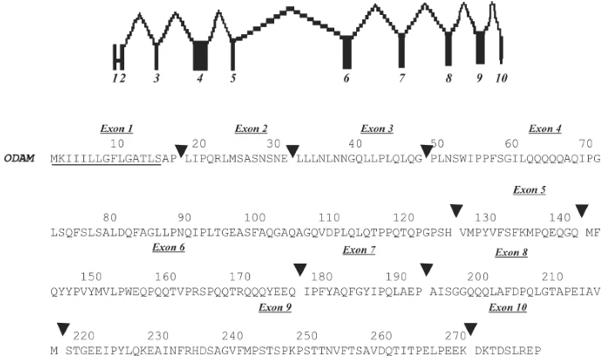 Fig. 1 The deduced amino acid sequence encoded by the human ODAM gene.1
Key structural properties of ODAM:
- Unique secretory protein structure
- The central proline-rich region mediates protein-protein interactions
- The C-terminal RGD motif directly recognizes integrins on the cell surface
- Acidic amino acid clusters by calcium ion chelating control mineralization microenvironment
Functions of ODAM
The core function of the ODAM gene is to regulate biomineralization and cell adhesion. However, this gene is also involved in a variety of pathophysiological processes, including tumor microenvironment remodeling and immune response regulation.
| Function | Description |
| Regulation of enamel mineralization | In the late into glaze cells secretory phase specific expression, orderly gathered by calcium phosphate ion directly guiding orientation deposition of hydroxyapatite crystals. |
| Cell adhesion mediation | The C-terminal conserved RGD sequence specifically binds to integrin αvβ3 to activate the intracellular FAK signaling pathway and regulate ameloblastic cytoskeleton remodeling. |
| Tumor microenvironment remodeling | The abnormally high expression in salivary gland adenocarcinoma and other tumors affects the integrity of basement membrane and promotes epithelial-mesenchymal transition by regulating matrix metalloproteinase activity. |
| Immune regulatory effect | As a damage-related molecular model molecule, it is released extracellular in periodontitis lesion tissues, activating the TLR4 receptor pathway of macrophages and intensifying the inflammatory response. |
| Maintenance of the epithelial barrier | Mediates desmosin rearrangement in tissues such as the submandibular gland, enhances the stability of intercellular connections, and maintains the functional polarity of secretory epithelium. |
This protein forms a heterologous complex with ameloblatin through its N-terminal disordered region. This synergistic effect significantly reduces the activation energy for the formation of enamel nuclei, and its nucleus-promoting efficiency is approximately 8 times higher than that of a single protein. This explains its irreplaceable biological significance in the development of hard tissues.
Applications of ODAM and ODAM Antibody in Literature
1. Springer, Mark S., et al. "Odontogenic ameloblast-associated (ODAM) is inactivated in toothless/enamelless placental mammals and toothed whales." BMC evolutionary biology 19.1 (2019): 31.https://doi.org/10.1186/s12862-019-1359-6
The article indicates that inactivated mutations of the ODAM gene in placental mammals have shown that its essential functions are only related to tooth development and the maintenance of the health of the gingival binding epithelium on the enamel surface. In both toothless and enamel species, this gene lost its function, verifying its tooth-specific role.
2. Kestler, Daniel P., et al. "ODAM expression inhibits human breast cancer tumorigenesis." Breast cancer: basic and clinical research 5 (2011): BCBCR-S6859. https://doi.org/10.4137/BCBCR.S6859
Studies have shown that ODAM plays a tumor suppressor role in breast cancer. Overexpression of ODAM can significantly inhibit the growth, migration, invasion, tumorigenesis and metastasis ability of breast cancer cells in vivo, and promote their apoptosis. This reveals the regulatory role of ODAM in tumorigenesis and has potential clinical value.
3. Lee, Hye-Kyung, et al. "Odontogenic ameloblast-associated protein (ODAM) in gingival crevicular fluid for site-specific diagnostic value of periodontitis: a pilot study." BMC Oral Health 18.1 (2018): 148. https://doi.org/10.1186/s12903-018-0609-0
The research found that the ODAM concentration in gingival crevicular fluid was significantly correlated with the clinical indicators of periodontitis (probing depth and clinical attachment loss). This indicates that ODAM has the potential to serve as a site-specific biomarker reflecting the degree of periodontal tissue damage.
4. Kestler, Daniel P., et al. "Expression of odontogenic ameloblast-associated protein (ODAM) in dental and other epithelial neoplasms." Molecular medicine 14.5-6 (2008): 318-326. https://doi.org/10.2119/2008-00010.Kestler
Studies have shown that ODAM is not only a developmental antigen that plays a key role in tooth maturation but is also expressed in various human epithelial malignancies, such as breast cancer. It may be involved in the pathogenesis of these tumors and has the potential to serve as a novel diagnostic biomarker and therapeutic target.
5. Fouillen, Aurélien, et al. "Interactions of AMTN, ODAM and SCPPPQ1 proteins of a specialized basal lamina that attaches epithelial cells to tooth mineral." Scientific Reports 7.1 (2017): 46683. https://doi.org/10.1038/srep46683
Studies have shown that ODAM, together with AMTN and SCPPPQ1, forms a special basement membrane that mediates the adhesion of epithelial cells to the tooth surface. These three proteins can interact to form a complex, building a protective barrier at the junction of the gums and teeth, which is the first line of defense against bacterial invasion.
Creative Biolabs: ODAM Antibodies for Research
Creative Biolabs specializes in the production of high-quality ODAM antibodies for research and industrial applications. Our portfolio includes monoclonal antibodies tailored for ELISA, Flow Cytometry, Western blot, immunohistochemistry, and other diagnostic methodologies.
- Custom ODAM Antibody Development: Tailor-made solutions to meet specific research requirements.
- Bulk Production: Large-scale antibody manufacturing for industry partners.
- Technical Support: Expert consultation for protocol optimization and troubleshooting.
- Aliquoting Services: Conveniently sized aliquots for long-term storage and consistent experimental outcomes.
For more details on our ODAM antibodies, custom preparations, or technical support, contact us at email.
Reference
- Kestler, Daniel P., et al. "Expression of odontogenic ameloblast-associated protein (ODAM) in dental and other epithelial neoplasms." Molecular medicine 14.5-6 (2008): 318-326. https://doi.org/10.2119/2008-00010.Kestler
Anti-ODAM antibodies
 Loading...
 Compare




Hot products 
- AActivation
- AGAgonist
- APApoptosis
- BBlocking
- BABioassay
- BIBioimaging
- CImmunohistochemistry-Frozen Sections
- CIChromatin Immunoprecipitation
- CTCytotoxicity
- CSCostimulation
- DDepletion
- DBDot Blot
- EELISA
- ECELISA(Cap)
- EDELISA(Det)
- ESELISpot
- EMElectron Microscopy
- FFlow Cytometry
- FNFunction Assay
- GSGel Supershift
- IInhibition
- IAEnzyme Immunoassay
- ICImmunocytochemistry
- IDImmunodiffusion
- IEImmunoelectrophoresis
- IFImmunofluorescence
- IGImmunochromatography
- IHImmunohistochemistry
- IMImmunomicroscopy
- IOImmunoassay
- IPImmunoprecipitation
- ISIntracellular Staining for Flow Cytometry
- LALuminex Assay
- LFLateral Flow Immunoassay
- MMicroarray
- MCMass Cytometry/CyTOF
- MDMeDIP
- MSElectrophoretic Mobility Shift Assay
- NNeutralization
- PImmunohistologyp-Paraffin Sections
- PAPeptide Array
- PEPeptide ELISA
- PLProximity Ligation Assay
- RRadioimmunoassay
- SStimulation
- SESandwich ELISA
- SHIn situ hybridization
- TCTissue Culture
- WBWestern Blot
