
YWHAZ Antibodies
Background
YWHAZ gene encoding the 14-3-3 zeta proteins are highly conservative 14-3-3 members of the family of proteins, widely exists in eukaryotic cells. This protein participates in regulating key biological processes such as cell cycle, apoptosis, metabolism and signal transduction by forming homologous or heterodimers and binding to various phosphorylated target proteins. Due to its stable expression characteristics, YWHAZ is often used as an internal reference gene in molecular biology research. Recent studies have found that abnormal expression of YWHAZ is closely related to tumorigenesis and development, especially in breast cancer and lung cancer, it can affect tumor cell proliferation and metastasis by regulating signaling pathways such as PI3K/AKT. The core role of this gene in maintaining cellular homeostasis makes it an important target for disease mechanism research and drug development.
Structure of YWHAZ
The molecular weight of the 14-3-3ζ protein encoded by the YWHAZ gene is approximately 27.8 kDa. This molecular weight remains relatively stable among different mammals, reflecting the high evolutionary conservation of this protein.
| Species | Human | Mouse | Rat | Bovine |
| Molecular Weight (kDa) | 27.8 | 27.9 | 27.8 | 27.7 |
| Primary Structural Differences | Highly conservative 14-3-3 structural domain | Homology with humans >99% | The regulatory areas for the C-end are slightly different | The core binding motifs are completely consistent |
The YWHAZ protein is composed of 245 amino acids and forms a typical homodimer structure. Each monomer contains nine anti-parallel α -helixes, which together form a negatively charged groove structure. This characteristic amide-binding groove can specifically recognize target protein sequences containing phosphorylated serine/threonine. This protein directly interacts with the phosphorylation motif of the client protein through its highly conserved lysine residues at position 49 and arginine residues at position 130, thereby participating in the regulation of multiple key biological processes such as cell signal transduction, apoptosis and metabolism.
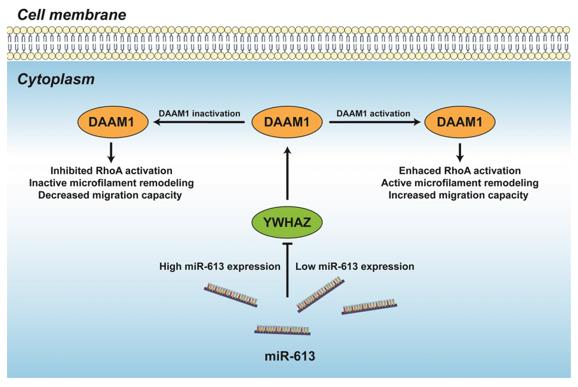 Fig. 1 YWHAZ interacts with DAAM1 and is essential for its molecular function.1
Key structural properties of YWHAZ:
- Conserved helix-loop-helix dimerization domains
- The negatively charged phosphopeptide binds to the groove
- Nine antiparallel α -helices form amide binding pockets
Functions of YWHAZ
The core function of the YWHAZ protein is to act as a signal transduction regulator to participate in the regulation of cell processes. Its main functions include:
| Function | Description |
| Signal pathway regulation | By recognizing phosphorylation sequences and binding to various signaling proteins (such as kinases and phosphatases), the activities of key pathways such as PI3K/AKT and MAPK are regulated. |
| Cell cycle regulation | Protein interactions with CDK and cycle, affect the G1 / S and G2 / M phase transformation checkpoint normal operation. |
| Apoptosis inhibition | Isolate pro-apoptotic proteins such as BAD and FOXO in the cytoplasm to prevent them from entering the mitochondria or nucleus to initiate the apoptotic program. |
| Metabolic regulation | Regulating the activity of key components in the insulin signaling pathway affects the efficiency of glucose uptake and utilization. |
| Cytoskeletal recombination | By interacting with Rho family GTases and their effectors, it participates in the dynamic assembly of actin and the maintenance of cell morphology. |
14-3-3ζ exerts its molecular scaffold function by forming homologous/heterodimers. Its phosphorylation-dependent binding characteristics enable it to simultaneously coordinate multiple signaling pathways, playing a core integration role in maintaining cellular homeostasis. The abnormal expression level of this protein is closely related to tumorigenesis, metabolic diseases and neurodegenerative diseases.
Applications of YWHAZ and YWHAZ Antibody in Literature
1. Gan, Yun, Feng Ye, and Xing-Xing He. "The role of YWHAZ in cancer: A maze of opportunities and challenges." Journal of cancer 11.8 (2020): 2252. https://doi.org/10.7150/jca.41316
The article indicates that YWHAZ (14-3-3ζ) is highly expressed in various cancers. As an oncogene, it promotes tumor development by regulating cell proliferation, apoptosis and invasion, and can serve as a potential biomarker for diagnostic, prognostic and therapeutic targets.
2. Yu, Chia‐Cheng, et al. "YWHAZ amplification/overexpression defines aggressive bladder cancer and contributes to chemo‐/radio‐resistance by suppressing caspase‐mediated apoptosis." The Journal of Pathology 248.4 (2019): 476-487. https://doi.org/10.1002/path.5274
The article indicates that YWHAZ (14-3-3ζ) is a key oncogene that regulates the proliferation, apoptosis and invasion of cancer cells. It is highly expressed in various cancers and is closely related to tumor progression, chemotherapy resistance and poor prognosis. Therefore, it is regarded as a promising diagnostic and prognostic biomarker and therapeutic target.
3. Mei, Jie, et al. "YWHAZ interacts with DAAM1 to promote cell migration in breast cancer." Cell death discovery 7.1 (2021): 221. https://doi.org/10.1038/s41420-021-00609-7
The article indicates that in breast cancer, YWHAZ combines with DAAM1 to form a complex, which collaboratively promotes the migration of cancer cells. However, miR-613 can simultaneously target and inhibit both, blocking their carcinogenic effects and revealing a new regulatory pathway.
4. Gao, Xuejie, et al. "Targeting enolase 1 reverses bortezomib resistance in multiple myeloma through YWHAZ/Parkin axis." Journal of Biomedical Science 32.1 (2025): 9. https://doi.org/10.1186/s12929-024-01101-x
The article indicates that in multiple myeloma, ENO1 leads to bortezomib resistance by enhancing the stability of the YWHAZ protein, activating mitochondrial autophagy and inhibiting apoptosis. Targeting ENO1 can reverse drug resistance and become a potential therapeutic strategy.
5. Popov, Ivan K., et al. "A YWHAZ variant associated with cardiofaciocutaneous syndrome activates the RAF-ERK pathway." Frontiers in physiology 10 (2019): 388. https://doi.org/10.3389/fphys.2019.00388
Research has found that the S230W variant of the YWHAZ gene may lead to cardiofacial skin syndrome by enhancing binding to Raf protein, evading degradation, and overactivating the RAS-ERK signaling pathway. This provides new evidence for understanding the cause of the disease.
Creative Biolabs: YWHAZ Antibodies for Research
Creative Biolabs specializes in the production of high-quality YWHAZ antibodies for research and industrial applications. Our portfolio includes monoclonal antibodies tailored for ELISA, Flow Cytometry, Western blot, immunohistochemistry, and other diagnostic methodologies.
- Custom YWHAZ Antibody Development: Tailor-made solutions to meet specific research requirements.
- Bulk Production: Large-scale antibody manufacturing for industry partners.
- Technical Support: Expert consultation for protocol optimization and troubleshooting.
- Aliquoting Services: Conveniently sized aliquots for long-term storage and consistent experimental outcomes.
For more details on our YWHAZ antibodies, custom preparations, or technical support, contact us at email.
Reference
- Mei, Jie, et al. "YWHAZ interacts with DAAM1 to promote cell migration in breast cancer." Cell death discovery 7.1 (2021): 221. https://doi.org/10.1038/s41420-021-00609-7
Anti-YWHAZ antibodies
 Loading...
 Compare




Hot products 
-
Mouse Anti-GFAP Recombinant Antibody (5) (CBMAB-G0346-LY)

-
Mouse Anti-COL1A2 Recombinant Antibody (CF108) (V2LY-1206-LY626)

-
Mouse Anti-CD33 Recombinant Antibody (P67.6) (CBMAB-C10189-LY)

-
Rat Anti-CD300A Recombinant Antibody (172224) (CBMAB-C0423-LY)

-
Mouse Anti-GPR34 Recombinant Antibody (CBFYH-0457) (CBMAB-H1331-FY)

-
Mouse Anti-FPR2 Recombinant Antibody (1D6) (CBMAB-F2628-CQ)

-
Rat Anti-4-1BB Recombinant Antibody (V2-1558) (CBMAB-0953-LY)

-
Mouse Anti-CD59 Recombinant Antibody (CBXC-2097) (CBMAB-C4421-CQ)

-
Armenian hamster Anti-CD40 Recombinant Antibody (HM40-3) (CBMAB-C10365-LY)

-
Mouse Anti-CFL1 (Phospho-Ser3) Recombinant Antibody (CBFYC-1770) (CBMAB-C1832-FY)

-
Mouse Anti-DISP2 Monoclonal Antibody (F66A4B1) (CBMAB-1112CQ)

-
Mouse Anti-ACTN4 Recombinant Antibody (V2-6075) (CBMAB-0020CQ)

-
Mouse Anti-AAV8 Recombinant Antibody (V2-634028) (CBMAB-AP022LY)

-
Mouse Anti-ENPP1 Recombinant Antibody (CBFYE-0159) (CBMAB-E0375-FY)

-
Mouse Anti-ARID3A Antibody (A4) (CBMAB-0128-YC)

-
Mouse Anti-GNA12 Recombinant Antibody (CBFYH-0402) (CBMAB-H1272-FY)

-
Rat Anti-CD63 Recombinant Antibody (7G4.2E8) (CBMAB-C8725-LY)

-
Mouse Anti-CD63 Recombinant Antibody (CBXC-1200) (CBMAB-C1467-CQ)

-
Mouse Anti-ATP1B3 Recombinant Antibody (1E9) (CBMAB-A4021-YC)

-
Mouse Anti-CD247 Recombinant Antibody (6B10.2) (CBMAB-C1583-YY)

- AActivation
- AGAgonist
- APApoptosis
- BBlocking
- BABioassay
- BIBioimaging
- CImmunohistochemistry-Frozen Sections
- CIChromatin Immunoprecipitation
- CTCytotoxicity
- CSCostimulation
- DDepletion
- DBDot Blot
- EELISA
- ECELISA(Cap)
- EDELISA(Det)
- ESELISpot
- EMElectron Microscopy
- FFlow Cytometry
- FNFunction Assay
- GSGel Supershift
- IInhibition
- IAEnzyme Immunoassay
- ICImmunocytochemistry
- IDImmunodiffusion
- IEImmunoelectrophoresis
- IFImmunofluorescence
- IGImmunochromatography
- IHImmunohistochemistry
- IMImmunomicroscopy
- IOImmunoassay
- IPImmunoprecipitation
- ISIntracellular Staining for Flow Cytometry
- LALuminex Assay
- LFLateral Flow Immunoassay
- MMicroarray
- MCMass Cytometry/CyTOF
- MDMeDIP
- MSElectrophoretic Mobility Shift Assay
- NNeutralization
- PImmunohistologyp-Paraffin Sections
- PAPeptide Array
- PEPeptide ELISA
- PLProximity Ligation Assay
- RRadioimmunoassay
- SStimulation
- SESandwich ELISA
- SHIn situ hybridization
- TCTissue Culture
- WBWestern Blot
