
ITGAX Antibodies
Background
ITGAX is a type I transmembrane glycoprotein that is mainly expressed on the surface of myeloid cells, such as dendritic cells, macrophages, and neutrophils. The protein encoded by this gene mediates cell adhesion, migration, and immune signal transduction by binding to extracellular matrix components and ligands. It plays a crucial role in inflammatory responses and immune surveillance. ITGAX was identified in the 1990s, and the study of its structure and function has deepened our understanding of leukocyte recruitment, antigen presentation, and immune regulatory mechanisms, providing important molecular targets for the development of immunotherapy for autoimmune diseases and cancer.
Structure of ITGAX
The CD11c protein encoded by the ITGAX gene has a molecular weight of approximately 150 kDa and belongs to the integrin α chain family. This molecule is a type I transmembrane glycoprotein, with its extracellular region containing a β-propeller domain and several calcium ion binding motifs, which are responsible for the specific recognition and binding to ligands (such as ICAM-1, fibrinogen). ITGAX usually non-covalently binds with the integrin β2 subunit (CD18) to form a functional heterodimeric integrin αXβ2, which is crucial for the adhesion and migration of white blood cells. Its intracellular domain transmits extracellular signals to the cell interior through interaction with cytoskeletal proteins (such as talin, kindlin), regulating cell spreading and movement. This protein is mainly expressed on the surface of dendritic cells and activated macrophages, and is an important surface marker of myeloid cells.
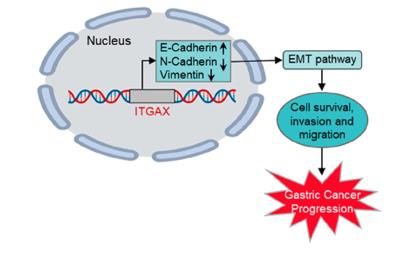 Fig. 1 Schematic illustration of ITGAX-enhanced gastric cancer progression via the EMT pathway.1
Key structural properties of ITGAX:
- Type I transmembrane glycoprotein structure
- The extracellular region contains the β-propeller domain and calcium ion-binding repeat sequences
- The α chain forms an heterodimeric integrin with the β2 subunit
Functions of ITGAX
The integrin αXβ2 (CD11c/CD18) encoded by the ITGAX gene plays a central role in the immune system. Its main function is to mediate the adhesion, migration and signal transduction of immune cells, thereby regulating immune surveillance and inflammatory responses.
| Function | Description |
| Immune cell adhesion | By recognizing ligands such as ICAM-1, it mediates the adhesion of dendritic cells, macrophages, etc. to vascular endothelium or extracellular matrix, which is the first step of cell migration. |
| Immune Cell Migration | Provides crucial mechanical anchors and traction forces for white blood cells to cross the vascular endothelium and reach the site of inflammation or infection. |
| Immune Signal Transduction | As pattern recognition receptors, they are involved in the recognition of pathogen-associated molecular patterns (PAMPs) and damage-associated molecular patterns (DAMPs), initiating downstream inflammatory signaling pathways. |
| Immune synapse formation | During the process of antigen presentation, it helps dendritic cells form stable contacts with T cells, promoting T cell activation. |
| Regulation of Phagocytosis | In macrophages, it is involved in the recognition and clearance of apoptotic cells, pathogens, or immune complexes. |
The ligand binding of this integrin depends on divalent cations (such as Mg²⁺), and its affinity can be dynamically regulated by the activation state of the cells, thereby precisely controlling the recruitment of immune cells and the intensity of their responses.
Applications of ITGAX and ITGAX Antibody in Literature
1. Hu, Jiali, et al. "ITGAX promotes gastric cancer progression via epithelial-mesenchymal transition pathway." Frontiers in Pharmacology 15 (2025): 1536478. https://doi.org/10.3389/fphar.2024.1536478
The study found that the ITGAX gene was significantly upregulated in gastric cancer tissues, which could enhance cell proliferation, invasion and the tumor-forming ability in mice, and promote the progression of gastric cancer by driving epithelial-mesenchymal transition. This suggests that it may serve as a potential biomarker for early diagnosis and prognosis assessment of gastric cancer.
2. Sui, Yingli, Kun Lu, and Lin Fu. "Prediction and analysis of novel key genes ITGAX, LAPTM5, SERPINE1 in clear cell renal cell carcinoma through bioinformatics analysis." PeerJ 9 (2021): e11272. https://doi.org/10.7717/peerj.11272
The article indicates that through bioinformatics analysis, it was found that ITGAX, LAPTM5 and SERPINE1 are significantly upregulated in renal clear cell carcinoma and have a poor prognosis. The hypomethylation of their promoters may be related to the abnormal expression, and they have the potential to become prognostic markers and therapeutic targets.
3. Williams, Kendra A., et al. "A systems genetics approach identifies CXCL14, ITGAX, and LPCAT2 as novel aggressive prostate cancer susceptibility genes." PLoS genetics 10.11 (2014): e1004809. https://doi.org/10.1371/journal.pgen.1004809
This study, through systematic genetic analysis, found that the expression level of the ITGAX gene was positively correlated with the risk of aggressive prostate cancer, and its polymorphism was also related to disease progression. This suggests that ITGAX could serve as a potential biomarker for this aggressive subtype.
4. Edsfeldt, Andreas, et al. "Interferon regulatory factor-5-dependent CD11c+ macrophages contribute to the formation of rupture–prone atherosclerotic plaques." European heart journal 43.19 (2022): 1864-1877. https://doi.org/10.1093/eurheartj/ehab920
This study found that in human atherosclerotic plaques, the expression of macrophage markers ITGAX/CD11c is closely related to plaque instability and symptomatic carotid artery disease. The IRF5-ITGAX axis was also verified through a mouse model to be a key mechanism driving plaque inflammation and rupture risk.
5. PLOS Genetics Staff. "Correction: A Systems Genetics Approach Identifies CXCL14, ITGAX, and LPCAT2 as Novel Aggressive Prostate Cancer Susceptibility Genes." Plos Genetics 11.5 (2015): e1005127. https://doi.org/10.1371/journal.pgen.1005127
In the genome-wide association analysis for aggressive prostate cancer, it was found that the SNP locus rs8045738 within the ITGAX gene was significantly correlated with a higher Gleason score after prostatectomy, suggesting that this genetic polymorphism may be related to the invasiveness of the disease.
Creative Biolabs: ITGAX Antibodies for Research
Creative Biolabs specializes in the production of high-quality ITGAX antibodies for research and industrial applications. Our portfolio includes monoclonal antibodies tailored for ELISA, Flow Cytometry, Western blot, immunohistochemistry, and other diagnostic methodologies.
- Custom ITGAX Antibody Development: Tailor-made solutions to meet specific research requirements.
- Bulk Production: Large-scale antibody manufacturing for industry partners.
- Technical Support: Expert consultation for protocol optimization and troubleshooting.
- Aliquoting Services: Conveniently sized aliquots for long-term storage and consistent experimental outcomes.
For more details on our ITGAX antibodies, custom preparations, or technical support, contact us at email.
Reference
- Hu, Jiali, et al. "ITGAX promotes gastric cancer progression via epithelial-mesenchymal transition pathway." Frontiers in Pharmacology 15 (2025): 1536478. https://doi.org/10.3389/fphar.2024.1536478
Anti-ITGAX antibodies
 Loading...
 Compare




Hot products 
- AActivation
- AGAgonist
- APApoptosis
- BBlocking
- BABioassay
- BIBioimaging
- CImmunohistochemistry-Frozen Sections
- CIChromatin Immunoprecipitation
- CTCytotoxicity
- CSCostimulation
- DDepletion
- DBDot Blot
- EELISA
- ECELISA(Cap)
- EDELISA(Det)
- ESELISpot
- EMElectron Microscopy
- FFlow Cytometry
- FNFunction Assay
- GSGel Supershift
- IInhibition
- IAEnzyme Immunoassay
- ICImmunocytochemistry
- IDImmunodiffusion
- IEImmunoelectrophoresis
- IFImmunofluorescence
- IGImmunochromatography
- IHImmunohistochemistry
- IMImmunomicroscopy
- IOImmunoassay
- IPImmunoprecipitation
- ISIntracellular Staining for Flow Cytometry
- LALuminex Assay
- LFLateral Flow Immunoassay
- MMicroarray
- MCMass Cytometry/CyTOF
- MDMeDIP
- MSElectrophoretic Mobility Shift Assay
- NNeutralization
- PImmunohistologyp-Paraffin Sections
- PAPeptide Array
- PEPeptide ELISA
- PLProximity Ligation Assay
- RRadioimmunoassay
- SStimulation
- SESandwich ELISA
- SHIn situ hybridization
- TCTissue Culture
- WBWestern Blot
