
CD52 Antibodies
Background
The CD52 gene is located on human chromosome 1 and encodes a highly glycosylated membrane-anchored protein, which is mainly anchored to the cell membranes of lymphocytes, monocytes and epidermal cells of the male reproductive tract through GPI. The CD52 protein expressed by this gene participates in immune regulation by interacting with specific receptors, can inhibit T cell activation and proliferation, and plays a role in complement-mediated cell lysis. Due to its specific expression pattern in immune cells, CD52 has become a target for treating autoimmune diseases such as multiple sclerosis. Related monoclonal antibody drugs can achieve targeted therapy by inducing antibody-dependent cytotoxicity. The discovery of this gene and the study of its functions not only deepen people's understanding of the immune regulatory mechanism, but also provide an important molecular basis for the development of new immunotherapies.
Structure of CD52
CD52 is a glycoprotein with a molecular weight of approximately 14-25 kDa. The significant mass differences among CD52 stem from the variations in the degree of glycosylation modification among different species.
| Species | Human | Mouse | Rat |
| Molecular Weight (kDa) | 14-25 (glycosylated form) | ~12-15 (glycosylated form) | ~13-16 (glycosylated form) |
| Primary Structural Differences | The mature peptide consists of only 12 amino acids and relies on GPI anchoring | High homology with human and different glycosylation pattern | Core peptides conservative, glycosylation interspecific differences |
This protein is encoded by the CD52 gene, and its primary structure is a short peptide core containing 12 amino acids. This core is anchored to the cell membrane by a glycosylphosphatidylinositol (GPI) at the C-terminal, forming its basic framework. The vast majority of the volume and functional properties of proteins are determined by their complex N-linked glycosylation modifications. These dense sugar chains determine their antigenicity and endow the protein with a key role in immune regulation.
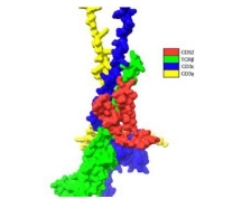 Fig. 1 AlphaFold Multimer-predicted structure of partial human TCR protein (TCRβ-CD3γ-CD3ε) and CD52.1
Key structural properties of CD52:
- Very short peptide backbone (only 12 amino acids)
- The C-terminal GPI-anchored domain is used for cell membrane attachment
- Dense N-linked glycosylation determines its spatial conformation and function
Functions of CD52
The core function of the CD52 molecule lies in immune regulation, but its mechanism of action shows diversity in different physiological and pathological environments.
| Function | Description |
| Immunosuppression | By mediating intercellular signaling through its high-density glycosylation structure, it can inhibit the activation and proliferation of T cells, thereby maintaining immune tolerance. |
| Therapeutic target | As a direct target of monoclonal antibodies, the antibody binding can trigger complement-dependent cytotoxic effects and eliminate pathological immune cells. |
| Regulation of cell migration | The GPI anchored forms may be involved in regulating immune cell migration between the organization and position. |
| Signal transduction | Interacts with specific receptors, such as Siglec-10, to transmit inhibitory signals and negatively regulate the strength of the immune response. |
The affinity of CD52 for binding to targets is usually higher than that of most cytokine receptors, which enables it to efficiently occupy cell membrane space and transmit strong inhibitory signals. This characteristic is the structural basis for it to serve as an efficient immune intervention target.
Applications of CD52 and CD52 Antibody in Literature
1. Harrison, Leonard C., et al. "Soluble CD52 mediates immune suppression by human seminal fluid." Frontiers in Immunology 15 (2024): 1497889. https://doi.org/10.3389/fimmu.2024.1497889
Research has found that CD52 in human semen forms a complex with HMGB1, which can indirectly inhibit T cell function through the inhibitory receptor Siglec-7 on immune cells and directly suppress NK cells, thereby regulating female immunity to promote reproduction.
2. Karnan, Sivasundaram, et al. "CD52 is a novel target for the treatment of FLT3-ITD-mutated myeloid leukemia." Cell Death Discovery 7.1 (2021): 121. https://doi.org/10.1038/s41420-021-00446-8
Research has found that in acute myeloid leukemia cells carrying the FLT3-ITD mutation, this mutation upregulates the expression of CD52 by activating the STAT5 signaling pathway. The antibody drug alenumab targeting CD52 can effectively mediate the ADCC effect and significantly inhibit tumor growth, providing a new potential therapy for this type of leukemia.
3. Fuhr, Viktoria, et al. "CD52 and OXPHOS—potential targets in ibrutinib-treated mantle cell lymphoma." Cell Death Discovery 8.1 (2022): 505. https://doi.org/10.1038/s41420-022-01289-7
Research has found that in mantle cell lymphoma, cells that survive ibrutinib treatment highly express CD52. Research has found that the combined use of anti-CD52 antibodies after this treatment can effectively eliminate these residual cells through complement-dependent cytotoxicity, providing a potential therapeutic strategy for eliminating minimal residual disease.
4. Bhamidipati, Kartik, et al. "CD52 is elevated on B cells of SLE patients and regulates B cell function." Frontiers in immunology 11 (2021): 626820. https://doi.org/10.3389/fimmu.2020.626820
Research has found that the high expression of CD52 in B cells of SLE patients is a compensatory mechanism that inhibits self-hyperactivity. Membrane-bound CD52 can inhibit B-cell receptor (BCR) signaling. When it is cut into soluble form, it can further inhibit the function of B cells by binding to Siglec-10 in an autocrine/paracrine manner.
5. Ramouz, Ali, et al. "Preoperative CD52 level predicts graft survival following kidney transplantation." BioMed Research International 2022.1 (2022): 8949919. https://doi.org/10.1155/2022/8949919
Studies have shown that the preoperative CD52 level can be used as a predictive indicator for the prognosis of kidney transplantation. High levels of CD52 predict an increased risk of acute rejection, delayed recovery of transplant function and BK virus infection after surgery, and are independently associated with a lower long-term graft survival rate.
Creative Biolabs: CD52 Antibodies for Research
Creative Biolabs specializes in the production of high-quality CD52 antibodies for research and industrial applications. Our portfolio includes monoclonal antibodies tailored for ELISA, Flow Cytometry, Western blot, immunohistochemistry, and other diagnostic methodologies.
- Custom CD52 Antibody Development: Tailor-made solutions to meet specific research requirements.
- Bulk Production: Large-scale antibody manufacturing for industry partners.
- Technical Support: Expert consultation for protocol optimization and troubleshooting.
- Aliquoting Services: Conveniently sized aliquots for long-term storage and consistent experimental outcomes.
For more details on our CD52 antibodies, custom preparations, or technical support, contact us at email.
Reference
- Liu, Tong, et al. "Cis-interaction between CD52 and T cell receptor complex interferes with CD4+ T cell activation in acute decompensation of cirrhosis." EBioMedicine 108 (2024). https://doi.org/10.1016/j.ebiom.2024.105336
Anti-CD52 antibodies
 Loading...
 Compare




Hot products 
-
Mouse Anti-CALR Recombinant Antibody (CBFYC-0763) (CBMAB-C0818-FY)

-
Rat Anti-FABP3 Recombinant Antibody (CBXF-2299) (CBMAB-F1612-CQ)

-
Mouse Anti-ARHGAP5 Recombinant Antibody (54/P190-B) (CBMAB-P0070-YC)

-
Mouse Anti-CSPG4 Recombinant Antibody (CBFYM-1050) (CBMAB-M1203-FY)

-
Mouse Anti-FOXA3 Recombinant Antibody (2A9) (CBMAB-0377-YC)

-
Mouse Anti-A2M Recombinant Antibody (V2-178822) (CBMAB-A0036-YC)

-
Mouse Anti-BAX Recombinant Antibody (CBYY-0216) (CBMAB-0217-YY)

-
Mouse Anti-ADRB2 Recombinant Antibody (V2-180026) (CBMAB-A1420-YC)

-
Mouse Anti-CCN2 Recombinant Antibody (CBFYC-2383) (CBMAB-C2456-FY)

-
Mouse Anti-CD24 Recombinant Antibody (ALB9) (CBMAB-0176CQ)

-
Mouse Anti-ENO2 Recombinant Antibody (H14) (CBMAB-E1341-FY)

-
Mouse Anti-CASP7 Recombinant Antibody (10-01-62) (CBMAB-C2005-LY)

-
Mouse Anti-ACTG1 Recombinant Antibody (V2-179597) (CBMAB-A0916-YC)

-
Mouse Anti-NSUN6 Recombinant Antibody (D-5) (CBMAB-N3674-WJ)

-
Mouse Anti-ALOX5 Recombinant Antibody (33) (CBMAB-1890CQ)

-
Mouse Anti-CD63 Recombinant Antibody (CBXC-1200) (CBMAB-C1467-CQ)

-
Mouse Anti-BrdU Recombinant Antibody (IIB5) (CBMAB-1038CQ)

-
Mouse Anti-CAT Recombinant Antibody (724810) (CBMAB-C8431-LY)

-
Mouse Anti-CCNH Recombinant Antibody (CBFYC-1054) (CBMAB-C1111-FY)

-
Mouse Anti-EIF4G1 Recombinant Antibody (2A9) (CBMAB-A2544-LY)

- AActivation
- AGAgonist
- APApoptosis
- BBlocking
- BABioassay
- BIBioimaging
- CImmunohistochemistry-Frozen Sections
- CIChromatin Immunoprecipitation
- CTCytotoxicity
- CSCostimulation
- DDepletion
- DBDot Blot
- EELISA
- ECELISA(Cap)
- EDELISA(Det)
- ESELISpot
- EMElectron Microscopy
- FFlow Cytometry
- FNFunction Assay
- GSGel Supershift
- IInhibition
- IAEnzyme Immunoassay
- ICImmunocytochemistry
- IDImmunodiffusion
- IEImmunoelectrophoresis
- IFImmunofluorescence
- IGImmunochromatography
- IHImmunohistochemistry
- IMImmunomicroscopy
- IOImmunoassay
- IPImmunoprecipitation
- ISIntracellular Staining for Flow Cytometry
- LALuminex Assay
- LFLateral Flow Immunoassay
- MMicroarray
- MCMass Cytometry/CyTOF
- MDMeDIP
- MSElectrophoretic Mobility Shift Assay
- NNeutralization
- PImmunohistologyp-Paraffin Sections
- PAPeptide Array
- PEPeptide ELISA
- PLProximity Ligation Assay
- RRadioimmunoassay
- SStimulation
- SESandwich ELISA
- SHIn situ hybridization
- TCTissue Culture
- WBWestern Blot
