
CD79B Antibodies
Background
The membrane-associated protein encoded by the CD79B gene is a key component of the B-cell antigen receptor complex and is mainly expressed on the surface of B lymphocytes. This protein forms a heterodimer together with CD79A, which is responsible for transmitting antigen recognition signals into the interior of the cell, thereby activating the immune response function of B cells. It plays an indispensable regulatory role in the development, differentiation and antibody production of B cells. Mutations in this gene are closely related to the occurrence of various B-cell lymphomas, especially when combined with gene abnormalities such as BCL2, it can significantly affect tumor progression and treatment response. Since its discovery in the 1980s, research on CD79B and its signaling pathways has greatly advanced B-cell immunology and the development of related targeted drugs, providing an important molecular basis for the treatment of hematological malignancies.
Structure of CD79B
The CD79B gene encodes a transmembrane protein of approximately 38-40 kDa, which is an important component of the B-cell receptor (BCR) complex. Its molecular weight is relatively conserved among different species, but in some B-cell lymphomas, it may undergo slight changes due to glycosylation modification or mutation.
| Species | Human | Mouse | Rat |
| Molecular Weight (kDa) | ~38-40 | ~38-40 | ~38-40 |
| Primary Structural Differences | Has the extracellular domain Ig structure, transmembrane region and immune receptor tyrosine activation sequence (ITAM), responsible for signal transduction BCR. | Highly similar to human homologues, it is functionally conserved in B-cell development and immune response. | Often used in the study of animal models, the ITAM sequence and the signal function and human are basically identical. |
The CD79B protein contains approximately 229 amino acids and is phosphorylated through two ITAM motifs in its intracellular region (each containing two tyrosine residues) after antigen binding, thereby initiating a downstream signaling cascade reaction, which is crucial for the activation, proliferation and survival of B cells.
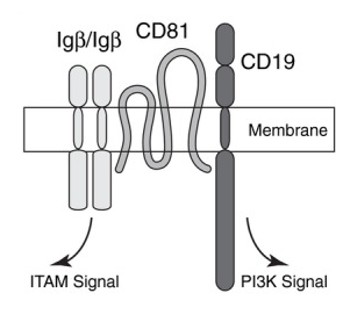 Fig. 1 Model of the Igβ/CD19 module promoting ITAM and PI3K signaling.1
Key structural properties of CD79B:
- Immunoglobulin (Ig) -like extracellular domains
- Intracellular tails containing the immunoreceptor tyrosine activation motif (ITAM)
- Stable heterodimers are formed with CD79A through disulfide bonds
Functions of CD79B
The primary function of the CD79B protein is to serve as a signal transduction subunit of the B-cell receptor (BCR) complex, transmitting antigen recognition signals. However, it also plays a key role in various B-cell biological processes, including cell development, survival and differentiation.
| Function | Description |
| Signal transduction | After BCR binds to the antigen, the tyrosine of the intracellular ITAM motif is phosphorylated, initiating the downstream signal cascade and activating B cells. |
| BCR assembly and transportation | The formation of a heterodimer with CD79A is crucial for the correct assembly of complete BCR on the cell membrane and its transport to the cell surface. |
| Cell survival and proliferation | The transmitted signals provide continuous support for the survival, proliferation and clonal expansion of immature and mature B cells. |
| Antigen presentation regulation | Effective BCR signaling promotes antigen internalization and processing, enhancing the function of B cells as antigen-presenting cells. |
| Maintenance of immune tolerance | The fine regulation of its signal strength and duration is crucial for central and peripheral immune tolerance and the prevention of autoimmune reactions. |
The CD79B-mediated signal belongs to a typical transient, high-affinity activation mode, in contrast to signaling systems such as T-cell receptors. The precise regulation of its signals determines whether B cells are normally activated, dysfunctional or undergo apoptosis, especially playing a core role in the early stage of immune response and the occurrence of lymphoma.
Applications of CD79B and CD79B Antibody in Literature
1. Yamaguchi, Junya, et al. "CD79B Y196 mutation is a potent predictive marker for favorable response to R‐MPV in primary central nervous system lymphoma." Cancer Medicine 12.6 (2023): 7116-7126. https://doi.org/10.1002/cam4.5512
The article indicates that the CD79B Y196 mutation is a predictive marker for the good efficacy of the R-MPV regimen in patients with PCNSL, and its rapid detection is conducive to precise diagnosis and treatment. This study confirmed that this mutation was significantly associated with a longer survival period of the patients.
2. Alshehri, Samiyah, et al. "The Efficacy of Polatuzumab Vedotin Targeting CD79B in the Treatment of Non-Hodgkin Lymphoma: A Systematic Review and Meta-Analysis." International Journal of Molecular Sciences 26.14 (2025): 6836. https://doi.org/10.3390/ijms26146836
The article indicates that the antibody-drug conjugate polatuzumab (PoV) targeting CD79B can significantly increase the complete response rate and progression-free survival of patients with non-Hodgkin's lymphoma, but the risk of adverse reactions increases simultaneously.
3. Deng, Ting, et al. "A single‐centre, real‐world study of BTK inhibitors for the initial treatment of MYD88mut/CD79Bmut diffuse large B‐cell lymphoma." Cancer Medicine 13.4 (2024): e7005. https://doi.org/10.1002/cam4.7005
The article indicates that the combination of BTK inhibitors and the R-CHOP regimen can significantly improve the remission rate and survival period of newly diagnosed DLBCL patients carrying MYD88/CD79B mutations, and the safety is controllable.
4. He, Xiaocui, et al. "Continuous signaling of CD 79b and CD 19 is required for the fitness of Burkitt lymphoma B cells." The EMBO journal 37.11 (2018): e97980. https://doi.org/10.15252/embj.201797980
Research has found that in the absence of a complete B-cell receptor, its key component Igβ (CD79b) can still form a signaling module with CD19, driving the continuous growth and survival of B-cell lymphoma through the ITAM/PI3K pathway.
5. Grossmann, Luis, et al. "Gene Expression Profiling Provides an Improved Characterization of CD79B-Mutated Diffuse Large B-Cell Lymphomas." Journal of Personalized Medicine 15.11 (2025): 548. https://doi.org/10.3390/jpm15110548
This study found that in DLBCL with CD79B mutations, in addition to the NF-κB pathway, genes such as ARNT2 and WNT11 were also significantly upregulated, providing new clues for the precise identification of this high-risk subtype and the development of new therapeutic targets.
Creative Biolabs: CD79B Antibodies for Research
Creative Biolabs specializes in the production of high-quality CD79B antibodies for research and industrial applications. Our portfolio includes monoclonal antibodies tailored for ELISA, Flow Cytometry, Western blot, immunohistochemistry, and other diagnostic methodologies.
- Custom CD79B Antibody Development: Tailor-made solutions to meet specific research requirements.
- Bulk Production: Large-scale antibody manufacturing for industry partners.
- Technical Support: Expert consultation for protocol optimization and troubleshooting.
- Aliquoting Services: Conveniently sized aliquots for long-term storage and consistent experimental outcomes.
For more details on our CD79B antibodies, custom preparations, or technical support, contact us at email.
Reference
- He, Xiaocui, et al. "Continuous signaling of CD 79b and CD 19 is required for the fitness of Burkitt lymphoma B cells." The EMBO journal 37.11 (2018): e97980. https://doi.org/10.15252/embj.201797980
Anti-CD79B antibodies
 Loading...
 Compare




Hot products 
- AActivation
- AGAgonist
- APApoptosis
- BBlocking
- BABioassay
- BIBioimaging
- CImmunohistochemistry-Frozen Sections
- CIChromatin Immunoprecipitation
- CTCytotoxicity
- CSCostimulation
- DDepletion
- DBDot Blot
- EELISA
- ECELISA(Cap)
- EDELISA(Det)
- ESELISpot
- EMElectron Microscopy
- FFlow Cytometry
- FNFunction Assay
- GSGel Supershift
- IInhibition
- IAEnzyme Immunoassay
- ICImmunocytochemistry
- IDImmunodiffusion
- IEImmunoelectrophoresis
- IFImmunofluorescence
- IGImmunochromatography
- IHImmunohistochemistry
- IMImmunomicroscopy
- IOImmunoassay
- IPImmunoprecipitation
- ISIntracellular Staining for Flow Cytometry
- LALuminex Assay
- LFLateral Flow Immunoassay
- MMicroarray
- MCMass Cytometry/CyTOF
- MDMeDIP
- MSElectrophoretic Mobility Shift Assay
- NNeutralization
- PImmunohistologyp-Paraffin Sections
- PAPeptide Array
- PEPeptide ELISA
- PLProximity Ligation Assay
- RRadioimmunoassay
- SStimulation
- SESandwich ELISA
- SHIn situ hybridization
- TCTissue Culture
- WBWestern Blot
