
ITPA Antibodies
Background
ITPA gene encoding a protein called inosine triphosphatase, mainly exist in the human body in a variety of tissues and cells. The enzyme produced by this gene can specifically hydrolyze abnormal nucleotides such as inosine triphosphate, preventing these atypical bases from incorporating into DNA and RNA molecules, thereby maintaining the stability and integrity of genetic information. Research has found that functional defects in the ITPA gene are closely related to inflammatory bowel disease and certain adverse drug reactions, especially when using thioprine drugs, significant individual differences will occur. This gene was first identified in 1999, and its enzymatic activity mechanism was elucidated by X-ray crystallography in 2004. As a key regulatory factor in the nucleotide metabolic pathway, the ITPA gene provides an important molecular basis for understanding DNA repair mechanisms, pharmacogenomics, and the treatment of related diseases.
Structure of ITPA
ITPA is an enzyme protein with a molecular weight of approximately 22.3 kDa, and its precise molecular weight varies by species.
| Species | Human | Mouse | Rat | Bovine |
| Molecular Weight (kDa) | 22.3 | 22.1 | 22.2 | 22.4 |
| Primary Structural Differences | Highly conservative catalytic core | Val94Met polymorphism | 92% homology to the human sequence | Gly102Ser mutation |
This protein is composed of 194 amino acids and adopts a typical α/β folding structure. Its active center contains a highly conserved HXGH sequence motif, which is responsible for binding to and hydrolyzing abnormal nucleotides. The key residues Asp60 and Lys95 stabilize the transition state by coordinating magnesium ions, while Tyr50 and Arg70 are involved in substrate-specific recognition. This enzyme maintains the stability of the genome by specifically degrading unconventional purine nucleotides such as inosine triphosphate (ITP), preventing these incorrect bases from incorporating into nucleic acid molecules.
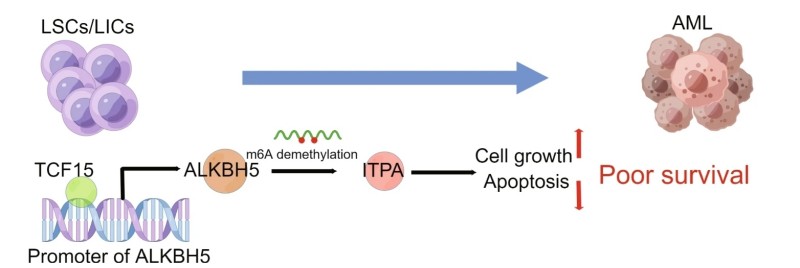 Fig. 1 The role of TCF15/ALKBH5/ITPA in AML progression, drawn by Figdraw.1
Key structural properties of ITPA:
- Adopt the classic α/β folded domain configuration
- Highly conserved catalytic pockets are used to identify aberrant nucleotides
- The hydrolysis function is achieved by relying on the active center of magnesium ions
Functions of ITPA
The main function of the ITPA gene is to maintain the stability of the intracellular nucleotide pool. In addition, it is also involved in a variety of cellular processes, including preventing gene mutations and drug metabolism reactions.
| Function | Description |
| Nucleotide cleaning | Specifically hydrolyze abnormal nucleotides such as inosine triphosphate (ITP) to prevent their incorporation into DNA/RNA and avoid mutation accumulation. |
| Drug response regulation | Genetic polymorphisms can affect the metabolic efficiency of thioprine drugs (such as azathioprine), leading to differences in drug toxicity. |
| Mitigation of oxidative damage | Reduce the accumulation of abnormal nucleotides under oxidative stress conditions and assist in maintaining the REDOX balance of cells. |
| Nucleic acid synthesis ensures authenticity | Ensure the use of standard nucleotides during DNA replication and transcription to maintain the accurate transmission of genetic information. |
| Individualized medical markers | ITPA genotyping has become an important biomarker for predicting adverse drug reactions in patients with inflammatory bowel disease. |
The clearance efficiency of this enzyme for abnormal nucleotides follows the Mie enzyme kinetic curve, demonstrating its high specificity for substrates. This characteristic is consistent with its crucial role in genetic information fidelity.
Applications of Applications of ITPA and ITPA Antibody in Literature
1. Lee, Yeonhong, et al. "Effect of ITPA polymorphism on adverse drug reactions of 6-mercaptopurine in pediatric patients with acute lymphoblastic leukemia: a systematic review and meta-analysis." Pharmaceuticals 15.4 (2022): 416.https://doi.org/10.3390/ph15040416
The article indicates that the ITPA 94C>A gene polymorphism can significantly increase the risk of neutropenia and hepatotoxicity in children with ALL when using 6-mercaptopurine, but it is not related to leukopenia, suggesting that its genetic testing has clinical value in toxicity prediction.
2. Burgis, Nicholas E., et al. "An ITPA enzyme with improved substrate selectivity." The protein journal 43.1 (2024): 62-71. https://doi.org/10.1007/s10930-023-10162-0
The article indicates that ITPA gene polymorphism affects the therapeutic effect of purine drugs. Research has found that the E22D mutant significantly enhances the hydrolysis efficiency of ITP and improves the selectivity for ATP/GTP, providing a new direction for the development of ITPA-targeted therapies.
3. Burgis, Nicholas E. "A disease spectrum for ITPA variation: advances in biochemical and clinical research." Journal of Biomedical Science 23.1 (2016): 73.https://doi.org/10.1186/s12929-016-0291-y
The article indicates that the enzymes encoded by the ITPA gene are crucial for maintaining nucleotide pool homeostasis. Its functional defects are associated with infantile fatal encephalopathy, drug toxicity and tuberculosis susceptibility. Nearly one-third of the population has ITPA polymorphism, suggesting that its regulation has important clinical value.
4. Koga, Yuichiro, et al. "Neural stem cell–specific ITPA deficiency causes neural depolarization and epilepsy." JCI insight 5.22 (2020): e140229. https://doi.org/10.1172/jci.insight.140229
The article indicates that the absence of ITPA leads to depolarization of neuronal membrane potential and epileptic seizures in mice. Research has found that ITPA deficiency causes abnormal synaptic activity by accumulating ITP or its metabolites, confirming its direct correlation with the phenotype of severe encephalopathy.
5. Moradveisi, Borhan, et al. "ITPA, TPMT, and NUDT15 genetic polymorphisms predict 6-mercaptopurine toxicity in Middle Eastern children with acute lymphoblastic leukemia." Frontiers in pharmacology 10 (2019): 916.https://doi.org/10.3389/fphar.2019.00916
Studies have shown that the polymorphism of the ITPA gene is significantly associated with the treatment tolerance of 6-mercaptopurine in children with ALL in the Middle East. Patients carrying the ITPA risk allele need to significantly reduce the drug dosage. It is recommended that ITPA gene screening be conducted before clinical treatment.
Creative Biolabs: ITPA Antibodies for Research
Creative Biolabs specializes in the production of high-quality ITPA antibodies for research and industrial applications. Our portfolio includes monoclonal antibodies tailored for ELISA, Flow Cytometry, Western blot, immunohistochemistry, and other diagnostic methodologies.
- Custom ITPA Antibody Development: Tailor-made solutions to meet specific research requirements.
- Bulk Production: Large-scale antibody manufacturing for industry partners.
- Technical Support: Expert consultation for protocol optimization and troubleshooting.
- Aliquoting Services: Conveniently sized aliquots for long-term storage and consistent experimental outcomes.
For more details on our ITPA antibodies, custom preparations, or technical support, contact us at email.
Reference
- Li, Ran, et al. "RNA demethylase ALKBH5 promotes tumorigenesis of t (8; 21) acute myeloid leukemia via ITPA m6A modification." Biomarker Research 11.1 (2023): 30. https://doi.org/10.1186/s40364-023-00464-x
Anti-ITPA antibodies
 Loading...
 Compare




Hot products 
-
Mouse Anti-AP4E1 Recombinant Antibody (32) (CBMAB-A2996-YC)

-
Mouse Anti-ABL2 Recombinant Antibody (V2-179121) (CBMAB-A0364-YC)

-
Mouse Anti-ASH1L Monoclonal Antibody (ASH5H03) (CBMAB-1372-YC)

-
Mouse Anti-FN1 Monoclonal Antibody (D6) (CBMAB-1240CQ)

-
Mouse Anti-BIRC3 Recombinant Antibody (315304) (CBMAB-1214-CN)

-
Mouse Anti-AMIGO2 Recombinant Antibody (CBYY-C0756) (CBMAB-C2192-YY)

-
Mouse Anti-CALR Recombinant Antibody (CBFYC-0763) (CBMAB-C0818-FY)

-
Mouse Anti-F11R Recombinant Antibody (402) (CBMAB-0026-WJ)

-
Rabbit Anti-ALOX5AP Recombinant Antibody (CBXF-1219) (CBMAB-F0750-CQ)

-
Mouse Anti-BRD3 Recombinant Antibody (CBYY-0801) (CBMAB-0804-YY)

-
Mouse Anti-CECR2 Recombinant Antibody (CBWJC-2465) (CBMAB-C3533WJ)

-
Armenian hamster Anti-CD40 Recombinant Antibody (HM40-3) (CBMAB-C10365-LY)

-
Mouse Anti-CASQ1 Recombinant Antibody (CBFYC-0863) (CBMAB-C0918-FY)

-
Mouse Anti-8-oxoguanine Recombinant Antibody (V2-7719) (CBMAB-1898CQ)

-
Mouse Anti-BHMT Recombinant Antibody (CBYY-0547) (CBMAB-0550-YY)

-
Mouse Anti-CGAS Recombinant Antibody (CBFYM-0995) (CBMAB-M1146-FY)

-
Mouse Anti-ATP1B3 Recombinant Antibody (1E9) (CBMAB-A4021-YC)

-
Mouse Anti-CDKL5 Recombinant Antibody (CBFYC-1629) (CBMAB-C1689-FY)

-
Mouse Anti-APOA1 Monoclonal Antibody (CBFYR0637) (CBMAB-R0637-FY)

-
Mouse Anti-ACVR1C Recombinant Antibody (V2-179685) (CBMAB-A1041-YC)

- AActivation
- AGAgonist
- APApoptosis
- BBlocking
- BABioassay
- BIBioimaging
- CImmunohistochemistry-Frozen Sections
- CIChromatin Immunoprecipitation
- CTCytotoxicity
- CSCostimulation
- DDepletion
- DBDot Blot
- EELISA
- ECELISA(Cap)
- EDELISA(Det)
- ESELISpot
- EMElectron Microscopy
- FFlow Cytometry
- FNFunction Assay
- GSGel Supershift
- IInhibition
- IAEnzyme Immunoassay
- ICImmunocytochemistry
- IDImmunodiffusion
- IEImmunoelectrophoresis
- IFImmunofluorescence
- IGImmunochromatography
- IHImmunohistochemistry
- IMImmunomicroscopy
- IOImmunoassay
- IPImmunoprecipitation
- ISIntracellular Staining for Flow Cytometry
- LALuminex Assay
- LFLateral Flow Immunoassay
- MMicroarray
- MCMass Cytometry/CyTOF
- MDMeDIP
- MSElectrophoretic Mobility Shift Assay
- NNeutralization
- PImmunohistologyp-Paraffin Sections
- PAPeptide Array
- PEPeptide ELISA
- PLProximity Ligation Assay
- RRadioimmunoassay
- SStimulation
- SESandwich ELISA
- SHIn situ hybridization
- TCTissue Culture
- WBWestern Blot
