
MAOB Antibodies
Background
MAOB is a mitochondrial outer membrane enzyme mainly distributed in the central nervous system of vertebrates. This enzyme maintains the dynamic balance of biogenic amine neurotransmitters (such as dopamine) by catalyzing their oxidative deamination reactions. Abnormally elevated MAOB activity in patients with Parkinson's disease can lead to dopamine metabolism disorders. Therefore, this enzyme has become an important target for the development of drugs for neurological diseases. As early as 1962, researchers discovered the functional differences between it and MAOA. In the 1990s, the human MAOB gene was successfully cloned and located on the X chromosome. The revelation of its tetramer structure and flavin adenine dinucleotide (FAD) cofactor not only promoted the research and development of selective inhibitors (such as selagiline), but also deepened people's understanding of the enzyme kinetics mechanism and the pathological mechanism of neurodegenerative diseases.
Structure of MAOB
MAOB (monoamine oxidase B) is a flavin protease with a molecular weight of approximately 58-60 kDa. Its precise molecular weight varies slightly among different species due to differences in amino acid sequences.
| Species | Human | Rat | Mouse | Bovine |
| Molecular Weight (kDa) | 58.0 | 59.5 | 59.2 | 58.8 |
| Primary Structural Differences | With mitochondrial targeting sequence | High homology with human | There are specific variations in the C-end region | Catalytic core highly conservative |
This protein is composed of approximately 520 amino acids, and its tertiary structure forms a typical flavin binding domain and substrate binding cavity. The active center of MAOB covalently binds to a FAD covalent group, which is the core of its catalytic monoamine oxidation reaction. The enzyme protein presents as a dimer form on the outer mitochondrial membrane, with its secondary structure composed of interlaced α -helices and β -folds, jointly enclosing hydrophobic substrate channels. The conserved amino acids at the entrance of the channel are responsible for recognizing substrates such as phenylethylamine, while FAD cofactors achieve the dehydrogenation process of amines through reversible REDOX cycles.
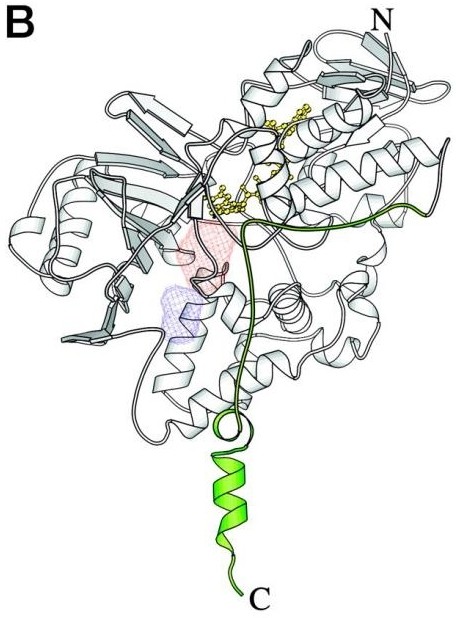 Fig. 1 Overall structure of human MAOB.1
Key structural properties of MAOB:
- Lutein-dependent dimer configuration
- Hydrophobic substrate channel
- FAD coenzyme-dependent REDOX system
Functions of MAOB
The monoamine oxidase B encoded by the MAOB gene mainly undertakes the metabolic regulation of monoamine neurotransmitters in the nervous system, and simultaneously participates in the regulation of various physiological and pathological processes:
| Function | Description |
| Neurotransmitter metabolism | In the mitochondrial outer membrane catalytic dopamine, phenethylamine single amine material such as oxidative deamination, maintain the neurotransmitter steady state. |
| Dopaminergic signaling regulation | By degrading dopamine in the synaptic cleft, it precisely regulates the signal transduction intensity of the dopaminergic neural pathway. |
| Neuroprotective effect | Timely remove excessive amine neurotoxins to reduce their damage to the mitochondrial function of neurons. |
| Regulation of reactive oxygen species generation | During the catalytic process, hydrogen peroxide is produced concurrently, and an abnormally elevated level of it can induce an oxidative stress response. |
| Pathological association of Parkinson's disease | Abnormally elevated activity in the substantia nigra of the midbrain can lead to dopamine depletion, becoming a key promoting factor for neurodegenerative diseases. |
The kinetic characteristics of this enzyme are characterized by high affinity for phenylethylamine, and its substrate selectivity curve contrasts sharply with that of MAOA. This difference is precisely an important structural basis for the development of targeted drugs for Parkinson's disease (such as selegilan).
Applications of MAOB and MAOB Antibody in Literature
1. Nam, Min-Ho, et al. "Revisiting the role of astrocytic MAOB in Parkinson's disease." International journal of molecular sciences 23.8 (2022): 4453. https://doi.org/10.3390/ijms23084453
The article indicates that the traditional view holds that MAOB degrades dopamine, but research has found that its actual function is to catalyze the abnormal synthesis of GABA and hydrogen peroxide by astrocytes. The former inhibits the activity of dopamine neurons, while the latter exacerbates neural degeneration. New MAOB inhibitors can improve Parkinson's symptoms by reversing this process.
2. Tian, Zhen, et al. "Inhibition of MAOB ameliorated high-fat-diet-induced atherosclerosis by inhibiting endothelial dysfunction and modulating gut microbiota." Nutrients 15.11 (2023): 2542. https://doi.org/10.3390/nu15112542
This study reveals that under a high-fat diet, the expression of monoamine oxidase B (MAOB) in vascular endothelial cells increases, which is a new source of cardiovascular reactive oxygen species (ROS). MAOB promotes atherosclerosis by inducing oxidative stress and causing endothelial dysfunction. Further research has found that the inhibitor selegilan can exert anti-atherosclerotic effects by improving endothelial function and regulating the intestinal flora.
3. Huang, Hsiang‐Ching, et al. "MAOB expression correlates with a favourable prognosis in prostate cancer, and its genetic variants are associated with the metastasis of the disease." Journal of Cellular and Molecular Medicine 28.8 (2024): e18229. https://doi.org/10.1111/jcmm.18229
This study reveals that MAOB plays a tumor suppressor role in prostate cancer, and its expression level is negatively correlated with the malignancy of the tumor and poor prognosis. Genetic analysis of the population in Taiwan, China, has found that specific genetic variations of MAOB (rs3027452, rs1799836) are significantly associated with the risk of cancer metastasis. Functional experiments have confirmed that MAOB can inhibit the proliferation and migration ability of cancer cells.
4. Tabata, Yuki. "Geranylgeranoic acid and the MAOB–CYP3A4 axis: a metabolic shift underlying age-related liver cancer risk." Frontiers in Aging 6 (2025): 1680031. https://doi.org/10.3389/fragi.2025.1680031
Research has found that monoamine oxidase B (MAOB) is a key enzyme for the synthesis of geranoate (GGA) in the body, and its activity decreases with aging, which may increase the risk of liver cancer. When MAOB activity is insufficient, cytochrome P450 3A4 (CYP3A4) can provide a compensatory synthetic pathway. This MABO-CYP3A4 axis mechanism provides a new perspective for understanding liver aging and developing related prevention strategies.
5. Tabata, Yuki, and Yoshihiro Shidoji. "Hepatic CYP3A4 enzyme compensatively maintains endogenous geranylgeranoic acid levels in MAOB-knockout human hepatoma cells." Metabolites 12.2 (2022): 140. https://doi.org/10.3390/metabo12020140
This study confirmed that in liver cancer cells, MAOB is the key enzyme that catalyzes the oxidation of GGOH to GGA precursors. However, after the knockout of the MAOB gene, cytochrome P450 3A4 (CYP3A4) is upregulated and acts as a substitute enzyme to perform the same function, thereby maintaining endogenous GGA levels. This indicates that the biosynthesis of GGA is maintained by multiple enzymes together.
Creative Biolabs: MAOB Antibodies for Research
Creative Biolabs specializes in the production of high-quality MAOB antibodies for research and industrial applications. Our portfolio includes monoclonal antibodies tailored for ELISA, Flow Cytometry, Western blot, immunohistochemistry, and other diagnostic methodologies.
- Custom MAOB Antibody Development: Tailor-made solutions to meet specific research requirements.
- Bulk Production: Large-scale antibody manufacturing for industry partners.
- Technical Support: Expert consultation for protocol optimization and troubleshooting.
- Aliquoting Services: Conveniently sized aliquots for long-term storage and consistent experimental outcomes.
For more details on our MAOB antibodies, custom preparations, or technical support, contact us at email.
Reference
- Binda, Claudia, Andrea Mattevi, and Dale E. Edmondson. "Structure-function relationships in flavoenzyme-dependent amine oxidations: a comparison of polyamine oxidase and monoamine oxidase." Journal of biological chemistry 277.27 (2002): 23973-23976.https://doi.org/10.1074/jbc.R200005200
Anti-MAOB antibodies
 Loading...
 Compare




Hot products 
- AActivation
- AGAgonist
- APApoptosis
- BBlocking
- BABioassay
- BIBioimaging
- CImmunohistochemistry-Frozen Sections
- CIChromatin Immunoprecipitation
- CTCytotoxicity
- CSCostimulation
- DDepletion
- DBDot Blot
- EELISA
- ECELISA(Cap)
- EDELISA(Det)
- ESELISpot
- EMElectron Microscopy
- FFlow Cytometry
- FNFunction Assay
- GSGel Supershift
- IInhibition
- IAEnzyme Immunoassay
- ICImmunocytochemistry
- IDImmunodiffusion
- IEImmunoelectrophoresis
- IFImmunofluorescence
- IGImmunochromatography
- IHImmunohistochemistry
- IMImmunomicroscopy
- IOImmunoassay
- IPImmunoprecipitation
- ISIntracellular Staining for Flow Cytometry
- LALuminex Assay
- LFLateral Flow Immunoassay
- MMicroarray
- MCMass Cytometry/CyTOF
- MDMeDIP
- MSElectrophoretic Mobility Shift Assay
- NNeutralization
- PImmunohistologyp-Paraffin Sections
- PAPeptide Array
- PEPeptide ELISA
- PLProximity Ligation Assay
- RRadioimmunoassay
- SStimulation
- SESandwich ELISA
- SHIn situ hybridization
- TCTissue Culture
- WBWestern Blot
