
MSMB Antibodies
Background
The beta-microseminoprotein encoded by the MSMB gene is a small molecule secreted protein mainly secreted by prostate epithelial cells. This protein is abundant in prostatic fluid and semen, participates in the liquefaction process of semen, and plays an important role in maintaining the microenvironment of the male reproductive system. Studies have shown that abnormal expression of the MSMB gene is closely related to the occurrence and development of prostate cancer. Genetic variations in its promoter region can affect protein expression levels and may thereby alter the risk of prostate cancer. Since its discovery, this gene and its protein products have continuously attracted attention due to their potential functions in prostate physiology and tumor biology, providing important clues for exploring the molecular mechanisms of reproductive system diseases and the development of related biomarkers.
Structure of MSMB
The Beta-microseminoprotein (PSP94) encoded by the MSMB gene is a secreted protein with a relatively small molecular weight, approximately 10-16 kDa. This value shows certain differences among different species or isomers, mainly due to the processing of precursor peptides, the degree of glycosylation and sequence polymorphism.
| Species | Human | Mouse | Rat |
| Molecular Weight (kDa) | ~10-14 (mature protein) | ~16 (precursor) | ~15 (precursor) |
| Primary Structural Differences | Mature peptide containing 94 amino acids with highly conserved core structure | The precursor protein is relatively long, and the mature region has a high homology with that of humans | The structure is similar to that of human and mouse, and there are species-specific variations |
This protein is composed of a mature peptide chain of 94 amino acids and presents a tight spherical structure. Its three-dimensional structure is mainly composed of reverse-parallel β -folded sheets, forming a stable "β-bucket" core. The structure contains multiple conserved disulfide bonds, which are crucial for maintaining its conformational stability and secretory function. The physiological function of this protein is related to its specific hydrophilic region and receptor-binding domain on its surface, but the exact active site and mechanism of action are still under further study.
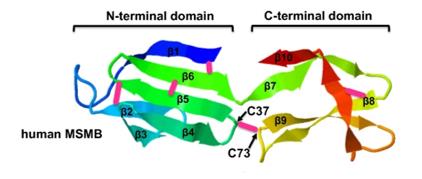 Fig. 1 The crystal structure of human MSMB.1
Key structural properties of MSMB:
- Stable β-folded sheet core structure
- Conservative disulfide bond network
- Binding pockets lacking excipients
- Sequence characteristics rich in cysteine
Functions of MSMB
The β -micronosperin (PSP94) encoded by the MSMB gene is mainly expressed as a secreted protein in the prostate. Its core function is believed to be related to the reproductive system, but studies have also suggested its potential role in other physiological and pathological processes.
| Function | Description |
| Reproductive system function | As one of the main components of semen, it participates in the liquefaction process of semen and may regulate sperm motility and function by binding to specific receptors. |
| Tumor suppressive potential | A large number of studies have shown that its down-regulation is associated with the progression of prostate cancer and may exert tumor suppressive effects through mechanisms such as inducing apoptosis and inhibiting proliferation. |
| Immune regulation | Evidence shows that this protein can interact with immune cells in a local microenvironment and may be involved in regulating inflammatory responses. |
| Extracellular matrix interaction | Potential impact can be combined with the extracellular matrix components, cell adhesion, migration, and the stability of tissue microenvironment. |
| Biomarker | Due to the variations in its content in prostatic fluid and serum, it has been widely explored as a potential biomarker for the diagnosis and risk stratification of prostate cancer. |
The mechanism of action of this protein is different from the classical ligand-receptor signaling pathway or enzyme activity. Its function is highly dependent on its complete spatial conformation and specific interactions with various proteins and cell surfaces in the microenvironment. The specific molecular pathways are still under in-depth study.
Applications of MSMB and MSMB Antibody in Literature
1. Frankenberg, Stephen, et al. "A novel MSMB-related microprotein in the postovulatory egg coats of marsupials." BMC Evolutionary Biology 11.1 (2011): 373. https://doi.org/10.1186/1471-2148-11-373
This study for the first time discovered and named a novel postoocyte membrane component - uterine secretory microprotein (USM) - in marsupials. This protein is homologous to β-microspermin (MSMB) and may be regulated by progesterone. It is speculated that it has been specialized in mammalian evolution as a component of the postoocyte membrane that regulates sperm function or immune response.
2. Trujillo-Cáceres, Silvia Juliana, et al. "Contribution of MSMB promoter region gene polymorphism to early-onset prostate cancer risk in Mexican males." Oncotarget 10.7 (2019): 738. https://doi.org/10.18632/oncotarget.26592
Studies on the Mexican population have shown that the MSMB gene rs10993994 polymorphism has no significant association with the overall risk of prostate cancer. However, carrying the TT genotype significantly increases the risk of early-onset (under 60 years old) prostate cancer.
3. Zhao, Weizhu, et al. "Single-cell analysis of gastric signet ring cell carcinoma reveals cytological and immune microenvironment features." Nature communications 14.1 (2023): 2985. https://doi.org/10.1038/s41467-023-38426-4
Research has found that MSMB can serve as a marker gene for poorly differentiated adenocarcinoma and signet ring cell carcinoma in gastric cancer. This subtype of cells exhibits low cell adhesion, strong immune escape ability and immunosuppressive microenvironment characteristics, which are associated with a poorer prognosis.
4. Palmisano, Alida, et al. "Multistate Model Builder (MSMB): a flexible editor for compact biochemical models." BMC Systems Biology 8.1 (2014): 42. https://doi.org/10.1186/1752-0509-8-42
Research has found that MSMB is an innovative polymorphic model builder. It significantly reduces the cognitive load and operational complexity when constructing complex biological network models by simplifying the reaction grammar and providing real-time interactive feedback.
5. Xu, Jiali, et al. "Association analysis of PRKAA2 and MSMB polymorphisms and growth traits of Xiangsu hybrid pigs." Genes 14.1 (2022): 113. https://doi.org/10.3390/genes14010113
This study's analysis found that multiple mutation sites of the PRKAA2 and MSMB genes significantly affected the growth traits of Xiangsu hybrid pigs. The MSMB gene is most expressed in the spleen, and both can serve as candidate marker genes for improving growth performance in molecular breeding.
Creative Biolabs: MSMB Antibodies for Research
Creative Biolabs specializes in the production of high-quality MSMB antibodies for research and industrial applications. Our portfolio includes monoclonal antibodies tailored for ELISA, Flow Cytometry, Western blot, immunohistochemistry, and other diagnostic methodologies.
- Custom MSMB Antibody Development: Tailor-made solutions to meet specific research requirements.
- Bulk Production: Large-scale antibody manufacturing for industry partners.
- Technical Support: Expert consultation for protocol optimization and troubleshooting.
- Aliquoting Services: Conveniently sized aliquots for long-term storage and consistent experimental outcomes.
For more details on our MSMB antibodies, custom preparations, or technical support, contact us at email.
Reference
- Frankenberg, Stephen, et al. "A novel MSMB-related microprotein in the postovulatory egg coats of marsupials." BMC Evolutionary Biology 11.1 (2011): 373. https://doi.org/10.1186/1471-2148-11-373
Anti-MSMB antibodies
 Loading...
 Compare




Hot products 
- AActivation
- AGAgonist
- APApoptosis
- BBlocking
- BABioassay
- BIBioimaging
- CImmunohistochemistry-Frozen Sections
- CIChromatin Immunoprecipitation
- CTCytotoxicity
- CSCostimulation
- DDepletion
- DBDot Blot
- EELISA
- ECELISA(Cap)
- EDELISA(Det)
- ESELISpot
- EMElectron Microscopy
- FFlow Cytometry
- FNFunction Assay
- GSGel Supershift
- IInhibition
- IAEnzyme Immunoassay
- ICImmunocytochemistry
- IDImmunodiffusion
- IEImmunoelectrophoresis
- IFImmunofluorescence
- IGImmunochromatography
- IHImmunohistochemistry
- IMImmunomicroscopy
- IOImmunoassay
- IPImmunoprecipitation
- ISIntracellular Staining for Flow Cytometry
- LALuminex Assay
- LFLateral Flow Immunoassay
- MMicroarray
- MCMass Cytometry/CyTOF
- MDMeDIP
- MSElectrophoretic Mobility Shift Assay
- NNeutralization
- PImmunohistologyp-Paraffin Sections
- PAPeptide Array
- PEPeptide ELISA
- PLProximity Ligation Assay
- RRadioimmunoassay
- SStimulation
- SESandwich ELISA
- SHIn situ hybridization
- TCTissue Culture
- WBWestern Blot
