
Phospho-RPA2 (Ser8)
This gene encodes a subunit of the heterotrimeric Replication Protein A (RPA) complex, which binds to single-stranded DNA (ssDNA), forming a nucleoprotein complex that plays an important role in DNA metabolism, being involved in DNA replication, repair, recombination, telomere maintenance, and co-ordinating the cellular response to DNA damage through activation of the ataxia telangiectasia and Rad3-related protein (ATR) kinase. The RPA complex protects single-stranded DNA from nucleases, prevents formation of secondary structures that would interfere with repair, and co-ordinates the recruitment and departure of different genome maintenance factors. The heterotrimeric complex has two different modes of ssDNA binding, a low-affinity and high-affinity mode, determined by which oligonucleotide/oligosaccharide-binding (OB) domains of the complex are utilized, and differing in the length of DNA bound. This subunit contains a single OB domain that participates in high-affinity DNA binding and also contains a winged helix domain at its carboxy terminus, which interacts with many genome maintenance protein. Post-translational modifications of the RPA complex also plays a role in co-ordinating different damage response pathways. [provided by RefSeq, Sep 2017]
Full Name
Replication Protein A2
Function
As part of the heterotrimeric replication protein A complex (RPA/RP-A), binds and stabilizes single-stranded DNA intermediates, that form during DNA replication or upon DNA stress. It prevents their reannealing and in parallel, recruits and activates different proteins and complexes involved in DNA metabolism. Thereby, it plays an essential role both in DNA replication and the cellular response to DNA damage. In the cellular response to DNA damage, the RPA complex controls DNA repair and DNA damage checkpoint activation. Through recruitment of ATRIP activates the ATR kinase a master regulator of the DNA damage response. It is required for the recruitment of the DNA double-strand break repair factors RAD51 and RAD52 to chromatin in response to DNA damage. Also recruits to sites of DNA damage proteins like XPA and XPG that are involved in nucleotide excision repair and is required for this mechanism of DNA repair. Plays also a role in base excision repair (BER) probably through interaction with UNG. Also recruits SMARCAL1/HARP, which is involved in replication fork restart, to sites of DNA damage. May also play a role in telomere maintenance.
Biological Process
Base-excision repairManual Assertion Based On ExperimentIDA:UniProtKB
DNA replicationManual Assertion Based On ExperimentIDA:UniProtKB
Double-strand break repair via homologous recombinationManual Assertion Based On ExperimentIMP:UniProtKB
Mismatch repairManual Assertion Based On ExperimentIMP:UniProtKB
Mitotic G1 DNA damage checkpoint signalingManual Assertion Based On ExperimentIMP:UniProtKB
Nucleotide-excision repairManual Assertion Based On ExperimentIMP:UniProtKB
Protein localization to chromosomeManual Assertion Based On ExperimentIDA:UniProtKB
Regulation of DNA damage checkpointManual Assertion Based On ExperimentIMP:UniProtKB
Regulation of double-strand break repair via homologous recombinationManual Assertion Based On ExperimentIMP:UniProtKB
Telomere maintenanceManual Assertion Based On ExperimentIMP:UniProtKB
DNA replicationManual Assertion Based On ExperimentIDA:UniProtKB
Double-strand break repair via homologous recombinationManual Assertion Based On ExperimentIMP:UniProtKB
Mismatch repairManual Assertion Based On ExperimentIMP:UniProtKB
Mitotic G1 DNA damage checkpoint signalingManual Assertion Based On ExperimentIMP:UniProtKB
Nucleotide-excision repairManual Assertion Based On ExperimentIMP:UniProtKB
Protein localization to chromosomeManual Assertion Based On ExperimentIDA:UniProtKB
Regulation of DNA damage checkpointManual Assertion Based On ExperimentIMP:UniProtKB
Regulation of double-strand break repair via homologous recombinationManual Assertion Based On ExperimentIMP:UniProtKB
Telomere maintenanceManual Assertion Based On ExperimentIMP:UniProtKB
Cellular Location
Nucleus
Nucleus, PML body
Redistributes to discrete nuclear foci upon DNA damage in an ATR-dependent manner.
Nucleus, PML body
Redistributes to discrete nuclear foci upon DNA damage in an ATR-dependent manner.
PTM
Differentially phosphorylated throughout the cell cycle, becoming phosphorylated at the G1-S transition and dephosphorylated in late mitosis. Mainly phosphorylated at Ser-23 and Ser-29, by cyclin A-CDK2 and cyclin B-CDK1, respectively during DNA replication and mitosis. Dephosphorylation may require the serine/threonine-protein phosphatase 4. Phosphorylation at Ser-23 and Ser-29 is a prerequisite for further phosphorylation. Becomes hyperphosphorylated on additional residues including Ser-4, Ser-8, Thr-21 and Ser-33 in response to DNA damage. Hyperphosphorylation is mediated by ATM, ATR and PRKDC. Primarily recruited to DNA repair nuclear foci as a hypophosphorylated form it undergoes subsequent hyperphosphorylation, catalyzed by ATR. Hyperphosphorylation is required for RAD51 recruitment to chromatin and efficient DNA repair. Phosphorylation at Thr-21 depends upon RFWD3 presence.
DNA damage-induced 'Lys-63'-linked polyubiquitination by PRPF19 mediates ATRIP recruitment to the RPA complex at sites of DNA damage and activation of ATR (PubMed:24332808).
Ubiquitinated by RFWD3 at stalled replication forks in response to DNA damage: ubiquitination by RFWD3 does not lead to degradation by the proteasome and promotes removal of the RPA complex from stalled replication forks, promoting homologous recombination (PubMed:26474068).
DNA damage-induced 'Lys-63'-linked polyubiquitination by PRPF19 mediates ATRIP recruitment to the RPA complex at sites of DNA damage and activation of ATR (PubMed:24332808).
Ubiquitinated by RFWD3 at stalled replication forks in response to DNA damage: ubiquitination by RFWD3 does not lead to degradation by the proteasome and promotes removal of the RPA complex from stalled replication forks, promoting homologous recombination (PubMed:26474068).
View more
Anti-Phospho-RPA2 (Ser8) antibodies
+ Filters
 Loading...
 Compare
Target: Phospho-RPA2 (Ser8)
Host: Rabbit
Antibody Isotype: IgG
Specificity: Human
Clone: E5A2F
Application*: WB, IF(IC)
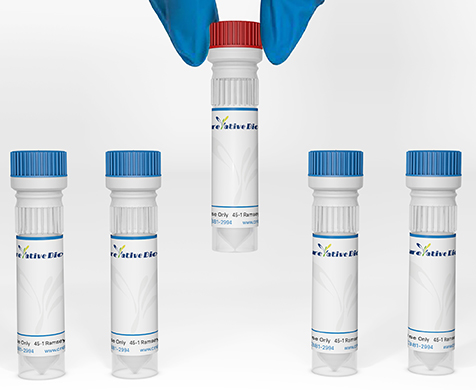
More Infomation



Hot products 
-
Mouse Anti-GGT1 Recombinant Antibody (1F9) (CBMAB-G3273-LY)

-
Mouse Anti-ARSA Recombinant Antibody (CBYC-A799) (CBMAB-A3679-YC)

-
Mouse Anti-AAV9 Recombinant Antibody (V2-634029) (CBMAB-AP023LY)

-
Mouse Anti-CAPZB Recombinant Antibody (CBYY-C0944) (CBMAB-C2381-YY)

-
Mouse Anti-GLP1R Recombinant Antibody (4F3) (CBMAB-G0521-LY)

-
Mouse Anti-ARG1 Recombinant Antibody (CBYCL-103) (CBMAB-L0004-YC)

-
Rat Anti-CD300A Recombinant Antibody (172224) (CBMAB-C0423-LY)

-
Mouse Anti-CD24 Recombinant Antibody (HIS50) (CBMAB-C10123-LY)

-
Mouse Anti-dsDNA Recombinant Antibody (22) (CBMAB-AP1954LY)

-
Mouse Anti-CD46 Recombinant Antibody (CBFYC-0076) (CBMAB-C0085-FY)

-
Mouse Anti-B2M Recombinant Antibody (CBYY-0050) (CBMAB-0050-YY)

-
Mouse Anti-ADAM29 Recombinant Antibody (V2-179787) (CBMAB-A1149-YC)

-
Rat Anti-CD63 Recombinant Antibody (7G4.2E8) (CBMAB-C8725-LY)

-
Mouse Anti-AKR1B1 Antibody (V2-2449) (CBMAB-1001CQ)

-
Rabbit Anti-ATF4 Recombinant Antibody (D4B8) (CBMAB-A3872-YC)

-
Mouse Anti-EGR1 Recombinant Antibody (CBWJZ-100) (CBMAB-Z0289-WJ)

-
Rabbit Anti-BAD (Phospho-Ser136) Recombinant Antibody (CAP219) (CBMAB-AP536LY)

-
Mouse Anti-CCDC6 Recombinant Antibody (CBXC-0106) (CBMAB-C5397-CQ)

-
Mouse Anti-CD8 Recombinant Antibody (C1083) (CBMAB-C1083-LY)

-
Mouse Anti-ALB Recombinant Antibody (V2-180650) (CBMAB-A2186-YC)

For Research Use Only. Not For Clinical Use.
(P): Predicted
* Abbreviations
- AActivation
- AGAgonist
- APApoptosis
- BBlocking
- BABioassay
- BIBioimaging
- CImmunohistochemistry-Frozen Sections
- CIChromatin Immunoprecipitation
- CTCytotoxicity
- CSCostimulation
- DDepletion
- DBDot Blot
- EELISA
- ECELISA(Cap)
- EDELISA(Det)
- ESELISpot
- EMElectron Microscopy
- FFlow Cytometry
- FNFunction Assay
- GSGel Supershift
- IInhibition
- IAEnzyme Immunoassay
- ICImmunocytochemistry
- IDImmunodiffusion
- IEImmunoelectrophoresis
- IFImmunofluorescence
- IGImmunochromatography
- IHImmunohistochemistry
- IMImmunomicroscopy
- IOImmunoassay
- IPImmunoprecipitation
- ISIntracellular Staining for Flow Cytometry
- LALuminex Assay
- LFLateral Flow Immunoassay
- MMicroarray
- MCMass Cytometry/CyTOF
- MDMeDIP
- MSElectrophoretic Mobility Shift Assay
- NNeutralization
- PImmunohistologyp-Paraffin Sections
- PAPeptide Array
- PEPeptide ELISA
- PLProximity Ligation Assay
- RRadioimmunoassay
- SStimulation
- SESandwich ELISA
- SHIn situ hybridization
- TCTissue Culture
- WBWestern Blot

Online Inquiry