
SALL4 Antibodies
Background
SALL4 is a gene that encodes transcription factors and is mainly expressed during the embryonic development of vertebrates, especially playing a key role in maintaining the pluripotency and self-renewal of stem cells. This gene participates in core biological processes such as early embryonic tissue formation and germ cell development by regulating the expression of downstream target genes. Research has found that the abnormal expression of SALL4 is closely related to the occurrence and development of various malignant tumors, especially in acute myeloid leukemia and germ cell tumors, it is often used as a diagnostic marker. After its function was first systematically explained in 2002, this gene has become an important object of research in developmental biology and oncology. Its complex regulatory network provides a key theoretical basis for understanding the mechanism of cell differentiation and targeted treatment of diseases.
Structure of SALL4
SALL4 is a zinc finger transcription factor with a molecular weight of approximately 105 kDa. The molecular weights among different species are highly conserved, but their functional domain structures have undergone adaptive differentiation during evolution.
| Species | Human | Mouse | Zebrafish | Fruit fly |
| Molecular Weight (kDa) | 105 | 103 | 98 | 62 |
| Primary Structural Differences | Contains seven C2H2 zinc finger domains | Zinc fingers have a highly homologous structure | The structure of the core zinc finger is conserved | Only retain some homologous domains |
The SALL4 protein typically contains over 1,300 amino acids, and both its N-terminal and C-terminal contain multiple tandem C2H2-type zinc finger modules, forming a typical DNA-binding structure. These domains bind to the GC-rich sequence in the promoter region of the target gene through specific spatial folding. Its nuclear localization signaling and transcriptional regulatory functional domains are mainly located in the middle of the protein. Through interaction with histone modification complexes (such as NuRD), it achieves precise regulation of the pluripotency gene network of embryonic stem cells.
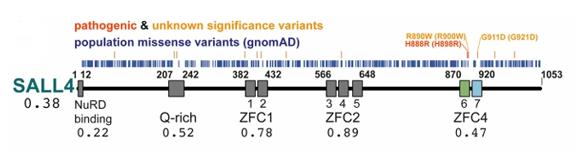 Fig. 1 Domain overview of human SALL4 protein.1
Key structural properties of SALL4:
- Compact α-helical structure
- Hydrophobic core surrounding the heme group
- Iron-containing heme for oxygen binding
- Histidine residues regulate oxygen affinity and prevent oxidative damage
Functions of SALL4
SALL4 mainly functions as a core transcription factor regulating the pluripotency and self-renewal of stem cells, and is also deeply involved in complex biological processes such as embryonic development, cell fate determination, and tumorigenesis.
| Function | Description |
| Maintain the pluripotency of stem cells | By activating the expression networks of pluripotent genes such as Oct4 and Nanog, the undifferentiated state and self-renewal ability of embryonic stem cells can be ensured. |
| Regulate the development of early embryos | Specific expression in the blastocyst and primitive germ cells, lineage differentiation and organ of mesoderm and endoderm form key regulatory role. |
| Participate in tumorigenesis and progression | In a variety of cancers, such as acute myeloid leukemia, hepatocellular carcinoma, germ cell tumors), abnormally high expression in promoting cell proliferation, invasion, and treatment resistance. |
| Chromatin remodeling and epigenetic regulation | By recruiting chromatin modification complexes such as NuRD, the histone modification status of target genes is regulated, thereby influencing their transcriptional activity. |
| Potential for tissue regeneration and repair | In adult tissues, such as heart, liver damage repair process can be reactivated, involved in regulation of proliferation and differentiation of precursor cells organization. |
SALL4 binds to the specific GC-rich sequence in the promoter region of the target gene through its zinc finger domain, and its regulatory effect is highly context-dependent: In embryonic stem cells, it mainly serves as a transcriptional activator to maintain pluripotency, while in certain somatic cells or tumor environments, it may exert inhibitory functions by binding to different co-inhibitory factors. This dual role reflects its complex regulatory logic in development and disease.
Applications of SALL4 and SALL4 Antibody in Literature
1. Liu, Jun, et al. "SALL4 and microRNA: the role of Let-7." Genes 12.9 (2021): 1301. https://doi.org/10.3390/genes12091301
The article indicates that SALL4 is abnormally activated in various cancers and participates in tumorigenesis and drug resistance regulation. Recent studies have found that micrornas such as the Let-7/Lin28 axis can regulate the expression of SALL4. Based on this, targeted therapeutic strategies are emerging as a new direction in cancer treatment.
2. Moein, Shiva, et al. "SALL4: an intriguing therapeutic target in cancer treatment." Cells 11.16 (2022): 2601. https://doi.org/10.3390/cells11162601
The article indicates that SALL4 is a key factor in tumorigenesis, but it is difficult to target as a transcription factor. The article explores the limitations of existing targeting strategies and highlights the novel therapeutic potential of using a degrader system to attack the SALL4 oncogene.
3. Sun, Boshu, et al. "SALL4 oncogenic function in cancers: mechanisms and therapeutic relevance." International Journal of Molecular Sciences 23.4 (2022): 2053. https://doi.org/10.3390/ijms23042053
The article indicates that SALL4 is highly expressed in various cancers, promotes malignant tumor progression by activating multiple pathways such as Wnt/β-catenin, and interacts with the tumor immune microenvironment. Its key carcinogenic mechanism makes it a highly potential therapeutic target, but further exploration is still needed.
4. Wang, Tairan, et al. "SALL4 in gastrointestinal tract cancers: upstream and downstream regulatory mechanisms." Molecular Medicine 30.1 (2024): 46. https://doi.org/10.1186/s10020-024-00812-z
The article indicates that SALL4 is overexpressed in digestive tract tumors and promotes tumor growth and migration by regulating related genes and pathways. This article reviews the mechanism of action of SALL4 and explores the potential possibility of using it as a therapeutic target.
5. Donovan, Katherine A., et al. "Thalidomide promotes degradation of SALL4, a transcription factor implicated in Duane Radial Ray syndrome." elife 7 (2018): e38430. https://doi.org/10.7554/eLife.38430
The article indicates that thalidomide can induce the degradation of SALL4 protein, which is directly related to the birth defects specific to thalidomide syndrome. The species-specific damage mechanism lies in the fact that this degradation process only occurs in humans and primates.
Creative Biolabs: SALL4 Antibodies for Research
Creative Biolabs specializes in the production of high-quality SALL4 antibodies for research and industrial applications. Our portfolio includes monoclonal antibodies tailored for ELISA, Flow Cytometry, Western blot, immunohistochemistry, and other diagnostic methodologies.
- Custom SALL4 Antibody Development: Tailor-made solutions to meet specific research requirements.
- Bulk Production: Large-scale antibody manufacturing for industry partners.
- Technical Support: Expert consultation for protocol optimization and troubleshooting.
- Aliquoting Services: Conveniently sized aliquots for long-term storage and consistent experimental outcomes.
For more details on our SALL4 antibodies, custom preparations, or technical support, contact us at email.
Reference
- Watson, James A., et al. "Structure of SALL4 zinc finger domain reveals link between AT-rich DNA binding and Okihiro syndrome." Life Science Alliance 6.3 (2023). https://doi.org/10.26508/lsa.202201588
Anti-SALL4 antibodies
 Loading...
 Compare




Hot products 
- AActivation
- AGAgonist
- APApoptosis
- BBlocking
- BABioassay
- BIBioimaging
- CImmunohistochemistry-Frozen Sections
- CIChromatin Immunoprecipitation
- CTCytotoxicity
- CSCostimulation
- DDepletion
- DBDot Blot
- EELISA
- ECELISA(Cap)
- EDELISA(Det)
- ESELISpot
- EMElectron Microscopy
- FFlow Cytometry
- FNFunction Assay
- GSGel Supershift
- IInhibition
- IAEnzyme Immunoassay
- ICImmunocytochemistry
- IDImmunodiffusion
- IEImmunoelectrophoresis
- IFImmunofluorescence
- IGImmunochromatography
- IHImmunohistochemistry
- IMImmunomicroscopy
- IOImmunoassay
- IPImmunoprecipitation
- ISIntracellular Staining for Flow Cytometry
- LALuminex Assay
- LFLateral Flow Immunoassay
- MMicroarray
- MCMass Cytometry/CyTOF
- MDMeDIP
- MSElectrophoretic Mobility Shift Assay
- NNeutralization
- PImmunohistologyp-Paraffin Sections
- PAPeptide Array
- PEPeptide ELISA
- PLProximity Ligation Assay
- RRadioimmunoassay
- SStimulation
- SESandwich ELISA
- SHIn situ hybridization
- TCTissue Culture
- WBWestern Blot
