
TYMS Antibodies
Background
The TYMS gene encodes thymidylate synthase, a key protein that catalyzes the biosynthesis of thymine nucleotides and is mainly present in the nucleus and cytoplasm of all proliferating cells. This enzyme maintains genomic stability by converting deoxyuridine acid into deoxythymidylate, providing essential precursors for DNA replication and repair. Its activity significantly increases in the S phase of the cell cycle and has become an important target for tumor chemotherapy. Multiple inhibitors have been developed to block DNA synthesis in rapidly dividing cancer cells. The structure and function of this gene have been gradually clarified since the 1970s. The research on its catalytic mechanism and allosteric regulation has greatly promoted the development of the field of nucleotide metabolism and provided a key molecular basis for the design of anti-tumor and anti-parasitic drugs.
Structure of TYMS
The monomer molecular weight of thymidylate synthase encoded by the TYMS gene varies among different species, mainly due to minor sequence variations at the N-terminal or C-terminal, but the catalytic core region is highly conserved.
| Species | Human | Mouse | E. coli |
| Molecular Weight (kDa) | ~35 | ~36 | ~30 |
| Primary Structural Differences | Typical eukaryotic two-domain proteins | The N-terminal regulatory region is slightly different | The structure is more compact and has no dual domains |
This protein monomer is composed of approximately 300 amino acids, and its core three-dimensional structure is a classic TIM barrel-shaped fold, forming a tightly bound active site. This site contains a crucial cysteine residue (Cys195 in humans), which can form a covalent intermediate with the substrate dUMP. The secondary structure of the protein is mainly composed of alternating α -helices and β -folds, which jointly surround and stabilize the binding pocket of the cofactor 5, 10-methylenetetrahydrofolate. The conserved residue networks such as arginine and aspartic acid in the active site jointly and precisely regulate the key methyl transfer step in the catalytic reaction. The functional form of this enzyme is a homodimer, and its interfacial interaction is crucial for maintaining the catalytic conformation.
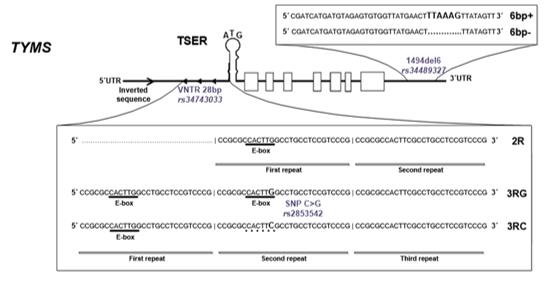 Fig. 1 Genetic Variations in TYMS: Implications for Enzyme Function and Disease Association.1
Key structural properties of TYMS:
- Classical TIM barrel (α/β) fold structure
- Conserved active sites contain cysteine residues essential for catalysis
- The binding pocket relies on 5, 10-methylene tetrahydrofolate as a methyl donor
Functions of TYMS
The main function of the TYMS gene is to catalyze the biosynthesis of thymine nucleotides (dTMP), which are essential for DNA synthesis. In addition, it also plays a key role in cell cycle regulation, maintaining genomic stability and responding to anti-cancer drugs.
| Function | Description |
| dTMP synthesis | Catalyze the conversion of deoxyuridine (dUMP) to deoxythymidylate (dTMP), which is the rate-limiting step in DNA replication. |
| Cell cycle regulation | The expression level significantly increases in the S phase, providing sufficient precursors for DNA replication and driving cell proliferation. |
| Genomic stability | Maintain the balance of the dTMP library, prevent uracil from being wrongly incorporated into DNA, and reduce the accumulation of mutations. |
| Chemotherapy target | It is the main target of chemotherapy drugs such as 5-fluorouracil (5-FU), and inhibiting its activity can block DNA synthesis in tumor cells. |
| Prognostic markers | In various cancers, its overexpression is associated with chemotherapy resistance and poor prognosis. |
The catalytic mechanism of this enzyme involves a covalently catalyzed methyl transfer process, which requires the participation of the cofactor 5, 10-methylenetetrahydrofolate. Its activity is subject to strict feedback inhibition and transcriptional regulation, ensuring the homeostasis of nucleotide metabolism.
Applications of TYMS and TYMS Antibody in Literature
- Li, Gang, et al. "ARDS and aging: TYMS emerges as a promising biomarker and therapeutic target." Frontiers in Immunology 15 (2024): 1365206. https://doi.org/10.3389/fimmu.2024.1365206
Research has found that the aging-related gene TYMS plays a key role in the pathogenesis of ARDS in the elderly by mediating endothelial cell damage and inflammatory responses, and can serve as a potential diagnostic marker and therapeutic target.
- Guijarro, Maria V., et al. "TYMS promotes genomic instability and tumor progression in Ink4a/Arf null background." Oncogene 42.23 (2023): 1926-1939. https://doi.org/10.1038/s41388-023-02694-7
This study demonstrates that in the context of Ink4a/Arf deletion, overexpression of TYMS accelerates tumorigenesis and metastasis, and the mechanism is related to enhanced genomic instability, suggesting that TYMS is a potential therapeutic target.
- Chen, Jingtian, et al. "TYMS enhances colorectal cell antioxidant capacity via the KEAP1-NRF2 pathway to resist ferroptosis." Journal of Cancer 16.2 (2025): 417. https://doi.org/10.7150/jca.102931
This study confirmed that TYMS expression is upregulated in colorectal cancer. It enhances the antioxidant capacity of cells through the KEAP1-NRF2 pathway, thereby resisting ferroptosis and promoting tumor progression.
- Wang, Liang, et al. "FOXM1-induced TYMS upregulation promotes the progression of hepatocellular carcinoma." Cancer cell international 22.1 (2022): 47. https://doi.org/10.1186/s12935-021-02372-2
Studies have revealed that TYMS is highly expressed in hepatocellular carcinoma, promoting tumor proliferation and invasion through the FOXM1-TYMS axis and leading to 5-FU resistance, suggesting it as a potential therapeutic target.
- Chmielewska-Kassassir, Małgorzata, et al. "Evening Primrose Extract Modulates TYMS Expression via SP1 Transcription Factor in Malignant Pleural Mesothelioma." Cancers 15.20 (2023): 5003. https://doi.org/10.3390/cancers15205003
Research has revealed that EPE extract can down-regulate the expression of TYMS in pleural mesothelioma by occupying the SP1 binding site, reverse cell invasion and epithelial-mesenchymal transition phenotypes, and provide a new direction for treatment.
Creative Biolabs: TYMS Antibodies for Research
Creative Biolabs specializes in the production of high-quality TYMS antibodies for research and industrial applications. Our portfolio includes monoclonal antibodies tailored for ELISA, Flow Cytometry, Western blot, immunohistochemistry, and other diagnostic methodologies.
- Custom TYMS Antibody Development: Tailor-made solutions to meet specific research requirements.
- Bulk Production: Large-scale antibody manufacturing for industry partners.
- Technical Support: Expert consultation for protocol optimization and troubleshooting.
- Aliquoting Services: Conveniently sized aliquots for long-term storage and consistent experimental outcomes.
For more details on our TYMS antibodies, custom preparations, or technical support, contact us at email.
Reference
- Lima, Aurea, et al. "Role of key TYMS polymorphisms on methotrexate therapeutic outcome in portuguese rheumatoid arthritis patients." PloS one 9.10 (2014): e108165. https://doi.org/10.1371/journal.pone.0108165
Anti-TYMS antibodies
 Loading...
 Compare



Hot products 
- AActivation
- AGAgonist
- APApoptosis
- BBlocking
- BABioassay
- BIBioimaging
- CImmunohistochemistry-Frozen Sections
- CIChromatin Immunoprecipitation
- CTCytotoxicity
- CSCostimulation
- DDepletion
- DBDot Blot
- EELISA
- ECELISA(Cap)
- EDELISA(Det)
- ESELISpot
- EMElectron Microscopy
- FFlow Cytometry
- FNFunction Assay
- GSGel Supershift
- IInhibition
- IAEnzyme Immunoassay
- ICImmunocytochemistry
- IDImmunodiffusion
- IEImmunoelectrophoresis
- IFImmunofluorescence
- IGImmunochromatography
- IHImmunohistochemistry
- IMImmunomicroscopy
- IOImmunoassay
- IPImmunoprecipitation
- ISIntracellular Staining for Flow Cytometry
- LALuminex Assay
- LFLateral Flow Immunoassay
- MMicroarray
- MCMass Cytometry/CyTOF
- MDMeDIP
- MSElectrophoretic Mobility Shift Assay
- NNeutralization
- PImmunohistologyp-Paraffin Sections
- PAPeptide Array
- PEPeptide ELISA
- PLProximity Ligation Assay
- RRadioimmunoassay
- SStimulation
- SESandwich ELISA
- SHIn situ hybridization
- TCTissue Culture
- WBWestern Blot
