
KLF4 Antibodies
Background
KLF4 is a zinc-containing finger structure transcription factor that is widely expressed in various mammalian tissues, especially playing an important role in the skin, gastrointestinal mucosa and vascular endothelial cells. This protein participates in regulating key biological processes such as cell proliferation, differentiation, apoptosis and somatic cell reprogramming by binding to the GC box elements in the promoter region of specific genes. Research has found that KLF4 can work in synergy with factors such as OCT4 and SOX2 to induce adult cells to transform into induced pluripotent stem cells. This breakthrough achievement has opened up a new path for regenerative medicine research. Due to its dual characteristics of both inhibiting tumor growth and potentially promoting the progression of malignant tumors under different pathological conditions, KLF4 has become an important target molecule in the fields of cancer research and tissue engineering. Its dynamic regulatory network and precise mechanism of action remain a hot direction in current molecular biology research.
Structure of KLF4
KLF4 is a transcription factor with a molecular weight of approximately 55 kDa. Its precise molecular weight may fluctuate slightly due to subtle differences in amino acid composition among different species.
| Species | Human | Mouse | Rat | African clawed toad |
| Molecular Weight (kDa) | 55 | 53 | 54 | 56 |
| Primary Structural Differences | Containing three C2H2 zinc finger domain structure | Zinc finger domain is highly conserved | DNA binding domain highly homologous with humans | There exists an additional alternative spliceosome |
This protein is composed of approximately 480 amino acids, and its core function depends on three tandem C2H2-type zinc finger domains at the carboxyl terminus. This structure can specifically recognize and bind to the GC box sequence in the promoter region of the target gene. The N-terminal region of proteins is rich in proline and serine. As an important transcriptional regulatory module, its activity and stability are precisely regulated by a wide range of post-translational modifications (such as acetylation, phosphorylation, and SUMOylation). This structural feature enables KLF4 to flexibly perform the dual functions of activating or inhibiting gene transcription depending on the cell type and signaling environment.
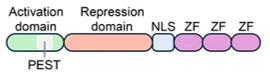 Fig. 1 A diagram depicting the main domains in the KLF4 protein.1
Key structural properties of KLF4:
- The carboxyl terminus contains three highly conserved C2H2-type zinc finger domains
- Proline/serine-rich transcriptional regulatory region at the amino terminal
- Specialized DNA-binding domains can recognize the promoter elements of the GC frame
- Multiple phosphorylation sites achieve functional plasticity regulation
Functions of KLF4
The core function of KLF4 is to regulate the cell cycle and differentiation process, and it also participates in the regulation of various pathophysiological processes.
| Function | Description |
| Proliferation regulation | By regulating the expression of genes such as p21, it can achieve key arrest of the G1/S phase of the cell cycle and affect the cell proliferation rate. |
| Differentiation induction | Promote the terminal differentiation in a variety of epithelial tissue, such as formation and the function of the intestinal epithelial cells in the skin cutin mature. |
| Reprogramming collaboration | Cooperating with transcription factors such as OCT4 and SOX4 to confer somatic cell pluripotency is one of the key factors in iPSC induction. |
| Dual oncogene effect | Depending on the differences in tissue environment, it can not only inhibit the progression of tumors such as colorectal cancer, but also promote invasion in some malignant gliomas. |
| Stress response | Participate in cells to DNA damage and oxidative stress stimulation of adaptive response, affecting cell fate decisions. |
The regulation of target genes by KLF4 shows a high degree of environmental dependence. Its activation or inhibition functions are often jointly determined by the combination of co-regulatory factors and specific post-translational modification patterns, which explains its dual role in maintaining homeostasis and disease occurrence.
Applications of KLF4 and KLF4 Antibody in Literature
1. Luo, Xiaoya, et al. "Prognostic significance of KLF4 in solid tumours: an updated meta-analysis." BMC cancer 22.1 (2022): 181. https://doi.org/10.1186/s12885-022-09198-9
This study evaluated the prognostic value of KLF4 in different cancers through meta-analysis. The results showed that KLF4 expression was not significantly correlated with the overall survival, disease-free survival, or disease-specific survival rate of patients.
2. Ju, Yunjie, et al. "KLF4: a multifunctional nexus connecting tumor progression and immune regulation." Frontiers in Immunology 16 (2025): 1514780. https://doi.org/10.3389/fimmu.2025.1514780
This study explored the prognostic value of KLF4 in different cancers through meta-analysis. The results showed that the expression level of KLF4 had no significant correlation with prognostic indicators such as the overall survival and disease-free survival of patients.
3. Ding, Haoran, et al. "KLF4 inhibited the senescence-associated secretory phenotype in ox-LDL-treated endothelial cells via PDGFRA/NAMPT/mitochondrial ROS." Aging (Albany NY) 16.9 (2024): 8070. https://doi.org/10.18632/aging.205805
This study reveals that under the induction of oxidized low-density lipoprotein (ox-LDL), the transcription factor KLF4 can directly activate the PDGFRA gene, thereby regulating NAMPT and mitochondrial reactive oxygen species pathways, effectively inhibiting the senescence-related secretory phenotype (SASP) of vascular endothelial cells and delaying cellular senescence.
4. Blum, Andrew, et al. "KLF4 regulates metabolic homeostasis in response to stress." Cells 10.4 (2021): 830. https://doi.org/10.3390/cells10040830
This study reveals that the transcription factor KLF4 enhances the energy efficiency of tumor cells under metabolic stress by strengthening glucose metabolism, promoting the membrane localization of GLUT1, and reducing reactive oxygen species levels. However, the expression of KLF4 also leads to an increase in autophagic death during glucose starvation, reflecting its role as a tumor suppressor gene.
5. Lacorazza, H. Daniel. "The reprogramming factor KLF4 in normal and malignant blood cells." Frontiers in Immunology 16 (2025): 1584181. https://doi.org/10.3389/fimmu.2025.1584181
This study reveals that KLF4 is a multifunctional transcription factor that regulates gene expression through multiple mechanisms such as epigenetics. It is not only a key factor in inducing pluripotent stem cells, but also plays a core role in innate and adaptive immunity (especially in macrophage function) and leukemia.
Creative Biolabs: KLF4 Antibodies for Research
Creative Biolabs specializes in the production of high-quality KLF4 antibodies for research and industrial applications. Our portfolio includes monoclonal antibodies tailored for ELISA, Flow Cytometry, Western blot, immunohistochemistry, and other diagnostic methodologies.
- Custom KLF4 Antibody Development: Tailor-made solutions to meet specific research requirements.
- Bulk Production: Large-scale antibody manufacturing for industry partners.
- Technical Support: Expert consultation for protocol optimization and troubleshooting.
- Aliquoting Services: Conveniently sized aliquots for long-term storage and consistent experimental outcomes.
For more details on our KLF4 antibodies, custom preparations, or technical support, contact us at email.
Reference
- Lacorazza, H. Daniel. "The reprogramming factor KLF4 in normal and malignant blood cells." Frontiers in Immunology 16 (2025): 1584181. https://doi.org/10.3389/fimmu.2025.1584181
Anti-KLF4 antibodies
Products List
 Loading...
 Compare




Hot products 
-
Mouse Anti-AFM Recombinant Antibody (V2-634159) (CBMAB-AP185LY)

-
Mouse Anti-AMOT Recombinant Antibody (CBYC-A564) (CBMAB-A2552-YC)

-
Mouse Anti-FLT1 Recombinant Antibody (11) (CBMAB-V0154-LY)

-
Mouse Anti-CD19 Recombinant Antibody (CBXC-1224) (CBMAB-C1491-CQ)

-
Mouse Anti-ACKR3 Recombinant Antibody (V2-261265) (CBMAB-C1023-LY)

-
Mouse Anti-GFAP Recombinant Antibody (24) (CBMAB-G2927-LY)

-
Mouse Anti-ARID3A Antibody (A4) (CBMAB-0128-YC)

-
Mouse Anti-ARHGDIA Recombinant Antibody (CBCNA-009) (CBMAB-R0415-CN)

-
Mouse Anti-COL12A1 Recombinant Antibody (CBYY-C3117) (CBMAB-C4560-YY)

-
Mouse Anti-AKR1C3 Recombinant Antibody (V2-12560) (CBMAB-1050-CN)

-
Rabbit Anti-CCL5 Recombinant Antibody (R0437) (CBMAB-R0437-CN)

-
Rat Anti-AChR Recombinant Antibody (V2-12500) (CBMAB-0990-CN)

-
Mouse Anti-dsDNA Recombinant Antibody (22) (CBMAB-AP1954LY)

-
Mouse Anti-CCND2 Recombinant Antibody (DCS-3) (CBMAB-G1318-LY)

-
Rabbit Anti-Acetyl-Histone H4 (Lys16) Recombinant Antibody (V2-623415) (CBMAB-CP1021-LY)

-
Mouse Anti-BIRC5 Recombinant Antibody (6E4) (CBMAB-CP2646-LY)

-
Mouse Anti-AKT1/AKT2/AKT3 (Phosphorylated T308, T309, T305) Recombinant Antibody (V2-443454) (PTM-CBMAB-0030YC)

-
Mouse Anti-C4B Recombinant Antibody (CBYY-C2996) (CBMAB-C4439-YY)

-
Mouse Anti-AFDN Recombinant Antibody (V2-58751) (CBMAB-L0408-YJ)

-
Mouse Anti-ATM Recombinant Antibody (2C1) (CBMAB-A3970-YC)

- AActivation
- AGAgonist
- APApoptosis
- BBlocking
- BABioassay
- BIBioimaging
- CImmunohistochemistry-Frozen Sections
- CIChromatin Immunoprecipitation
- CTCytotoxicity
- CSCostimulation
- DDepletion
- DBDot Blot
- EELISA
- ECELISA(Cap)
- EDELISA(Det)
- ESELISpot
- EMElectron Microscopy
- FFlow Cytometry
- FNFunction Assay
- GSGel Supershift
- IInhibition
- IAEnzyme Immunoassay
- ICImmunocytochemistry
- IDImmunodiffusion
- IEImmunoelectrophoresis
- IFImmunofluorescence
- IGImmunochromatography
- IHImmunohistochemistry
- IMImmunomicroscopy
- IOImmunoassay
- IPImmunoprecipitation
- ISIntracellular Staining for Flow Cytometry
- LALuminex Assay
- LFLateral Flow Immunoassay
- MMicroarray
- MCMass Cytometry/CyTOF
- MDMeDIP
- MSElectrophoretic Mobility Shift Assay
- NNeutralization
- PImmunohistologyp-Paraffin Sections
- PAPeptide Array
- PEPeptide ELISA
- PLProximity Ligation Assay
- RRadioimmunoassay
- SStimulation
- SESandwich ELISA
- SHIn situ hybridization
- TCTissue Culture
- WBWestern Blot
