
FABP5 Antibodies
Background
FABP5 (Fatty Acid Binding Protein 5) belongs to the fatty acid binding protein family and is a small molecule cytoplasmic protein mainly expressed in the epidermis, adipose tissue, and specific cancer cells. This protein is responsible for binding and transporting long-chain fatty acids and participates in intracellular lipid metabolism, signal transduction, and gene expression regulation processes. In the tumor microenvironment, FABP5 promotes the proliferation and migration of cancer cells by regulating the distribution of fatty acids, and is closely related to the progression of various malignant tumors. Since it was systematically studied in the 1990s, this protein has become an important target for research on metabolic diseases and cancer treatment. Its specific mechanism of interaction with ligands provides a key theoretical basis for the development of targeted drugs targeting lipid metabolism pathways.
Structure of FABP5
FABP5 (Fatty Acid Binding Protein 5) is a relatively small intracellular protein with a molecular weight of approximately 15.2 kDa. The molecular weight of this protein may vary slightly among different species, mainly due to minor changes in its amino acid sequence.
| Species | Human | Mouse | Rat | Pig |
| Molecular Weight (kDa) | About 15.2 | About 15.0 | About 15.1 | About 15.3 |
The main structural differences are as follows: Human FABP5 has a highly conserved amino acid sequence, and the core fatty acid binding domain is similar in mammals; there are individual amino acid substitutions among different species, which may affect its binding affinity to specific fatty acid ligands.
The FABP5 protein is composed of approximately 135 amino acid residues and exhibits a typical β-barrel-like folding structure. Its three-dimensional structure has a core that is a barrel-shaped cavity surrounded by 10 antiparallel β-sheet segments. This hydrophobic cavity is specifically used for binding long-chain fatty acid molecules. The N-terminal region of the protein forms a "lid" structure, regulating the entry and exit of ligands. The key amino acid residues (such as arginine and tyrosine) within the ligand binding pocket stabilize the fatty acid chain through hydrogen bonds and hydrophobic interactions, determining the specificity and function of ligand binding.
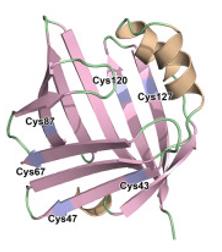 Fig. 1 FABP5 Structure with 6 Cysteines1
Key structural properties of FABP5:
- Typical β-barrel-like folding structure
- Hydrophobic ligand-binding pocket formed by 10 antiparallel β-strands
- Highly conserved arginine-tyrosine networks are used to bind fatty acid carboxyl heads
- The dynamic regulation of ligand entry and release in the N-terminal "lid" region
Functions of FABP5
The core function of the protein encoded by the FABP5 gene is to act as a transporter and regulator of fatty acids within cells. Additionally, it is also widely involved in various physiological and pathological processes such as cell signal transduction, proliferation and differentiation, and inflammatory responses.
| Function | Description |
| Fatty Acid Transport | It binds and transports long-chain fatty acids within the cytoplasm, transporting them from the cell membrane to organelles such as peroxisomes and endoplasmic reticulum for metabolism. |
| Lipid Signaling Transduction | As a partner of lipid signaling molecules (such as endogenous cannabinoids, arachidonic acid derivatives), it participates in regulating the transcriptional activity of nuclear receptors like PPAR. |
| Cell Growth and Differentiation | It is highly expressed in epidermal cells and adipocytes, and influences the proliferation and differentiation process of cells by regulating the lipid metabolism network. |
| Inflammatory Response Regulation | By influencing the production and release of inflammatory mediators such as arachidonic acid, it participates in regulating local and systemic inflammatory responses. |
| Tumor Occurrence and Development | Overexpressed in various cancer cells, it promotes fatty acid uptake and metabolic reprogramming, providing energy and raw materials for cell proliferation and migration of cancer cells. |
Unlike single-function transport proteins, the ligand binding kinetics of FABP5 exhibit a broad-spectrum and adjustable characteristic, enabling it to respond to various lipid signals and integrate metabolic and signaling pathways. It plays a pivotal role in maintaining energy homeostasis and in disease development. Particularly in the tumor microenvironment, its upregulation is significantly associated with poor patient prognosis, highlighting its crucial role under pathological conditions.
Applications of FABP5 and FABP5 Antibody in Literature
1. Guo, Yuxian, et al. "Oxidative stress-induced FABP5 S-glutathionylation protects against acute lung injury by suppressing inflammation in macrophages." Nature communications 12.1 (2021): 7094. https://doi.org/10.1038/s41467-021-27428-9
The article indicates that in acute lung injury, oxidative stress leads to a decrease in glutathione peroxidase 1 (Grx1) in macrophages. The study found that under oxidative conditions, the Cys127 site of FABP5 protein undergoes S-glutathionylation. This modification enhances its ability to bind fatty acids, enter the nucleus, and interact with PPARβ/δ, thereby activating anti-inflammatory target genes and alleviating the inflammatory response.
2. Zhang, Chunyu, et al. "FABP5 promotes lymph node metastasis in cervical cancer by reprogramming fatty acid metabolism." Theranostics 10.15 (2020): 6561. https://doi.org/10.7150/thno.44868
Studies have confirmed that lymph node metastasis of cervical cancer is associated with the upregulation of FABP5 expression. This protein reprograms fatty acid metabolism and activates the NF-κB signaling pathway, thereby inducing tumor metastasis. The study also found the regulatory effects of miR-144-3p and the hypoxic microenvironment on it, suggesting that FABP5 can be a potential therapeutic and diagnostic target.
3. Seo, Jieun, et al. "Fatty-acid-induced FABP5/HIF-1 reprograms lipid metabolism and enhances the proliferation of liver cancer cells." Communications biology 3.1 (2020): 638. https://doi.org/10.1038/s42003-020-01367-5
The research reveals that in liver cancer, fatty acid binding protein FABP5 interacts with the transcription factor HIF-1α. FABP5 enhances the activity of HIF-1α by promoting its synthesis and interfering with its inhibitory binding, thereby driving lipid metabolism reprogramming and tumor progression. Both high expression of FABP5 and HIF-1α indicate a poor prognosis.
4. Ye, Mujie, et al. "FABP5 suppresses colorectal cancer progression via mTOR-mediated autophagy by decreasing FASN expression." International Journal of Biological Sciences 19.10 (2023): 3115. https://doi.org/10.7150/ijbs.85285
The study found that FABP5 expression is downregulated in colorectal cancer. FABP5 binds to fatty acid synthase FASN, activates the ubiquitination degradation pathway, inhibits the mTOR signal and induces autophagy, thereby suppressing tumor growth. The upstream ALKBH5 can positively regulate FABP5 expression, revealing the crucial role of the ALKBH5/FABP5/FASN/mTOR axis.
5. Chen, Nan-Nan, et al. "Doxorubicin resistance in breast cancer is mediated via the activation of FABP5/PPARγ and CaMKII signaling pathway." Frontiers in Pharmacology 14 (2023): 1150861. https://doi.org/10.3389/fphar.2023.1150861
The study found that FABP5 is upregulated in drug-resistant breast cancer cells and enhances autophagy by regulating the PPARγ/CaMKII signaling axis, leading to resistance to doxorubicin. Inhibiting FABP5 can restore drug sensitivity, indicating that it can serve as a new target for overcoming chemotherapy resistance in breast cancer.
Creative Biolabs: FABP5 Antibodies for Research
Creative Biolabs specializes in the production of high-quality FABP5 antibodies for research and industrial applications. Our portfolio includes monoclonal and polyclonal antibodies tailored for ELISA, Flow Cytometry, Western blot, immunohistochemistry, and other diagnostic methodologies.
- Custom FABP5 Antibody Development: Tailor-made solutions to meet specific research requirements.
- Bulk Production: Large-scale antibody manufacturing for industry partners.
- Technical Support: Expert consultation for protocol optimization and troubleshooting.
- Aliquoting Services: Conveniently sized aliquots for long-term storage and consistent experimental outcomes.
For more details on our FABP5 antibodies, custom preparations, or technical support, contact us at info@creative-biolabs.com.
Reference
- Guo, Yuxian, et al. "Oxidative stress-induced FABP5 S-glutathionylation protects against acute lung injury by suppressing inflammation in macrophages." Nature communications 12.1 (2021): 7094. Distributed under Open Access license CC BY 4.0. Cropped from the original figure. https://doi.org/10.1038/s41467-021-27428-9
Anti-FABP5 antibodies
 Loading...
 Compare




Hot products 
-
Human Anti-SARS-CoV-2 S1 Monoclonal Antibody (CBFYR-0120) (CBMAB-R0120-FY)

-
Mouse Anti-CD164 Recombinant Antibody (CBFYC-0077) (CBMAB-C0086-FY)

-
Mouse Anti-CD24 Recombinant Antibody (HIS50) (CBMAB-C10123-LY)

-
Mouse Anti-C4B Recombinant Antibody (CBYY-C2996) (CBMAB-C4439-YY)

-
Mouse Anti-ARHGDIA Recombinant Antibody (CBCNA-009) (CBMAB-R0415-CN)

-
Mouse Anti-ADAM29 Recombinant Antibody (V2-179787) (CBMAB-A1149-YC)

-
Mouse Anti-DMD Recombinant Antibody (D1190) (CBMAB-D1190-YC)

-
Mouse Anti-AFDN Recombinant Antibody (V2-58751) (CBMAB-L0408-YJ)

-
Mouse Anti-DLC1 Recombinant Antibody (D1009) (CBMAB-D1009-YC)

-
Mouse Anti-ASB9 Recombinant Antibody (1D8) (CBMAB-A0529-LY)

-
Mouse Anti-BIRC3 Recombinant Antibody (16E63) (CBMAB-C3367-LY)

-
Mouse Anti-BSN Recombinant Antibody (219E1) (CBMAB-1228-CN)

-
Mouse Anti-CD83 Recombinant Antibody (HB15) (CBMAB-C1765-CQ)

-
Mouse Anti-FLT1 Recombinant Antibody (11) (CBMAB-V0154-LY)

-
Mouse Anti-APOE Recombinant Antibody (A1) (CBMAB-0078CQ)

-
Rat Anti-AChR Recombinant Antibody (V2-12500) (CBMAB-0990-CN)

-
Mouse Anti-ARSA Recombinant Antibody (CBYC-A799) (CBMAB-A3679-YC)

-
Mouse Anti-AFM Recombinant Antibody (V2-634159) (CBMAB-AP185LY)

-
Mouse Anti-CCDC25 Recombinant Antibody (CBLC132-LY) (CBMAB-C9786-LY)

-
Mouse Anti-DDC Recombinant Antibody (8E8) (CBMAB-0992-YC)

- AActivation
- AGAgonist
- APApoptosis
- BBlocking
- BABioassay
- BIBioimaging
- CImmunohistochemistry-Frozen Sections
- CIChromatin Immunoprecipitation
- CTCytotoxicity
- CSCostimulation
- DDepletion
- DBDot Blot
- EELISA
- ECELISA(Cap)
- EDELISA(Det)
- ESELISpot
- EMElectron Microscopy
- FFlow Cytometry
- FNFunction Assay
- GSGel Supershift
- IInhibition
- IAEnzyme Immunoassay
- ICImmunocytochemistry
- IDImmunodiffusion
- IEImmunoelectrophoresis
- IFImmunofluorescence
- IGImmunochromatography
- IHImmunohistochemistry
- IMImmunomicroscopy
- IOImmunoassay
- IPImmunoprecipitation
- ISIntracellular Staining for Flow Cytometry
- LALuminex Assay
- LFLateral Flow Immunoassay
- MMicroarray
- MCMass Cytometry/CyTOF
- MDMeDIP
- MSElectrophoretic Mobility Shift Assay
- NNeutralization
- PImmunohistologyp-Paraffin Sections
- PAPeptide Array
- PEPeptide ELISA
- PLProximity Ligation Assay
- RRadioimmunoassay
- SStimulation
- SESandwich ELISA
- SHIn situ hybridization
- TCTissue Culture
- WBWestern Blot
