
LIPH Antibodies
Background
LIPH is a membrane-bound phospholipase A1 that is mainly expressed in hair follicles, skin, and some digestive system tissues. This protein catalyzes the hydrolysis of phosphatidylcholine to produce lysophosphatidylcholine, participating in the regulation of lipid metabolism and cell signal transduction processes, and playing a crucial role in maintaining the hair growth cycle and skin barrier function. Studies have shown that mutations in the LIPH gene can cause autosomal recessive hereditary hypotrichosis, which affects hair follicle development by disrupting the PA/LPA signaling axis. This gene was first cloned and identified by Japanese researchers Kiyohiko Shimizu et al. in 2003. Subsequent studies revealed that the encoded protein has a typical phospholipase domain and its activity is dependent on the presence of calcium ions. This discovery laid an important foundation for understanding the mechanism of action of lipid mediators in skin biology, and also provided new molecular targets for the diagnosis and treatment of hair loss-related diseases.
Structure of LIPH
LIPH is a membrane-bound phospholipase with a molecular weight of approximately 55 kDa. Its exact size varies slightly among different species due to post-translational modifications.
| Species | Human | Mouse | Rat |
| Molecular Weight (kDa) | 55 | 54.8 | 54.9 |
| Primary Structural Differences | Contains typical phospholipase domain | Homology 85%, N-terminal slightly shorter | Highly homologous to mice |
This protein is composed of 451 amino acids and has a characteristic α/β hydrolase folding structure. Its catalytic triad (Ser154-Asp178-His241) forms the active center, which is responsible for hydrolyzing phosphatidylcholine to produce lysophosphatidylcholine. The N-terminal of the protein contains a hydrophobic transmembrane region, which can anchor LIPH to the outer surface of the cell membrane. Crystal structure analysis reveals that there is a flexible lid region above the active center, which may be involved in substrate recognition and catalytic regulation.
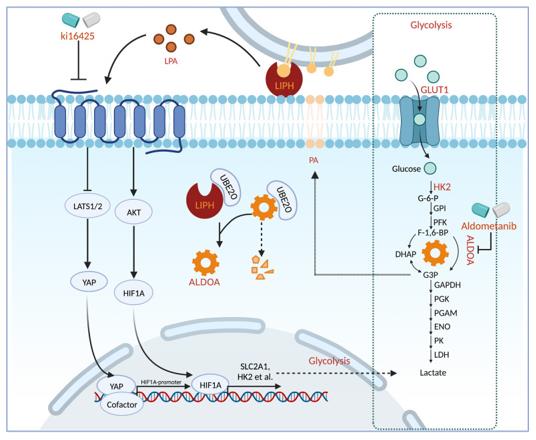 Fig. 1 LIPH promotes pancreatic cancer via LPA signaling and ALDOA stabilization.1
The key structural features of LIPH:
- Characteristic α/β hydrolase folding structure
- Conserved catalytic triad (Ser-Asp-His)
- Membrane-anchored hydrophobic transmembrane domain
- Flexible substrate binding lid region regulates catalytic activity
- Calcium ion binding site maintains enzyme activity stability
Functions of LIPH
LIPH, as a type of phospholipase, primarily functions by catalyzing the hydrolysis of phosphatidylcholine to produce lysophosphatidylcholine, thereby regulating various physiological and pathological processes.
| Function | Description |
| LPA Generation | Hydrolyzes phosphatidic acid on the outer surface of the cell membrane, generating lipid signaling molecules, lysophosphatidic acid. |
| Hair Follicle Development Regulation | Regulates hair follicle morphogenesis and hair growth cycle by activating the LPA signaling pathway. |
| Tumor Progression Promotion | Abnormally expressed in various cancers, activates the downstream PI3K/AKT pathway through LPA receptors, enhancing the proliferation, migration and invasion abilities of tumor cells. |
| Glucose Oxidation Regulation | Maintains the stability of ALDOA protein, promoting aerobic glycolysis in tumor cells. |
| Lipid Metabolism Regulation | Participates in the glycerophospholipid metabolic pathway, affecting the lipid composition of the cell membrane and lipid signal transduction. |
The LPA produced by LIPH mainly exerts its biological effects by binding to G protein-coupled receptors. Its enzymatic activity is calcium ion-dependent and shows high selectivity for phosphatidylcholine substrates.
Applications of LIPH and LIPH Antibody in Literature
1. Han, Lijie, et al. "LIPH contributes to glycolytic phenotype in pancreatic ductal adenocarcinoma by activating LPA/LPAR axis and maintaining ALDOA stability." Journal of Translational Medicine 21.1 (2023): 838. https://doi.org/10.1186/s12967-023-04702-6
The article indicates that LIPH promotes abnormal glycolysis in pancreatic cancer by activating the LPA/LPAR axis and maintaining the stability of ALDOA. The study reveals that it can serve as a prognostic marker and provides a new strategy of gemcitabine combined with targeted therapy for patients with high expression.
2. Zhang, Yixiao, et al. "LIPH promotes metastasis by enriching stem‐like cells in triple‐negative breast cancer." Journal of Cellular and Molecular Medicine 24.16 (2020): 9125-9134. https://doi.org/10.1111/jcmm.15549
The article indicates that LIPH is highly expressed in triple-negative breast cancer. By promoting stem cell characteristics, epithelial-mesenchymal transition, and mitochondrial oxidative phosphorylation, it enhances tumor metastasis and leads to poor patient prognosis, making it a potential therapeutic target.
3. Xiao, Yuhang, et al. "Long noncoding RNA LIPH-4 promotes esophageal squamous cell carcinoma progression by regulating the miR-216b/IGF2BP2 axis." Biomarker Research 10.1 (2022): 60. https://doi.org/10.1186/s40364-022-00408-x
The article indicates that LIPH-4 is highly expressed in esophageal squamous cell carcinoma. It regulates IGF2BP2 by adsorbing miR-216b, promoting tumor growth and leading to poor prognosis for patients. It can serve as a potential prognostic marker and therapeutic target.
4. Ma, Yan, et al. "Circular RNA LIPH promotes pancreatic cancer glycolysis and progression through sponge miR‐769‐3p and interaction with GOLM1." Clinical and Translational Medicine 14.8 (2024): e70003. https://doi.org/10.1002/ctm2.70003
The article indicates that circLIPH is highly expressed in pancreatic cancer and is associated with tumor size, stage, and proliferation. It exerts a carcinogenic effect by promoting cell proliferation, migration, invasion, and epithelial-mesenchymal transition, and can be used as a potential biomarker.
5. Gui, Xiaolong, et al. "Circ_LDLR promoted the development of papillary thyroid carcinoma via regulating miR-195-5p/LIPH axis." Cancer Cell International 20.1 (2020): 241. https://doi.org/10.1186/s12935-020-01327-3
The article indicates that circ_LDLR is highly expressed in papillary thyroid carcinoma. It upregulates LIPH by adsorbing miR-195-5p, promoting tumor proliferation, migration and invasion, and inhibiting apoptosis. Silencing this axis can inhibit tumor progression and provide a new target for treatment.
Creative Biolabs: LIPH Antibodies for Research
Creative Biolabs specializes in the production of high-quality LIPH antibodies for research and industrial applications. Our portfolio includes monoclonal and polyclonal antibodies tailored for ELISA, Flow Cytometry, Western blot, immunohistochemistry, and other diagnostic methodologies.
- Custom LIPH Antibody Development: Tailor-made solutions to meet specific research requirements.
- Bulk Production: Large-scale antibody manufacturing for industry partners.
- Technical Support: Expert consultation for protocol optimization and troubleshooting.
- Aliquoting Services: Conveniently sized aliquots for long-term storage and consistent experimental outcomes.
For more details on our LIPH antibodies, custom preparations, or technical support, contact us at email.
Reference
- Han, Lijie, et al. "LIPH contributes to glycolytic phenotype in pancreatic ductal adenocarcinoma by activating LPA/LPAR axis and maintaining ALDOA stability." Journal of Translational Medicine 21.1 (2023): 838. Distributed under Open Access license CC BY 4.0, without modification. https://doi.org/10.1186/s12967-023-04702-6
Anti-LIPH antibodies
 Loading...
 Compare




Hot products 
- AActivation
- AGAgonist
- APApoptosis
- BBlocking
- BABioassay
- BIBioimaging
- CImmunohistochemistry-Frozen Sections
- CIChromatin Immunoprecipitation
- CTCytotoxicity
- CSCostimulation
- DDepletion
- DBDot Blot
- EELISA
- ECELISA(Cap)
- EDELISA(Det)
- ESELISpot
- EMElectron Microscopy
- FFlow Cytometry
- FNFunction Assay
- GSGel Supershift
- IInhibition
- IAEnzyme Immunoassay
- ICImmunocytochemistry
- IDImmunodiffusion
- IEImmunoelectrophoresis
- IFImmunofluorescence
- IGImmunochromatography
- IHImmunohistochemistry
- IMImmunomicroscopy
- IOImmunoassay
- IPImmunoprecipitation
- ISIntracellular Staining for Flow Cytometry
- LALuminex Assay
- LFLateral Flow Immunoassay
- MMicroarray
- MCMass Cytometry/CyTOF
- MDMeDIP
- MSElectrophoretic Mobility Shift Assay
- NNeutralization
- PImmunohistologyp-Paraffin Sections
- PAPeptide Array
- PEPeptide ELISA
- PLProximity Ligation Assay
- RRadioimmunoassay
- SStimulation
- SESandwich ELISA
- SHIn situ hybridization
- TCTissue Culture
- WBWestern Blot
