
NR4A2 Antibodies
Background
NR4A2, as a nuclear receptor transcription factor, is mainly expressed in dopamine-producing neurons and immune regulatory cells in the central nervous system. This protein regulates the transcriptional activity of downstream genes by binding to specific DNA sequences, thereby participating in key physiological processes such as neuronal differentiation, synaptic plasticity, and inflammatory response. Abnormal function of NR4A2 is commonly observed in patients with Parkinson's disease, and its dysregulated expression can lead to the degeneration of dopamine-producing neurons. This gene was first identified in 1994, and its three-dimensional spatial structure was gradually resolved through nuclear magnetic resonance technology in the late 2000s, promoting research on the mechanisms of neural development and degenerative diseases. As a typical representative of ligand-independent nuclear receptors, the unique domain conformation and epigenetic regulatory mechanism of NR4A2 have become important research models in the fields of neuropharmacology and immune metabolism.
Structure of NR4A2
NR4A2, as a ligand-independent nuclear receptor transcription factor, has varying molecular weights among different species. Taking human NR4A2 as an example, its molecular weight is approximately 60 kDa. This value may slightly fluctuate in different mammals due to minor variations in the homologous domains.
| Species | Human | Mouse | Rat |
| Molecular Weight (kDa) | About 60 | About 59 | About 60 |
The primary structural feature of this protein is a highly conserved DNA-binding domain, which is rich in zinc finger structures and is responsible for recognizing and specifically binding to the promoter sequences of target genes. In its C-terminal ligand-binding domain, the amino acid sequence of the ligand-binding pocket varies among different species, resulting in different affinities for specific regulatory molecules. The secondary structure of NR4A2 mainly consists of multiple α-helices, which fold to form a hydrophobic core, constituting the binding interface for co-activators/co-inhibitors. The conformational changes in this region directly affect its transcriptional activity and signal transduction efficiency.
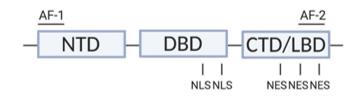 Fig. 1 Structural domains of Nr4a2.1
Key structural properties of NR4A2:
- Unique DNA-binding domain structure
- Ligand binding domains dependent on hydrophobic interactions
- Autonomous transcriptional activation structure
- Classical nuclear localization sequence
Functions of NR4A2
The protein encoded by the NR4A2 gene (also known as Nurr1) has the core function of regulating the transcription of specific genes, which is crucial for the development and homeostasis of the nervous system. Additionally, it is also involved in physiological processes such as immune regulation and metabolism.
| Function | Description |
| Neuronal Development and Survival | It plays a crucial regulatory role in the differentiation, maturation, and long-term survival of midbrain dopaminergic neurons, and is the main regulatory factor for maintaining their functional phenotype. |
| Neuroinflammation Regulation | Expressed in immune cells such as microglia, it exerts anti-neuroinflammatory effects by inhibiting the transcription of pro-inflammatory factors (such as TNF-α, IL-1β). |
| Dopamine Metabolism Regulation | It directly regulates the expression of genes such as tyrosine hydroxylase, influencing the synthesis of dopamine and is closely related to the pathological mechanism of Parkinson's disease. |
| Cellular Stress Response | Induced under conditions such as oxidative stress, it participates in the protective response of the cell and may achieve this by regulating the expression of antioxidant-related genes. |
| Metabolic homeostasis involvement | It participates in regulating the transcription of genes related to sugar and lipid metabolism in tissues such as the liver and fat, influencing energy balance. |
Unlike the classical nuclear receptors that rely on ligand activation, NR4A2 lacks the traditional ligand-binding pocket in its structure. Instead, it regulates its transcriptional activity mainly through post-translational modifications such as phosphorylation, protein interactions, and changes in its own expression level, enabling it to respond continuously and rapidly to internal and external cellular signals.
Applications of NR4A2 and NR4A2 Antibody in Literature
1. Català-Solsona, Judit, Alfredo J. Miñano-Molina, and José Rodríguez-Álvarez. "Nr4a2 transcription factor in hippocampal synaptic plasticity, memory and cognitive dysfunction: a perspective review." Frontiers in molecular neuroscience 14 (2021): 786226. https://doi.org/10.3389/fnmol.2021.786226
The article indicates that the nuclear receptor Nr4a2 is a key transcription factor that regulates hippocampal synaptic plasticity and memory formation. Its dysfunction may lead to cognitive impairment. This factor is expected to become a new synaptic therapeutic target for treating cognitive disorders such as Alzheimer's disease.
2. Woo, Marcel S., et al. "The NR4A2/VGF pathway fuels inflammation-induced neurodegeneration via promoting neuronal glycolysis." Journal of Clinical Investigation 134.16 (2024): e177692. https://doi.org/10.1172/JCI177692
The article indicates that in multiple sclerosis, the neuronal nuclear receptor NR4A2 is chronically activated by excitation, leading to continuous secretion of VGF and triggering glycolysis-dependent neuronal death. Blocking VGF can alleviate neurodegeneration, suggesting that the NR4A2-VGF axis is a key target for treating inflammatory neurodegeneration.
3. Ruiz-Sánchez, Elizabeth, et al. "Regulation of NR4A2 Gene Expression and Its Importance in Neurodegenerative and Psychiatric Diseases." International Journal of Molecular Sciences 26.18 (2025): 9162. https://doi.org/10.3390/ijms26189162
The article indicates that the transcription factor NR4A2 regulates various key physiological processes such as cell proliferation and neural development. Its gene expression is precisely regulated by epigenetic mechanisms such as DNA methylation and histone modification. In various neurological and psychiatric diseases such as Parkinson's disease and schizophrenia, the expression of NR4A2 is found to be dysregulated, making it a potential therapeutic target and biomarker.
4. Gabaldon-Albero, Alba, Sonia Mayo, and Francisco Martinez. "NR4A2 as a novel target gene for developmental and epileptic encephalopathy: a systematic review of related disorders and therapeutic strategies." International Journal of Molecular Sciences 25.10 (2024): 5198. https://doi.org/10.3390/ijms25105198
The article indicates that variations in the NR4A2 gene can lead to overall developmental delay/intellectual disability, often accompanied by drug-resistant epilepsy, movement disorders and mental problems. It is associated with neurodegenerative diseases such as Parkinson's disease and is a primary diagnostic target for developmental epileptic encephalopathy. The regulation of its transcriptional activity is also a potential therapeutic direction.
5. Ashraf, Sadia, Heinrich Taegtmeyer, and Romain Harmancey. "Prolonged cardiac NR4A2 activation causes dilated cardiomyopathy in mice." Basic Research in Cardiology 117.1 (2022): 33. https://doi.org/10.1007/s00395-022-00942-7
The article indicates that the overexpression of the transcription factor NR4A2 in cardiac muscle cells can lead to cell hypertrophy, metabolic abnormalities, multinucleation, and induce cell apoptosis, ultimately resulting in heart failure. This study reveals that NR4A2 is a key factor regulating the self-renewal and regenerative ability of cardiac muscle cells.
Creative Biolabs: NR4A2 Antibodies for Research
Creative Biolabs specializes in the production of high-quality NR4A2 antibodies for research and industrial applications. Our portfolio includes monoclonal antibodies tailored for ELISA, Flow Cytometry, Western blot, immunohistochemistry, and other diagnostic methodologies.
- Custom NR4A2 Antibody Development: Tailor-made solutions to meet specific research requirements.
- Bulk Production: Large-scale antibody manufacturing for industry partners.
- Technical Support: Expert consultation for protocol optimization and troubleshooting.
- Aliquoting Services: Conveniently sized aliquots for long-term storage and consistent experimental outcomes.
For more details on our NR4A2 antibodies, custom preparations, or technical support, contact us at email.
Reference
- Català-Solsona, Judit, Alfredo J. Miñano-Molina, and José Rodríguez-Álvarez. "Nr4a2 transcription factor in hippocampal synaptic plasticity, memory and cognitive dysfunction: a perspective review." Frontiers in molecular neuroscience 14 (2021): 786226. https://doi.org/10.3389/fnmol.2021.786226
Anti-NR4A2 antibodies
 Loading...
 Compare




Hot products 
-
Rabbit Anti-ABL1 (Phosphorylated Y185) Recombinant Antibody (V2-443434) (PTM-CBMAB-0001YC)

-
Mouse Anti-ADRB2 Recombinant Antibody (V2-180026) (CBMAB-A1420-YC)

-
Rabbit Anti-ABL1 (Phosphorylated Y245) Recombinant Antibody (V2-505716) (PTM-CBMAB-0465LY)

-
Mouse Anti-DMPK Recombinant Antibody (CBYCD-324) (CBMAB-D1200-YC)

-
Mouse Anti-GSDMA Recombinant Antibody (CBLG1-2983) (CBMAB-G5128-LY)

-
Mouse Anti-AKT1 (Phosphorylated S473) Recombinant Antibody (V2-505430) (PTM-CBMAB-0067LY)

-
Mouse Anti-GFAP Recombinant Antibody (20) (CBMAB-G2914-LY)

-
Mouse Anti-ACTB Recombinant Antibody (V2-179553) (CBMAB-A0870-YC)

-
Mouse Anti-BAD (Phospho-Ser136) Recombinant Antibody (CBYY-0138) (CBMAB-0139-YY)

-
Mouse Anti-CTCF Recombinant Antibody (CBFYC-2371) (CBMAB-C2443-FY)

-
Mouse Anti-ATM Recombinant Antibody (2C1) (CBMAB-A3970-YC)

-
Mouse Anti-FN1 Monoclonal Antibody (D6) (CBMAB-1240CQ)

-
Mouse Anti-AFDN Recombinant Antibody (V2-58751) (CBMAB-L0408-YJ)

-
Mouse Anti-BIRC5 Recombinant Antibody (6E4) (CBMAB-CP2646-LY)

-
Mouse Anti-DLG1 Monolconal Antibody (4F3) (CBMAB-0225-CN)

-
Rat Anti-CD300A Recombinant Antibody (172224) (CBMAB-C0423-LY)

-
Mouse Anti-CA9 Recombinant Antibody (CBXC-2079) (CBMAB-C0131-CQ)

-
Mouse Anti-CALR Recombinant Antibody (CBFYC-0763) (CBMAB-C0818-FY)

-
Rat Anti-C5AR1 Recombinant Antibody (8D6) (CBMAB-C9139-LY)

-
Mouse Anti-ARID1B Recombinant Antibody (KMN1) (CBMAB-A3546-YC)

- AActivation
- AGAgonist
- APApoptosis
- BBlocking
- BABioassay
- BIBioimaging
- CImmunohistochemistry-Frozen Sections
- CIChromatin Immunoprecipitation
- CTCytotoxicity
- CSCostimulation
- DDepletion
- DBDot Blot
- EELISA
- ECELISA(Cap)
- EDELISA(Det)
- ESELISpot
- EMElectron Microscopy
- FFlow Cytometry
- FNFunction Assay
- GSGel Supershift
- IInhibition
- IAEnzyme Immunoassay
- ICImmunocytochemistry
- IDImmunodiffusion
- IEImmunoelectrophoresis
- IFImmunofluorescence
- IGImmunochromatography
- IHImmunohistochemistry
- IMImmunomicroscopy
- IOImmunoassay
- IPImmunoprecipitation
- ISIntracellular Staining for Flow Cytometry
- LALuminex Assay
- LFLateral Flow Immunoassay
- MMicroarray
- MCMass Cytometry/CyTOF
- MDMeDIP
- MSElectrophoretic Mobility Shift Assay
- NNeutralization
- PImmunohistologyp-Paraffin Sections
- PAPeptide Array
- PEPeptide ELISA
- PLProximity Ligation Assay
- RRadioimmunoassay
- SStimulation
- SESandwich ELISA
- SHIn situ hybridization
- TCTissue Culture
- WBWestern Blot
