
PBRM1 Antibodies
Background
The PBRM1 gene encodes a core subunit of the BAF complex, which regulates gene transcription through chromatin remodeling. This protein is mainly expressed in the cell nucleus and recognizes histone modifications through its bromine domain, thereby influencing various biological processes such as cell cycle and DNA repair. In tumors such as renal cell carcinoma, the mutation frequency of PBRM1 is relatively high, and its functional deficiency is believed to alter the gene expression profile and immune microenvironment of the tumor. Since it was identified as a member of the SWI/SNF complex in 2002, the research on the structure and function of PBRM1 has continued to deepen. The three-dimensional resolution of its bromine domain has provided an important foundation for the development of targeted epigenetic drugs and significantly advanced the understanding of the chromatin remodeling mechanism in the occurrence and development of diseases.
Structure of PBRM1
The molecular weight of the PBRM1 protein is approximately 200 kDa. Its molecular weight is relatively conserved among different species, with the main differences arising from the complex composition of its multiple domains.
| Species | Human | Mouse | Rat |
| Molecular Weight (kDa) | About 200 | About 199 | About 200 |
| Primary Structural Differences | Contains 6 brom domains and 2 BROMO domains | The bromodomain is highly conserved and has an extremely high sequence similarity. | Core structure domain and anthropogenic are basically identical |
PBRM1 is a large multi-domain protein, with its primary structure consisting of approximately 1650 amino acids and folding into multiple independent functional modules. The core function of this protein relies on its tandem 6 bromine domains, which can specifically recognize and bind to the acetylated tails of histones, thereby anchoring the entire chromatin remodeling complex to specific genomic regions. Additionally, the C-terminal BROMO domain is crucial for maintaining the overall stability of the complex and subunit assembly. This protein does not contain a catalytic active center, and its function is mainly achieved through protein-protein interactions and protein-nucleic acid interactions.
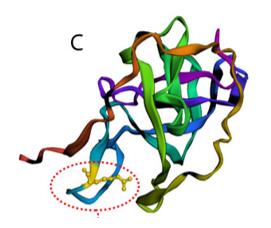 Fig. 1 3D structure of PBRM1 and the mutation cite is shown.1
Key structural properties of PBRM1:
- Composed of multiple linked bromodomains
- Through the BROMO domain-mediated protein interaction
- The function is entirely dependent on protein-protein interactions.
Functions of PBRM1
The protein encoded by the PBRM1 gene (BAF180) mainly functions as the core subunit of the chromatin remodeling complex SWI/SNF, regulating gene transcription. Additionally, it plays a crucial role in various cellular processes, including DNA damage repair and cell cycle regulation.
| Function | Description |
| Gene Transcription Regulation | By recognizing histone acetylation marks and remodeling the nucleosome structure, it regulates the transcriptional activation or inhibition of target genes (such as tumor suppressor genes). |
| Cell Cycle Regulation | It regulates the expression of genes related to the cell cycle, influencing the transition of cells from the G1 phase to the S phase. Its absence can lead to abnormal cell cycle. |
| DNA Damage Repair | Repair factors are recruited at the DNA double-strand break sites, coordinating various pathways such as homologous recombination repair to maintain genomic stability. |
| Tumor Suppression Function | As an important tumor suppressor factor, it frequently mutates in various cancers such as renal cell carcinoma. Its inactivation is associated with tumor occurrence, invasion, and poor prognosis. |
| Immune microenvironment regulation | When absent in tumor cells, it can alter the interferon signaling pathway and tumor antigen presentation, thereby affecting the tumor immune response and the efficacy of immunotherapy. |
Unlike single-function oxygen storage proteins, PBRM1 integrates multiple epigenetic signals through its multiple brom domains, acting like a complex "signal hub" that links chromatin state with a wide range of cellular functions. The consequences of its functional loss are pleiotropic, highlighting its central role in maintaining cellular homeostasis.
Applications of PBRM1 and PBRM1 Antibody in Literature
1. Aili, Abudureyimujiang, et al. "Mutational analysis of PBRM1 and significance of PBRM1 mutation in anti-PD-1 immunotherapy of clear cell renal cell carcinoma." Frontiers in Oncology 11 (2021): 712765. https://doi.org/10.3389/fonc.2021.712765
This study analyzed the impact of PBRM1 gene mutations and expression on immunotherapy for renal cell carcinoma and found that PBRM1 deletion was associated with a reduction in CD4+T cells within the tumor, affecting the efficacy of anti-PD-1 therapy and suggesting its potential as a therapeutic target.
2. Gu, Di, et al. "PBRM1 deficiency sensitizes renal cancer cells to DNMT inhibitor 5-fluoro-2'-deoxycytidine." Frontiers in Oncology 12 (2022): 870229. https://doi.org/10.3389/fonc.2022.870229
Research has found that renal cancer cells lacking PBRM1 have an enhanced response to DNA damage and are sensitive to DNA-toxic drugs. The DNMT inhibitor Fdcyd selectively inhibits the growth of the apoptotic factor XAF1 by inducing DNA damage and activating it, providing a new strategy for the treatment of PBRM1-mutated renal cell carcinoma.
3. Lane, Karen A., et al. "PBRM1 directs PBAF to pericentromeres and protects centromere integrity." Nature Communications 16.1 (2025): 1980. https://doi.org/10.1038/s41467-025-57277-9
Research reveals the crucial role of the chromatin remodeling complex PBAF in maintaining the stability of centromere structure. The absence of its subunit PBRM1 can lead to centromere fragility, increase genomic instability, and make cells dependent on spindle examination points, suggesting potential therapeutic targets.
4. Zimmer, Kai, et al. "PBRM1 mutations might render a subtype of biliary tract cancers sensitive to drugs targeting the DNA damage repair system." NPJ precision oncology 7.1 (2023): 64. https://doi.org/10.1038/s41698-023-00409-5
Research has found that PBRM1 mutations account for approximately 8.1% of biliary tract cancers, often accompanied by co-mutations in chromatin remodeling and DNA repair genes. In vitro experiments suggest that the absence of PBRM1 can enhance the sensitivity to PARP/ATR inhibitors, providing a new basis for targeted therapy.
5. Li, Rui, et al. "PBRM1 deficiency enhances PD1 immunotherapeutic sensitivity via chromosomal accessibility in colorectal cancer." Theranostics 15.8 (2025): 3316. https://doi.org/10.7150/thno.100793
This study found that the deletion of PBRM1 significantly enhanced the sensitivity of PD-1 immunotherapy by increasing chromosome openness, activating the NF-κB pathway and releasing chemokines CCL5/CXCL10, thereby increasing the infiltration of CD8+T/NK cells in colorectal cancer.
Creative Biolabs: PBRM1 Antibodies for Research
Creative Biolabs specializes in the production of high-quality PBRM1 antibodies for research and industrial applications. Our portfolio includes monoclonal antibodies tailored for ELISA, Flow Cytometry, Western blot, immunohistochemistry, and other diagnostic methodologies.
- Custom PBRM1 Antibody Development: Tailor-made solutions to meet specific research requirements.
- Bulk Production: Large-scale antibody manufacturing for industry partners.
- Technical Support: Expert consultation for protocol optimization and troubleshooting.
- Aliquoting Services: Conveniently sized aliquots for long-term storage and consistent experimental outcomes.
For more details on our PBRM1 antibodies, custom preparations, or technical support, contact us at email.
Reference
- Aili, Abudureyimujiang, et al. "Mutational analysis of PBRM1 and significance of PBRM1 mutation in anti-PD-1 immunotherapy of clear cell renal cell carcinoma." Frontiers in Oncology 11 (2021): 712765. https://doi.org/10.3389/fonc.2021.712765
Anti-PBRM1 antibodies
 Loading...
 Compare




Hot products 
-
Mouse Anti-AGO2 Recombinant Antibody (V2-634169) (CBMAB-AP203LY)

-
Mouse Anti-BLNK Recombinant Antibody (CBYY-0623) (CBMAB-0626-YY)

-
Mouse Anti-ADV Recombinant Antibody (V2-503423) (CBMAB-V208-1364-FY)

-
Mouse Anti-ACKR3 Recombinant Antibody (V2-261265) (CBMAB-C1023-LY)

-
Mouse Anti-EGR1 Recombinant Antibody (CBWJZ-100) (CBMAB-Z0289-WJ)

-
Mouse Anti-AK4 Recombinant Antibody (V2-180419) (CBMAB-A1891-YC)

-
Mouse Anti-ACTG1 Recombinant Antibody (V2-179597) (CBMAB-A0916-YC)

-
Mouse Anti-4-Hydroxynonenal Recombinant Antibody (V2-502280) (CBMAB-C1055-CN)

-
Mouse Anti-CFL1 (Phospho-Ser3) Recombinant Antibody (CBFYC-1770) (CBMAB-C1832-FY)

-
Mouse Anti-AQP2 Recombinant Antibody (G-3) (CBMAB-A3359-YC)

-
Mouse Anti-ADAM29 Recombinant Antibody (V2-179787) (CBMAB-A1149-YC)

-
Mouse Anti-CD24 Recombinant Antibody (SN3) (CBMAB-C1037-CQ)

-
Mouse Anti-ADIPOR2 Recombinant Antibody (V2-179983) (CBMAB-A1369-YC)

-
Mouse Anti-BRD3 Recombinant Antibody (CBYY-0801) (CBMAB-0804-YY)

-
Mouse Anti-CCDC6 Recombinant Antibody (CBXC-0106) (CBMAB-C5397-CQ)

-
Mouse Anti-CASQ1 Recombinant Antibody (CBFYC-0863) (CBMAB-C0918-FY)

-
Mouse Anti-FPR2 Recombinant Antibody (1D6) (CBMAB-F2628-CQ)

-
Mouse Anti-GDF5 Recombinant Antibody (1F4) (CBMAB-G2740-LY)

-
Mouse Anti-ALB Recombinant Antibody (V2-363290) (CBMAB-S0173-CQ)

-
Rat Anti-CD34 Recombinant Antibody (MEC 14.7) (CBMAB-C10196-LY)

- AActivation
- AGAgonist
- APApoptosis
- BBlocking
- BABioassay
- BIBioimaging
- CImmunohistochemistry-Frozen Sections
- CIChromatin Immunoprecipitation
- CTCytotoxicity
- CSCostimulation
- DDepletion
- DBDot Blot
- EELISA
- ECELISA(Cap)
- EDELISA(Det)
- ESELISpot
- EMElectron Microscopy
- FFlow Cytometry
- FNFunction Assay
- GSGel Supershift
- IInhibition
- IAEnzyme Immunoassay
- ICImmunocytochemistry
- IDImmunodiffusion
- IEImmunoelectrophoresis
- IFImmunofluorescence
- IGImmunochromatography
- IHImmunohistochemistry
- IMImmunomicroscopy
- IOImmunoassay
- IPImmunoprecipitation
- ISIntracellular Staining for Flow Cytometry
- LALuminex Assay
- LFLateral Flow Immunoassay
- MMicroarray
- MCMass Cytometry/CyTOF
- MDMeDIP
- MSElectrophoretic Mobility Shift Assay
- NNeutralization
- PImmunohistologyp-Paraffin Sections
- PAPeptide Array
- PEPeptide ELISA
- PLProximity Ligation Assay
- RRadioimmunoassay
- SStimulation
- SESandwich ELISA
- SHIn situ hybridization
- TCTissue Culture
- WBWestern Blot
