
SF3B1 Antibodies
Background
SF3B1 is a key component of the core complex of the spliceosome, mainly involved in the identification of branching points and the selection of 3' splicing sites during the splicing process of precursor mRNA. The protein encoded by this gene mediates protein-RNA interactions through the zinc finger domain, ensuring the accuracy of the splicing response. Research has found that SF3B1 is one of the most common mutant genes in hematopoietic system tumors. Missense mutations in the amino acid region at positions 700-750 can lead to abnormal splicing sites and induce diseases such as myelodysplastic syndrome. After scientists first analyzed its crystal structure in 2007, the selective splicing inhibitor E7107 targeting SF3B1 mutations has entered the clinical trial stage. Its unique HEAT repeat domain provides a molecular basis for targeted therapy and promotes the research on RNA processing mechanisms and the development of precision medicine.
Structure of SF3B1
SF3B1 is a nuclear protein with a molecular weight of approximately 145 kDa. Its precise molecular weight varies slightly among different species due to differences in the length of the coding region.
| Species | Human | Mouse | Zebrafish | Fruit fly |
| Molecular Weight (kDa) | 146 | 144 | 142 | 138 |
| Primary Structural Differences | Contains 20 HEAT repeating domains | There is a deficiency of three amino acids in the C-terminal domain | The 7HEAT repeat sequence is shorter | Core splicing structure domain highly conservative |
This protein is composed of 1,304 amino acids, and its three-dimensional structure presents a typical HEAT repeat sequence superhelical architecture. The N-terminal domain of SF3B1 forms a hydrophobic core, which is responsible for interacting with splicing factors such as SF3B3. The C-terminal domain specifically binds to U2 snRNP through the H2 helical ring. The zinc finger motif between the 5th and 6th repeat units maintains structural stability, while the proline residue at the end of the 15th HEAT repeat is crucial for branching point recognition.
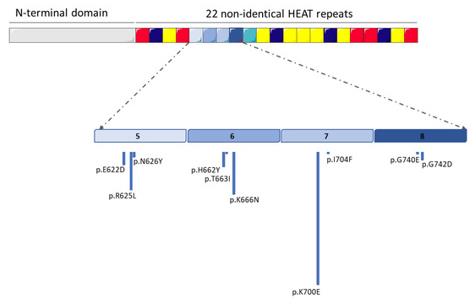 Fig. 1 Schematic of common SF3B1 mutations in hematologic malignancies.1
Key structural properties of SF3B1:
- Superhelical architecture consisting of 20 HEAT repeats
- Amino terminal form hydrophobic core and with SF3B3 factors etc
- Contains carboxyl terminal conservative U2 snRNP combined with domain
- The zinc finger structure between the 5-6 repeat units maintains the complex stability
Functions of SF3B1
The core function of the SF3B1 gene is to participate in the splicing process of precursor mRNA, and it also plays a key role in various cellular activities.
| Function | Description |
| Splicing catalysis | As the core component of U2 snRNP, it is responsible for identifying the branching point sequence and catalyzing the first transesterification reaction. |
| Selective splicing regulation | By identifying the polypyrimidine bundles at the 3' splicing site, the differential selection of exon skipping or retention is determined. |
| Maintenance of genomic stability | Ensuring correct splicing can prevent the generation of abnormal transcripts and reduce the abnormal activation of DNA damage response pathways. |
| Cell cycle regulation | By regulating cell cycle-related genes (such as MKNK2) through splicing, it affects the transition process of the G2/M phase. |
| Hematopoietic differentiation support | Ensure the correct processing and maturation of the hemoglobin gene family transcripts in erythroid differentiation. |
Unlike the broad-spectrum effect of the universal splicing factor SF1, SF3B1 shows significant specificity in the selection of branch point sequences. This characteristic makes it a key regulator for maintaining the accuracy of the cell transcriptome, especially indispensable in the differentiation process of hematopoietic stem cells.
Applications of SF3B1 and SF3B1 Antibody in Literature
1. Cilloni, Daniela, et al. "SF3B1 mutations in hematological malignancies." Cancers 14.19 (2022): 4927. https://doi.org/10.3390/cancers14194927
Research has found that SF3B1 is a common splicing factor mutation in hematological malignancies, especially having significant diagnostic value for myelodysplastic syndrome. This mutation leads to abnormal splicing, drives the occurrence of the disease, and helps stratify the prognosis of patients and provide treatment guidance.
2. Bland, Philip, et al. "SF3B1 hotspot mutations confer sensitivity to PARP inhibition by eliciting a defective replication stress response." Nature Genetics 55.8 (2023): 1311-1323. https://doi.org/10.1038/s41588-023-01460-5
Research has found that SF3B1 mutations disrupt the DNA replication stress response by down-regulating the CINP protein, leading to its sensitivity to PARP inhibitors. This discovery provides a theoretical basis for PARPi in treating such patients.
3. Wang, Shourong, et al. "Inhibition of SF3B1 improves the immune microenvironment through pyroptosis and synergizes with αPDL1 in ovarian cancer." Cell Death & Disease 14.11 (2023): 775. https://doi.org/10.1038/s41419-023-06301-1
Research has revealed that inhibiting the highly expressed SF3B1 in ovarian cancer can induce pyroptosis and activate macrophages, improve the immune microenvironment, and thereby produce a synergistic anti-tumor effect with PD-L1 antibodies.
4. Cusan, Martina, et al. "SF3B1 mutation and ATM deletion codrive leukemogenesis via centromeric R-loop dysregulation." The Journal of Clinical Investigation 133.17 (2023). https://doi.org/10.1172/JCI163325
Studies have revealed that SF3B1 mutations cause the accumulation of centromere R-loops through abnormal splicing, leading to chromosomal separation errors and instability. This process is exacerbated by ATM deletion, jointly driving the occurrence of leukemia.
5. Jiang, Moqin, et al. "SF3B1 mutations in myelodysplastic syndromes: A potential therapeutic target for modulating the entire disease process." Frontiers in Oncology 13 (2023): 1116438. https://doi.org/10.3389/fonc.2023.1116438
Research has revealed that SF3B1 is the most common splicing factor mutation in MDS, closely related to the circular sideroblast subtype, and affects multiple processes such as erythropoiesis. It has been listed as an independent subtype by the WHO and has potential for therapeutic research.
Creative Biolabs: SF3B1 Antibodies for Research
Creative Biolabs specializes in the production of high-quality SF3B1 antibodies for research and industrial applications. Our portfolio includes monoclonal antibodies tailored for ELISA, Flow Cytometry, Western blot, immunohistochemistry, and other diagnostic methodologies.
- Custom SF3B1 Antibody Development: Tailor-made solutions to meet specific research requirements.
- Bulk Production: Large-scale antibody manufacturing for industry partners.
- Technical Support: Expert consultation for protocol optimization and troubleshooting.
- Aliquoting Services: Conveniently sized aliquots for long-term storage and consistent experimental outcomes.
For more details on our SF3B1 antibodies, custom preparations, or technical support, contact us at email.
Reference
- Cilloni, Daniela, et al. "SF3B1 mutations in hematological malignancies." Cancers 14.19 (2022): 4927. https://doi.org/10.3390/cancers14194927
Anti-SF3B1 antibodies
 Loading...
 Compare




Hot products 
-
Mouse Anti-AFM Recombinant Antibody (V2-634159) (CBMAB-AP185LY)

-
Mouse Anti-AGO2 Recombinant Antibody (V2-634169) (CBMAB-AP203LY)

-
Mouse Anti-AKR1C3 Recombinant Antibody (V2-12560) (CBMAB-1050-CN)

-
Mouse Anti-ASH1L Monoclonal Antibody (ASH5H03) (CBMAB-1372-YC)

-
Mouse Anti-ESR1 Recombinant Antibody (Y31) (CBMAB-1208-YC)

-
Mouse Anti-CECR2 Recombinant Antibody (CBWJC-2465) (CBMAB-C3533WJ)

-
Rabbit Anti-CCL5 Recombinant Antibody (R0437) (CBMAB-R0437-CN)

-
Mouse Anti-BBS2 Recombinant Antibody (CBYY-0253) (CBMAB-0254-YY)

-
Mouse Anti-CCL18 Recombinant Antibody (64507) (CBMAB-C7910-LY)

-
Rat Anti-ADGRE4 Recombinant Antibody (V2-160163) (CBMAB-F0011-CQ)

-
Rabbit Anti-AP2M1 (Phosphorylated T156) Recombinant Antibody (D4F3) (PTM-CBMAB-0610LY)

-
Mouse Anti-ACKR3 Recombinant Antibody (V2-261265) (CBMAB-C1023-LY)

-
Mouse Anti-FeLV g27 Recombinant Antibody (1) (CBMAB-V208-1714-FY)

-
Mouse Anti-AAV-5 Recombinant Antibody (V2-503416) (CBMAB-V208-1402-FY)

-
Mouse Anti-BIRC7 Recombinant Antibody (88C570) (CBMAB-L0261-YJ)

-
Mouse Anti-CCDC25 Recombinant Antibody (CBLC132-LY) (CBMAB-C9786-LY)

-
Mouse Anti-14-3-3 Pan Recombinant Antibody (V2-9272) (CBMAB-1181-LY)

-
Mouse Anti-ALPL Antibody (B4-78) (CBMAB-1009CQ)

-
Rat Anti-EMCN Recombinant Antibody (28) (CBMAB-E0280-FY)

-
Mouse Anti-BACE1 Recombinant Antibody (61-3E7) (CBMAB-1183-CN)

- AActivation
- AGAgonist
- APApoptosis
- BBlocking
- BABioassay
- BIBioimaging
- CImmunohistochemistry-Frozen Sections
- CIChromatin Immunoprecipitation
- CTCytotoxicity
- CSCostimulation
- DDepletion
- DBDot Blot
- EELISA
- ECELISA(Cap)
- EDELISA(Det)
- ESELISpot
- EMElectron Microscopy
- FFlow Cytometry
- FNFunction Assay
- GSGel Supershift
- IInhibition
- IAEnzyme Immunoassay
- ICImmunocytochemistry
- IDImmunodiffusion
- IEImmunoelectrophoresis
- IFImmunofluorescence
- IGImmunochromatography
- IHImmunohistochemistry
- IMImmunomicroscopy
- IOImmunoassay
- IPImmunoprecipitation
- ISIntracellular Staining for Flow Cytometry
- LALuminex Assay
- LFLateral Flow Immunoassay
- MMicroarray
- MCMass Cytometry/CyTOF
- MDMeDIP
- MSElectrophoretic Mobility Shift Assay
- NNeutralization
- PImmunohistologyp-Paraffin Sections
- PAPeptide Array
- PEPeptide ELISA
- PLProximity Ligation Assay
- RRadioimmunoassay
- SStimulation
- SESandwich ELISA
- SHIn situ hybridization
- TCTissue Culture
- WBWestern Blot
