
SIRT3 Antibodies
Background
SIRT3 is a nicotinamide adenine dinucleotide (NAD+) -dependent deacetylase that exists in the mitochondrial matrix. It is mainly distributed in metabolically active tissues such as the heart, brain, and liver. This enzyme participates in maintaining cellular energy homeostasis, reactive oxygen balance, and mitochondrial functional integrity by regulating the acetylation levels of various metabolic-related proteins. It plays a crucial role in enabling cells to adapt to metabolic stress and delaying the aging process. It was initially identified as a member of the Sirtuin family in 1999. SIRT3 is the first deacetylase to be confirmed to be located in the mitochondria and capable of responding to changes in energy status. The elucidation of its function provides an important breakthrough for understanding the association between metabolic regulation and aging diseases. This enzyme has a highly conserved and precisely regulated mechanism, which has become an important model in aging biology and metabolic disease research, significantly advancing our understanding of energy sensing, oxidative stress protection, and cellular adaptive regulatory mechanisms.
Structure of SIRT3
SIRT3 is a mitochondrial deacetylase protein with a molecular weight of approximately 28.2 kDa. The molecular weight varies slightly among different species, mainly due to the minor differences in the mitochondrial localization sequence at the N-terminus.
| Species | Human | Mouse | Rat | Bovine |
| Molecular Weight (kDa) | 28.2 | 27.9 | 28.0 | 28.3 |
| Primary Structural Differences | Mitochondrial targeting sequence containing 44 amino acids | Positioning a slightly different sequence, the core structure of catalytic domain highly conservative | Similar to mice, the key catalytic sites are also the same | The amino acid sequence has a high degree of homology and the function is conserved |
The SIRT3 protein is composed of approximately 400 amino acids and possesses the classic catalytic core domain of the Sirtuin family. Its three-dimensional structure forms a "Rossmann fold" configuration that includes a zinc ion binding motif and an NAD+ binding channel. The key residues of the active center (such as His248) catalyze the deacetylation reaction by coordinating NAD+ and the substrate acetylated lysine. The N-terminal extension region of the protein is crucial for guiding its entry into the mitochondrial matrix, and the mature protein formed after removing this signal peptide has complete enzymatic activity. Its structural characteristics ensure its specific recognition and regulation of various metabolic enzymes (such as acetyl-CoA synthetase 2, SOD2).
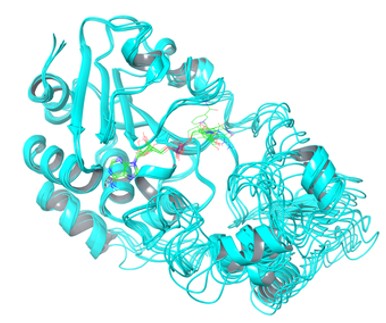 Fig. 1 Snapshots taken from MD simulations of SIRT3:NAD+ binary complex.1
Key structural properties of SIRT3:
- The classic "Rossmann fold" catalytic core domain
- NAD⁺binds pockets to substrate channels
- Zinc ion binding module, used for stabilizing protein structure
Functions of SIRT3
The SIRT3 gene encodes the mitochondrial deacetylase SIRT3, and its main function is to act as a metabolic regulator for cellular energy and stress.
| Function | Description |
| Energy Metabolism Regulation | By deacetylating and activating mitochondrial metabolic enzymes (such as acetyl-CoA synthetase 2, LCAD), it promotes fatty acid oxidation and ATP production, responding to energy demands. |
| Antioxidant Defense | Deacetylation and activation of superoxide dismutase (SOD2), isocitrate dehydrogenase 2 (IDH2), etc., enhance the mitochondrial ability to remove reactive oxygen species, protecting cells from oxidative damage. |
| Metabolic Adaptation and Stress Resistance | Activated during calorie restriction, hunger or exercise, it coordinates the conversion of metabolic pathways and enhances the adaptability and survival rate of cells to metabolic stress. |
| Cell Apoptosis Regulation | By regulating the acetylation status of proteins such as FoxO3a and Ku70, it affects mitochondrial membrane potential and the apoptotic pathway, maintaining cellular homeostasis. |
| Aging and Lifespan Association | Its activity is associated with lifespan extension. In various tissues, it delays the decline of aging-related functions by maintaining mitochondrial function and reducing oxidative stress. |
The activity of SIRT3 is highly dependent on the intracellular level of NAD⁺, making it a key molecular switch that links the cellular energy state (the ratio of NAD⁺to NADH) to a variety of protective transcriptional and metabolic reactions. Under conditions such as calorie restriction, the upregulation of its activity is one of the core mechanisms for generating health benefits.
Applications of SIRT3 and SIRT3 Antibody in Literature
1. Zhou, Lei, et al. "The role of SIRT3 in exercise and aging." Cells 11.16 (2022): 2596. https://doi.org/10.3390/cells11162596
The article indicates that SIRT3 is a mitochondrial deacetylase, and there is controversy regarding the impact of exercise on its expression. This article reviews the mechanisms of the association between exercise, SIRT3 and health and aging, and points out the future research directions.
2. Hu, Siwang, and Shuangshuang Wang. "The role of SIRT3 in the osteoporosis." Frontiers in Endocrinology 13 (2022): 893678. https://doi.org/10.3389/fendo.2022.893678
The article indicates that SIRT3, as a mitochondrial deacetylase, participates in regulating the cellular function of bone metabolism and is related to the occurrence and development of osteoporosis. This article reviews its mechanism of action in osteoporosis, providing a theoretical basis for related targeted treatments.
3. Li, Yanlin, et al. "Role of SIRT3 in neurological diseases and rehabilitation training." Metabolic Brain Disease 38.1 (2023): 69-89. https://doi.org/10.1007/s11011-022-01111-4
The article indicates that SIRT3 is a key deacetylase that regulates the progression of neurological diseases through multiple pathways in both directions. This article reviews its mechanism of action and summarizes related rehabilitation training methods, providing new ideas for disease prognosis.
4. Yang, Jing, et al. "SIRT3 alleviates painful diabetic neuropathy by mediating the FoxO3a‐PINK1‐Parkin signaling pathway to activate mitophagy." CNS Neuroscience & Therapeutics 30.4 (2024): e14703. https://doi.org/10.1111/cns.14703
Research has confirmed that SIRT3 enhances mitochondrial autophagy by activating the FoxO3a-PINK1-Parkin pathway, thereby improving the neurological function and mitochondrial damage in diabetic painful neuropathy.
5. Sun, Wei, et al. "SIRT3: a new regulator of cardiovascular diseases." Oxidative medicine and cellular longevity 2018.1 (2018): 7293861. https://doi.org/10.1155/2018/7293861
Studies have confirmed that the mitochondrial protein deacetylase SIRT3 plays a crucial protective role in cardiovascular diseases by regulating metabolic, antioxidant and anti-apoptotic pathways, providing potential targets for related prevention and treatment.
Creative Biolabs: SIRT3 Antibodies for Research
Creative Biolabs specializes in the production of high-quality SIRT3 antibodies for research and industrial applications. Our portfolio includes monoclonal and polyclonal antibodies tailored for ELISA, Flow Cytometry, Western blot, immunohistochemistry, and other diagnostic methodologies.
- Custom SIRT3 Antibody Development: Tailor-made solutions to meet specific research requirements.
- Bulk Production: Large-scale antibody manufacturing for industry partners.
- Technical Support: Expert consultation for protocol optimization and troubleshooting.
- Aliquoting Services: Conveniently sized aliquots for long-term storage and consistent experimental outcomes.
For more details on our SIRT3 antibodies, custom preparations, or technical support, contact us at info@creative-biolabs.com.
Reference
- Guan, Xiangying, et al. "Mechanism of inhibition of the human sirtuin enzyme SIRT3 by nicotinamide: computational and experimental studies." PloS one 9.9 (2014): e107729. Distributed under Open Access license CC BY 4.0, without modification. https://doi.org/10.1371/journal.pone.0107729
Anti-SIRT3 antibodies
 Loading...
 Compare




Hot products 
- AActivation
- AGAgonist
- APApoptosis
- BBlocking
- BABioassay
- BIBioimaging
- CImmunohistochemistry-Frozen Sections
- CIChromatin Immunoprecipitation
- CTCytotoxicity
- CSCostimulation
- DDepletion
- DBDot Blot
- EELISA
- ECELISA(Cap)
- EDELISA(Det)
- ESELISpot
- EMElectron Microscopy
- FFlow Cytometry
- FNFunction Assay
- GSGel Supershift
- IInhibition
- IAEnzyme Immunoassay
- ICImmunocytochemistry
- IDImmunodiffusion
- IEImmunoelectrophoresis
- IFImmunofluorescence
- IGImmunochromatography
- IHImmunohistochemistry
- IMImmunomicroscopy
- IOImmunoassay
- IPImmunoprecipitation
- ISIntracellular Staining for Flow Cytometry
- LALuminex Assay
- LFLateral Flow Immunoassay
- MMicroarray
- MCMass Cytometry/CyTOF
- MDMeDIP
- MSElectrophoretic Mobility Shift Assay
- NNeutralization
- PImmunohistologyp-Paraffin Sections
- PAPeptide Array
- PEPeptide ELISA
- PLProximity Ligation Assay
- RRadioimmunoassay
- SStimulation
- SESandwich ELISA
- SHIn situ hybridization
- TCTissue Culture
- WBWestern Blot
