
SS18 Antibodies
Background
The SS18 gene, which encodes the SS18 protein, is mainly located in the cell nucleus of vertebrates. This gene is involved in regulating chromatin remodeling and gene transcription, and plays a crucial role in embryonic development and maintaining tissue homeostasis. Its abnormal expression or mutation is closely related to human diseases such as synovial sarcoma, and was first identified in chromosomal translocations of synovial sarcoma and became an important molecular marker for the diagnosis of this disease. The functional study of the SS18 gene and its complex has deepened our understanding of chromatin dynamic regulation, cell differentiation, and the mechanism of cancer occurrence, providing a theoretical basis for related targeted therapy.
Structure of SS18
The nuclear protein encoded by the SS18 gene has a molecular weight of approximately 60 kDa, and its size is relatively conserved among different species. This protein is composed of over 500 amino acids and mainly includes a highly conserved SNH domain and a C-terminal region rich in glutamine. The SNH domain is composed of α-helices and is responsible for interacting with the core components of the BAF chromatin remodeling complex, which is the structural basis for its regulation of gene transcription. The C-terminal region is related to the recruitment of transcriptional co-activators. These structural features jointly determine the crucial role of SS18 in chromatin dynamic assembly and gene expression regulation.
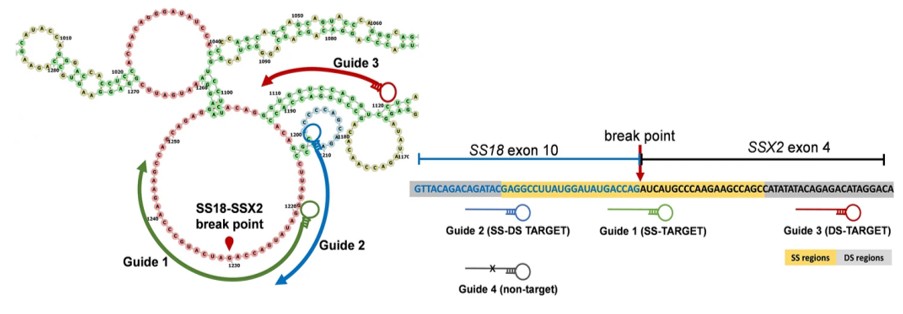 Fig. 1 Structure-Based gRNA Design Against the SS18-SSX2 Fusion Oncogene.1
Key structural properties of SS18:
- Contains a conservative SNH domain (mainly composed of α helices)
- Binding to BAF complex core proteins such as SMARCB1 via the SNH domain
- Having a C-terminal transcriptional activation region rich in glutamine
Functions of SS18
The main function of the SS18 gene is to act as a key scaffold protein of the BAF chromatin remodeling complex and participate in gene transcription regulation. However, it also plays a role in various biological processes, including embryonic development and tumor formation.
| Function | Description |
|---|---|
| Chromatin Remodeling | SS18 binds to the BAF complex through its SNH domain, regulating the open state of chromatin and influencing the accessibility of genes. |
| Transcriptional Regulation | As a transcriptional co-activator, it recruits other regulatory proteins to the promoter region of specific genes, thereby activating or inhibiting gene expression. |
| Embryo Development | It is crucial for the early embryonic development, the differentiation of neural crest cells, and the formation of multiple tissues and organs. |
| Tumor Formation | The SS18 gene translocation (such as the SS18-SSX fusion gene) is the main driving event for synovial sarcoma, leading to abnormal function of the BAF complex and activation of the oncogenic program. |
| Cell fate determination | By dynamically regulating chromatin structure and the expression of specific gene groups, it influences cell proliferation, differentiation, and fate determination. |
Unlike typical transcription factors, SS18 functions by integrating into a large multi-subunit complex (BAF), which determines its highly coordinated and context-specific regulation, and it plays different roles in different cell types and developmental stages.
Applications of SS18 and SS18 Antibody in Literature
1. Bandaru, Srinivas, et al. "Structure-based design of gRNA for Cas13." Scientific reports 10.1 (2020): 11610. https://doi.org/10.1038/s41598-020-68459-4
The article indicates that the Cas13 enzyme cuts RNA based on the single-stranded region. By combining experimental and predicted structural data, we designed gRNAs targeting the single-stranded region of the SS18-SSX2 fusion transcript, and the efficiency of inducing cell necrosis by these gRNAs was significantly higher than that of gRNAs targeting the double-stranded region. This strategy provides an efficient new idea for the design of gRNAs for targets such as long non-coding RNAs.
2. Cheng, Yanli, et al. "Phase transition and remodeling complex assembly are important for SS18-SSX oncogenic activity in synovial sarcomas." Nature communications 13.1 (2022): 2724. https://doi.org/10.1038/s41467-022-30447-9
This article reveals the carcinogenic mechanism of the SS18-SSX fusion protein. The study found that its QPGY domain mediates liquid-liquid phase separation through tyrosine and recruits BRG1. Meanwhile, SNF11 may be the homolog of SS18. Disrupting phase separation or binding with BRG1 can both inhibit cell transformation.
3. Lin, Runxia, et al. "H3K27ac mediated SS18/BAFs relocation regulates JUN induced pluripotent-somatic transition." Cell & Bioscience 12.1 (2022): 89. https://doi.org/10.1186/s13578-022-00827-1
In this study, using the pluripotency exit model induced by JUN, it was found that the SS18/BAF chromatin remodeling complex rapidly translocated from the pluripotency site to the AP-1-related site within 4 hours. This process was regulated by H3K27ac modification and was a key early event in the transformation of cell fate.
4. Kuntze, Anna, et al. "SS18:: SSX and BRD9 Modulate Synovial Sarcoma Differentiation." Cells 14.24 (2025): 2022. https://doi.org/10.3390/cells14242022
This study reveals that the SS18::SSX fusion protein in synovial sarcoma regulates key EMT factors (such as Snail and Slug) through the GBAF subunit BRD9 in multiple layers, thereby inhibiting the expression of E-Cadherin and influencing the tumor differentiation phenotype and potential prognosis of the disease.
5. Przybyl, Joanna, Matt van de Rijn, and Piotr Rutkowski. "Detection of SS18-SSX1/2 fusion transcripts in circulating tumor cells of patients with synovial sarcoma." Diagnostic Pathology 14.1 (2019): 24. https://doi.org/10.1186/s13000-019-0800-x
This study confirmed that the detection rate of SS18-SSX fusion transcripts in the peripheral blood of patients with synovial sarcoma was extremely low (approximately 6.7%), suggesting that the liquid biopsy monitoring based on this marker has limited effectiveness. Clinically, it is necessary to explore alternative molecular markers to achieve non-invasive monitoring of tumor burden.
Creative Biolabs: SS18 Antibodies for Research
Creative Biolabs specializes in the production of high-quality SS18 antibodies for research and industrial applications. Our portfolio includes monoclonal antibodies tailored for ELISA, Flow Cytometry, Western blot, immunohistochemistry, and other diagnostic methodologies.
- Custom SS18 Antibody Development: Tailor-made solutions to meet specific research requirements.
- Bulk Production: Large-scale antibody manufacturing for industry partners.
- Technical Support: Expert consultation for protocol optimization and troubleshooting.
- Aliquoting Services: Conveniently sized aliquots for long-term storage and consistent experimental outcomes.
For more details on our SS18 antibodies, custom preparations, or technical support, contact us at email.
Reference
- Bandaru, Srinivas, et al. "Structure-based design of gRNA for Cas13." Scientific reports 10.1 (2020): 11610. Distributed under Open Access license CC BY 4.0, without modification. https://doi.org/10.1038/s41598-020-68459-4
Anti-SS18 antibodies
 Loading...
 Compare




Hot products 
-
Mouse Anti-BIRC3 Recombinant Antibody (315304) (CBMAB-1214-CN)

-
Mouse Anti-Acetyl SMC3 (K105/K106) Recombinant Antibody (V2-634053) (CBMAB-AP052LY)

-
Mouse Anti-CCL18 Recombinant Antibody (64507) (CBMAB-C7910-LY)

-
Mouse Anti-APOA1 Monoclonal Antibody (CBFYR0637) (CBMAB-R0637-FY)

-
Mouse Anti-C4B Recombinant Antibody (CBYY-C2996) (CBMAB-C4439-YY)

-
Rabbit Anti-BRCA2 Recombinant Antibody (D9S6V) (CBMAB-CP0017-LY)

-
Mouse Anti-H1-0 Recombinant Antibody (CBFYH-0565) (CBMAB-H1451-FY)

-
Mouse Anti-ARIH1 Recombinant Antibody (C-7) (CBMAB-A3563-YC)

-
Mouse Anti-FeLV g27 Recombinant Antibody (1) (CBMAB-V208-1714-FY)

-
Mouse Anti-BIRC3 Recombinant Antibody (16E63) (CBMAB-C3367-LY)

-
Mouse Anti-HTLV-1 gp46 Recombinant Antibody (CBMW-H1006) (CBMAB-V208-1154-FY)

-
Mouse Anti-CD24 Recombinant Antibody (HIS50) (CBMAB-C10123-LY)

-
Mouse Anti-F11R Recombinant Antibody (402) (CBMAB-0026-WJ)

-
Mouse Anti-ACKR3 Recombinant Antibody (V2-261265) (CBMAB-C1023-LY)

-
Mouse Anti-CA9 Recombinant Antibody (CBXC-2079) (CBMAB-C0131-CQ)

-
Mouse Anti-FN1 Monoclonal Antibody (71) (CBMAB-1241CQ)

-
Mouse Anti-APOH Recombinant Antibody (4D9A4) (CBMAB-A3249-YC)

-
Rat Anti-(1-5)-α-L-Arabinan Recombinant Antibody (V2-501861) (CBMAB-XB0003-YC)

-
Mouse Anti-CAPZB Recombinant Antibody (CBYY-C0944) (CBMAB-C2381-YY)

-
Mouse Anti-BHMT Recombinant Antibody (CBYY-0547) (CBMAB-0550-YY)

- AActivation
- AGAgonist
- APApoptosis
- BBlocking
- BABioassay
- BIBioimaging
- CImmunohistochemistry-Frozen Sections
- CIChromatin Immunoprecipitation
- CTCytotoxicity
- CSCostimulation
- DDepletion
- DBDot Blot
- EELISA
- ECELISA(Cap)
- EDELISA(Det)
- ESELISpot
- EMElectron Microscopy
- FFlow Cytometry
- FNFunction Assay
- GSGel Supershift
- IInhibition
- IAEnzyme Immunoassay
- ICImmunocytochemistry
- IDImmunodiffusion
- IEImmunoelectrophoresis
- IFImmunofluorescence
- IGImmunochromatography
- IHImmunohistochemistry
- IMImmunomicroscopy
- IOImmunoassay
- IPImmunoprecipitation
- ISIntracellular Staining for Flow Cytometry
- LALuminex Assay
- LFLateral Flow Immunoassay
- MMicroarray
- MCMass Cytometry/CyTOF
- MDMeDIP
- MSElectrophoretic Mobility Shift Assay
- NNeutralization
- PImmunohistologyp-Paraffin Sections
- PAPeptide Array
- PEPeptide ELISA
- PLProximity Ligation Assay
- RRadioimmunoassay
- SStimulation
- SESandwich ELISA
- SHIn situ hybridization
- TCTissue Culture
- WBWestern Blot
