
STAT2 Antibodies
Background
The STAT2 gene encodes a signal transduction and transcriptional activation factor that exists in the cytoplasm. It plays a central role in the interferon signaling pathway. This protein is phosphorylated and activated upon stimulation by type I and type III interferons, and then forms a transcriptional complex and enters the nucleus, thereby regulating the expression of a series of interferon-stimulated genes and establishing the cell's antiviral immune state. STAT2 was first identified as a key component of the interferon signaling pathway in the early 1990s. The elucidation of its function and structure has greatly advanced the research progress in the host immune response mechanism. The high conservation of this gene and its unique position in antiviral defense make it an important molecule for understanding innate immunity, cell signal transduction, and related disease mechanisms.
Structure of STAT2
STAT2 is a transcription factor protein with a molecular weight of approximately 94 kDa. Its size varies slightly among different species due to sequence differences.
| Species | Human | Mouse | Rat |
| Molecular Weight (kDa) | 94 | 93 | 95 |
| Primary Structural Differences | Including SH2, DNA binding domain, multiple functions such as transcription activation structure | The structure is highly similar to that of humans, and the function is highly conserved. | Amino acid sequence and human existence part variation |
The STAT2 protein is composed of approximately 850 amino acids and adopts a typical multi-domain structure. Its core contains a SH2 domain, which mediates its interaction with proteins such as STAT1. The DNA-binding domain of the protein is responsible for recognizing specific gene regulatory sequences, while the C-terminal transcriptional activation domain is responsible for recruiting the transcriptional co-activator complex. The function of STAT2 is highly dependent on its tyrosine phosphorylation modification, which occurs at a specific residue and determines its central hub role in the type I interferon signaling pathway.
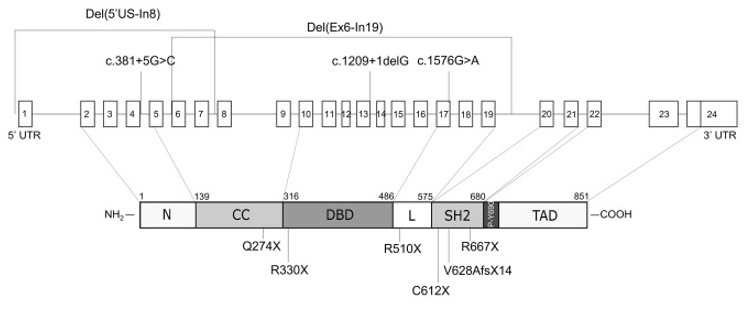 Fig. 1 Schematic illustration of the STAT2 gene.1
Key structural properties of STAT2:
- Modular multi-domain protein configuration
- SH2 domains mediate protein interactions and signal transduction
- DNA binding domains recognize interferon stimulation response elements
- Conservative tyrosine phosphorylation sites is the key to its function to activate the switch
Functions of STAT2
The protein encoded by the STAT2 gene mainly functions to mediate the signal transduction of type I and type III interferons. However, it is also involved in regulating cell apoptosis, proliferation, and influencing other signaling pathways.
| Function | Description |
| Antiviral Immune Response | As the core component of the ISGF3 complex, it activates interferon-stimulated genes and establishes the antiviral state of the cell. |
| Signal Transduction Hub | After phosphorylation, it enters the nucleus and directly binds to specific DNA sequences, initiating the transcription process of hundreds of downstream genes. |
| Immune homeostasis regulation | It participates in regulating the intensity and duration of the interferon response, preventing tissue damage caused by excessive immune reactions. |
| Tumor Suppression Potential | The integrity of its signaling pathway is associated with the progression and prognosis of certain cancers and may play a role in tumor suppression. |
| Interacting with Other Pathways | It can interact with pathways such as MAPK and PI3K, influencing cell fate determination and inflammatory responses. |
Unlike myoglobin, which has a high affinity and stable oxygen-binding property, the activation of STAT2 is rapid and reversible. Its phosphorylation state is strictly regulated by phosphatases, allowing the interferon signal to be sensitively initiated and promptly terminated to meet the dynamic requirements of immune defense.
Applications of STAT2 and STAT2 Antibody in Literature
1. Bucciol, Giorgia, et al. "Human inherited complete STAT2 deficiency underlies inflammatory viral diseases." The Journal of clinical investigation 133.12 (2023). https://doi.org/10.1172/JCI168321
The article indicates that the autosomal recessive genetic disorder with complete absence of STAT2 function can lead to interferon type I/III immune deficiency. Patients exhibit severe reactions to vaccinations, severe influenza/COVID-19/HSV-1 infections, and excessive inflammation from an early age, with a high mortality rate in childhood, confirming that this gene is crucial for viral survival.
2. Bluyssen, Hans. "STAT2-directed pathogen responses." Oncotarget 6.30 (2015): 28525. https://doi.org/10.18632/oncotarget.5266
The article indicates that interferon (IFN) activates STAT1/2 through the JAK-STAT pathway and forms an ISGF3 complex with IRF9 to regulate antiviral genes. STAT2 particularly mediates I/III type IFN responses, and its functional deficiency will weaken the host's basic defense against various pathogens.
3. Veit, Ethan C., et al. "Evolution of STAT2 resistance to flavivirus NS5 occurred multiple times despite genetic constraints." Nature Communications 15.1 (2024): 5426. https://doi.org/10.1038/s41467-024-49758-0
The article indicates that the Zika and Dengue viruses inhibit the host's interferon response by antagonizing STAT2. Studies have shown that although mammalian STAT2 has evolved multiple times to acquire antiviral antagonistic capabilities, it requires complex amino acid alterations and often accompanies functional loss, indicating that its evolution involves balance and costs.
4. Rogers, Meredith C., et al. "STAT2 limits host species specificity of human metapneumovirus." Viruses 12.7 (2020): 724. https://doi.org/10.3390/v12070724
The article indicates that the human metapneumovirus (HMPV) evades the host's type I interferon antiviral immunity by targeting and degrading the human STAT2 protein. However, the murine STAT2, due to interspecies differences, can resist this degradation, thereby limiting the infectivity of HMPV towards murine cells.
5. Lee, Cheol-Jung, et al. "Stat2 stability regulation: an intersection between immunity and carcinogenesis." Experimental & molecular medicine 52.9 (2020): 1526-1536. https://doi.org/10.1038/s12276-020-00506-6
The article indicates that STAT2 is not only the core transcription factor of the type I interferon antiviral response, but recent studies have also revealed that it regulates stability through protein quality control mechanisms and affects cell proliferation, playing an important role in the occurrence and development of cancer.
Creative Biolabs: STAT2 Antibodies for Research
Creative Biolabs specializes in the production of high-quality STAT2 antibodies for research and industrial applications. Our portfolio includes monoclonal and polyclonal antibodies tailored for ELISA, Flow Cytometry, Western blot, immunohistochemistry, and other diagnostic methodologies.
- Custom STAT2 Antibody Development: Tailor-made solutions to meet specific research requirements.
- Bulk Production: Large-scale antibody manufacturing for industry partners.
- Technical Support: Expert consultation for protocol optimization and troubleshooting.
- Aliquoting Services: Conveniently sized aliquots for long-term storage and consistent experimental outcomes.
For more details on our STAT2 antibodies, custom preparations, or technical support, contact us at info@creative-biolabs.com.
Reference
- Bucciol, Giorgia, et al. "Human inherited complete STAT2 deficiency underlies inflammatory viral diseases." The Journal of clinical investigation 133.12 (2023). Distributed under Open Access license CC BY 4.0. Cropped from the original figure. https://doi.org/10.1172/JCI168321
Anti-STAT2 antibodies
 Loading...
 Compare




Hot products 
- AActivation
- AGAgonist
- APApoptosis
- BBlocking
- BABioassay
- BIBioimaging
- CImmunohistochemistry-Frozen Sections
- CIChromatin Immunoprecipitation
- CTCytotoxicity
- CSCostimulation
- DDepletion
- DBDot Blot
- EELISA
- ECELISA(Cap)
- EDELISA(Det)
- ESELISpot
- EMElectron Microscopy
- FFlow Cytometry
- FNFunction Assay
- GSGel Supershift
- IInhibition
- IAEnzyme Immunoassay
- ICImmunocytochemistry
- IDImmunodiffusion
- IEImmunoelectrophoresis
- IFImmunofluorescence
- IGImmunochromatography
- IHImmunohistochemistry
- IMImmunomicroscopy
- IOImmunoassay
- IPImmunoprecipitation
- ISIntracellular Staining for Flow Cytometry
- LALuminex Assay
- LFLateral Flow Immunoassay
- MMicroarray
- MCMass Cytometry/CyTOF
- MDMeDIP
- MSElectrophoretic Mobility Shift Assay
- NNeutralization
- PImmunohistologyp-Paraffin Sections
- PAPeptide Array
- PEPeptide ELISA
- PLProximity Ligation Assay
- RRadioimmunoassay
- SStimulation
- SESandwich ELISA
- SHIn situ hybridization
- TCTissue Culture
- WBWestern Blot
