
CHML Antibodies
Background
CHML genes encode proteins belong to small G protein Ras superfamily of Rab GTPase members, mainly involved in intracellular vesicles transport and the regulation of membrane trafficking. This protein mediates the reverse transport from the early endosome to the Golgi apparatus by binding to GTP/GDP and undergoing conformational changes, thereby maintaining the integrity of organelles and the directional transport of substances. Research has found that functional defects of CHML protein can cause abnormal lipid deposition within cells, which is closely related to genetic diseases such as Hermanski-Prader-Drucker syndrome type II (HPS2). Since its identification through genomic sequencing in the 1990s, its unique molecular switch mechanism and effector protein interaction pattern have become important models for cell transport research, providing a key molecular basis for revealing the precise regulation of intracellular logistics networks.
Structure of CHML
The CHM-like protein encoded by the CHML gene (also known as Rab escort protein 2) has a molecular weight of approximately 95-100 kDa. This value shows subtle differences among different species or isomers, mainly due to the variations in transcript splicing and post-translational modifications.
| Species | Human | Mouse | Bovine |
| Molecular Weight (kDa) | ~95.3 (Isomer 1) | ~95.5 | ~95.1 |
| Primary Structural Differences | Responsible for the intracellular localization and function of Rab GTPase | Highly homologous to humans and often used in modeling studies | Functions are highly conserved in mammals |
The primary structure of this protein contains multiple functional domains, which together form its extended stereoconformation. Its core function relies on a domain called the "Rab binding platform", which binds to specific Rab GTPase proteins through hydrophobic interactions and charge complementarity. The secondary structure of the CHML protein is characterized by the alternating arrangement of α -helicles and β -folds, forming a crack-like structure that can accommodate the Rab protein. A key diphenylalanine motif is responsible for recognizing the C-terminal of the Rab protein, while another region rich in acidic amino acids interacts electrostally with the GTPase domain of the Rab, jointly ensuring precise substrate recognition and stable binding.
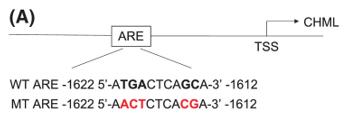 Fig. 1 Sequence and upstream location of putative CHML antioxidant response element.1
Key structural properties of CHML:
- Extended dual-domain architecture
- Central fissure Rab protein binding interface
- Diphenylalanine motifs are responsible for substrate recognition
Functions of CHML
The main function of the CHML gene-encoded protein (Rab escort protein 2) is to mediate the intracellular localization and functional regulation of Rab GTPase. In addition, it is also involved in a variety of cellular processes, including the sequential control of vesicle transport and the regulation of autophagy.
| Function | Description |
| Pre-acylation of Rab protein | Recognize and bind the newly synthesized Rab GTPase in the cytoplasm to form a stable complex. |
| Transfer to the membrane structure | Precisely deliver the bound Rab protein to specific cell membrane structures such as the Golgi apparatus and endosomes. |
| Membrane transport regulation | By ensuring the correct localization of Rab proteins, the reverse vesicle transport from endosomes to Golgi apparatus is regulated. |
| The influence of autophagy in cells | The loss of its function will disrupt the fusion process of autophagosomes and lysosomes, affecting the completion of autophagic flow in cells. |
| Association of disease occurrence | The dysfunction of this protein directly leads to type II Hermanski-Pradourck syndrome (HPS2), causing symptoms such as partial albinism and pulmonary fibrosis. |
The binding curve of CHML to Rab protein presents a typical 1:1 stoichiometric ratio, which is quite different from the synergistic binding of hemoglobin, reflecting its role as the exclusive "companion" and single delivery partner of Rab protein in the cytoplasm.
Applications of CHML and CHML Antibody in Literature
1. Chen, Tian-Wei, et al. "CHML promotes liver cancer metastasis by facilitating Rab14 recycle." Nature communications 10.1 (2019): 2510. https://doi.org/10.1038/s41467-019-10364-0
Research has found that CHML is highly expressed in liver cancer, indicating a poor prognosis. It drives liver cancer metastasis by binding to Rab14, promoting its circulation to the membrane and transporting goods such as CD44. The CHML-Rab14 axis may become a new therapeutic target.
2. Dodson, Matthew, et al. "CHML is an NRF2 target gene that regulates mTOR function." Molecular Oncology 16.8 (2022): 1714-1727. https://doi.org/10.1002/1878-0261.13194
This article demonstrates that myoglobin plays a central role in rhabdomyolysis- and crush syndrome-associated acute kidney injury (RM/CS-AKI), and highlights the potential of a high-affinity anti-myoglobin rabbit monoclonal antibody (RabMAb) as an effective emergency treatment that blocks myoglobin-induced kidney toxicity.
3. Zhang, Weilong, et al. "High expression of CHML predicts poor prognosis of multiple myeloma." Journal of Cancer 10.24 (2019): 6048. https://doi.org/10.7150/jca.34465
Research has found that high expression of CHML is significantly associated with poor survival in patients with multiple myeloma. The mechanism may be related to the proliferation and division pathways of myeloma cells promoted by CHML, and CHML can be used as an independent factor for evaluating prognosis.
4. Cao, Huanqian, et al. "CHML regulates migration and invasion in hepatocellular carcinoma via transcriptional and metabolic reprogramming." Frontiers in Oncology 15 (2025): 1575809. https://doi.org/10.3389/fonc.2025.1575809
Research has found that CHML is a key driver of liver cancer metastasis. It reprograms choline metabolism through SLC44A3 and activates the MAPK/PI3K-AKT signal with phosphatidic acid, thereby driving the migration and invasion process of liver cancer cells.
5. Fioretti, Tiziana, et al. "Molecular characterization of choroideremia-associated deletions reveals an unexpected regulation of CHM gene transcription." Genes 12.8 (2021): 1111. https://doi.org/10.3390/genes12081111
Research reveals that the deletion of the CHM gene is associated with rearrangement hotspots mediated by repetitive sequences. It was unexpectedly discovered that abnormal transcripts increased in non-PTC mutation patients, and CHML was upregulated in CHM deletion patients, suggesting that the expression regulatory mechanisms of both are complex.
Creative Biolabs: CHML Antibodies for Research
Creative Biolabs specializes in the production of high-quality CHML antibodies for research and industrial applications. Our portfolio includes monoclonal antibodies tailored for ELISA, Flow Cytometry, Western blot, immunohistochemistry, and other diagnostic methodologies.
- Custom CHML Antibody Development: Tailor-made solutions to meet specific research requirements.
- Bulk Production: Large-scale antibody manufacturing for industry partners.
- Technical Support: Expert consultation for protocol optimization and troubleshooting.
- Aliquoting Services: Conveniently sized aliquots for long-term storage and consistent experimental outcomes.
For more details on our CHML antibodies, custom preparations, or technical support, contact us at email.
Reference
- Dodson, Matthew, et al. "CHML is an NRF2 target gene that regulates mTOR function." Molecular Oncology 16.8 (2022): 1714-1727. https://doi.org/10.1002/1878-0261.13194
Anti-CHML antibodies
 Loading...
 Compare




Hot products 
-
Mouse Anti-COL12A1 Recombinant Antibody (CBYY-C3117) (CBMAB-C4560-YY)

-
Mouse Anti-ARHGAP5 Recombinant Antibody (54/P190-B) (CBMAB-P0070-YC)

-
Mouse Anti-ACLY Recombinant Antibody (V2-179314) (CBMAB-A0610-YC)

-
Mouse Anti-EMP3 Recombinant Antibody (CBFYE-0100) (CBMAB-E0207-FY)

-
Mouse Anti-APC Recombinant Antibody (CBYC-A661) (CBMAB-A3036-YC)

-
Rabbit Anti-ALOX5AP Recombinant Antibody (CBXF-1219) (CBMAB-F0750-CQ)

-
Mouse Anti-FLI1 Recombinant Antibody (CBXF-0733) (CBMAB-F0435-CQ)

-
Mouse Anti-BACE1 Recombinant Antibody (CBLNB-121) (CBMAB-1180-CN)

-
Mouse Anti-ADAM12 Recombinant Antibody (V2-179752) (CBMAB-A1114-YC)

-
Mouse Anti-Gro Monoclonal Antibody (1) (CBMAB-0482-LY)

-
Mouse Anti-BCL6 Recombinant Antibody (CBYY-0442) (CBMAB-0445-YY)

-
Mouse Anti-C5AR1 Recombinant Antibody (R63) (CBMAB-C9553-LY)

-
Mouse Anti-ACTN4 Recombinant Antibody (V2-6075) (CBMAB-0020CQ)

-
Mouse Anti-BCL2L1 Recombinant Antibody (H5) (CBMAB-1025CQ)

-
Mouse Anti-ELAVL4 Recombinant Antibody (6B9) (CBMAB-1132-YC)

-
Rabbit Anti-Acetyl-Histone H4 (Lys16) Recombinant Antibody (V2-623415) (CBMAB-CP1021-LY)

-
Mouse Anti-GOLGA2 Recombinant Antibody (2C10) (CBMAB-G0602-LY)

-
Rat Anti-EPO Recombinant Antibody (16) (CBMAB-E1578-FY)

-
Mouse Anti-CCT6A/B Recombinant Antibody (CBXC-0168) (CBMAB-C5570-CQ)

-
Rabbit Anti-AKT3 Recombinant Antibody (V2-12567) (CBMAB-1057-CN)

- AActivation
- AGAgonist
- APApoptosis
- BBlocking
- BABioassay
- BIBioimaging
- CImmunohistochemistry-Frozen Sections
- CIChromatin Immunoprecipitation
- CTCytotoxicity
- CSCostimulation
- DDepletion
- DBDot Blot
- EELISA
- ECELISA(Cap)
- EDELISA(Det)
- ESELISpot
- EMElectron Microscopy
- FFlow Cytometry
- FNFunction Assay
- GSGel Supershift
- IInhibition
- IAEnzyme Immunoassay
- ICImmunocytochemistry
- IDImmunodiffusion
- IEImmunoelectrophoresis
- IFImmunofluorescence
- IGImmunochromatography
- IHImmunohistochemistry
- IMImmunomicroscopy
- IOImmunoassay
- IPImmunoprecipitation
- ISIntracellular Staining for Flow Cytometry
- LALuminex Assay
- LFLateral Flow Immunoassay
- MMicroarray
- MCMass Cytometry/CyTOF
- MDMeDIP
- MSElectrophoretic Mobility Shift Assay
- NNeutralization
- PImmunohistologyp-Paraffin Sections
- PAPeptide Array
- PEPeptide ELISA
- PLProximity Ligation Assay
- RRadioimmunoassay
- SStimulation
- SESandwich ELISA
- SHIn situ hybridization
- TCTissue Culture
- WBWestern Blot
