
FIGN Antibodies
Background
FIGN Fidgetin genetic encoding protein is a kind of microtubule cut atpase, mainly involved in cell mitotic spindle assembly and in the process of chromosome separation control. This protein maintains the normal progress of cell division by regulating microtubule dynamics and plays an important role in embryonic development and nerve cell migration. Research has found that the deletion of the FIGN gene can lead to neural tube defects and abnormal movement in mice, which is related to the pathogenesis of congenital spina bifida in humans. This gene was first identified in 2005. The protein it encodes belongs to the AAA-ATPase family and functions as a molecular motor through a hameric ring structure. The continuous research on FIGN not only reveals the new mechanisms of microtubule dynamics in developmental biology, but also provides potential molecular targets for the diagnosis and treatment of related congenital diseases.
Structure of FIGN
The fidgetin protein encoded by the FIGN gene is an AAA-ATPase with a molecular weight of approximately 82 kDa. Its molecular weight is relatively conserved among different mammals, which is closely related to the core function of this protein in cell division.
| Species | Human | Mouse | Rat | Zebrafish |
| Molecular Weight (kDa) | 82.3 | 82.1 | 82.0 | 81.8 |
| Primary Structural Differences | Microtube cutting, regulating spindle assembly | Deletion results in a "fidget" mutant phenotype | Role in neural development | Participate in the cell division of early embryos |
This protein is composed of 730 amino acid residues, and its primary structure contains a conserved AAA domain, which is the molecular basis for its ATP hydrolysis and microtubule cleavage activities. The FIGN protein functions by forming a characteristic tertiary structure, a hexameric ring structure. The core mechanism lies in utilizing the energy generated by ATP hydrolysis to act on microtubule fibers, triggering the depolymerization or cleavage of microtubules, thereby precisely regulating the dynamics of the microtubule network within the cell.
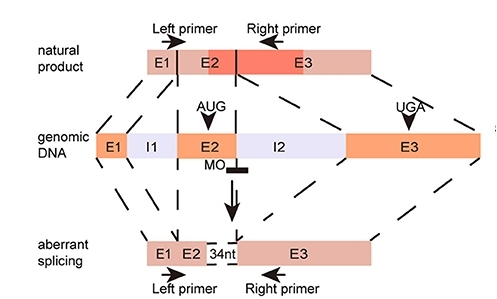 Fig. 1 FIGNL2 Aberrant Splicing Induced by Morpholino Oligonucleotide.1
Key structural properties of FIGN:
- Conserved AAA+ ATPase domain
- Form a hexagonal ring-shaped core structure
- Microtubule binding domain critical for cleavage activity
Functions of FIGN
The core function of the FIGN protein is to regulate microtubule dynamics, but it is involved in a variety of key physiological and pathological processes in cells.
| Function | Description |
| Microtube cutting | Utilize ATP hydrolysis energy to specifically cut microtubules and maintain the dynamic balance of the microtubule network. |
| Mitotic regulation | During the cell division period, the accurate separation of chromosomes is ensured by regulating the dynamics of the spindle microtubules. |
| Cell migration influence | By reshaping the cytoskeleton of neural crest cells and other cell migration path and speed. |
| Embryonic development participation | Loss of its function leads to severe developmental abnormalities such as neural tube closure defects in mouse models. |
| DNA damage response | Recent studies have found that it may be involved in the cell's response process to DNA damage through an indirect mechanism. |
Unlike motor proteins such as kinesins that transport goods along microtubules by walking, FIGN functions by directly altering the structural state of the microtubules themselves, which reflects its unique and fundamental molecular role in the regulation of the cytoskeleton.
Applications of FIGN and FIGN Antibody in Literature
1. Zhou, Bin, et al. "Fidgetin as a potential prognostic biomarker for hepatocellular carcinoma." International Journal of Medical Sciences 17.17 (2020): 2888. https://doi.org/10.7150/ijms.49913
This study confirmed that high expression of FIGN is significantly associated with malignant features such as elevated TNM stage and microvascular invasion in hepatocellular carcinoma, and it is an independent risk factor for shortened overall survival and disease-free survival of patients, suggesting that FIGN can serve as a potential prognostic marker and therapeutic target for liver cancer.
2. Qi, Longju, et al. "Comprehensive characterization of Fidgetin on tumor immune microenvironment evaluation and immunotherapy in human hepatocellular carcinoma." Aging (Albany NY) 16.5 (2024): 4445. https://doi.org/10.18632/aging.205598
This study confirmed that low expression of FIGN is common in liver cancer, but it was found that its high expression is independently associated with poor prognosis in patients. High expression of FIGN is associated with immune cell infiltration and the "hot tumor" state, and affects immune checkpoints. This indicates that FIGN can serve as a potential biomarker for predicting prognosis and guiding immunotherapy.
3. Dong, Zhangji, et al. "Microtubule severing protein fignl2 contributes to endothelial and neuronal branching in zebrafish development." Frontiers in Cell and Developmental Biology 8 (2021): 593234. https://doi.org/10.3389/fcell.2020.593234
This study confirmed that it was the first to reveal that the microtubule cutting protein FIGNL2 plays a key role in the development of zebrafish. The absence of FIGNL2 can lead to abnormal vascular branching and cardiac edema, and cause excessive growth of neuronal axons. The results indicated that FIGNL2 affects the development of the cardiovascular and nervous systems by regulating the morphology of cell branches.
4. Gagnon, Jonathan, Véronique Caron, and André Tremblay. "SUMOylation of nuclear receptor Nor1/NR4A3 coordinates microtubule cytoskeletal dynamics and stability in neuronal cells." Cell & Bioscience 14.1 (2024): 91. https://doi.org/10.1186/s13578-024-01273-x
This study reveals that the Sumoylation modification of the nuclear receptor Nor1 is the key to its transcriptional regulatory function. When Nor1 undergoes desumoylation at a specific site, it down-regulates the expression of microtubule cutting genes, including FIGN, thereby enhancing the stability of microtubules and the resistance of neurons to damage.
5. Chen, Bowen, et al. "Transcriptome-metabolome analysis reveals how sires affect meat quality in hybrid sheep populations." Frontiers in Nutrition 9 (2022): 967985. https://doi.org/10.3389/fnut.2022.967985
This study, through multi-omics analysis, found that the differences in meat quality among hybrid offspring of different sheep breeds are closely related to lipid metabolism pathways. The research screened out multiple key genes including FIGN and MYH8, which are involved in muscle growth and development and are significantly correlated with the levels of fatty acids related to meat quality, providing new insights into the molecular mechanism of meat quality improvement through hybridization.
Creative Biolabs: FIGN Antibodies for Research
Creative Biolabs specializes in the production of high-quality FIGN antibodies for research and industrial applications. Our portfolio includes monoclonal antibodies tailored for ELISA, Flow Cytometry, Western blot, immunohistochemistry, and other diagnostic methodologies.
- Custom FIGN Antibody Development: Tailor-made solutions to meet specific research requirements.
- Bulk Production: Large-scale antibody manufacturing for industry partners.
- Technical Support: Expert consultation for protocol optimization and troubleshooting.
- Aliquoting Services: Conveniently sized aliquots for long-term storage and consistent experimental outcomes.
For more details on our FIGN antibodies, custom preparations, or technical support, contact us at email.
Reference
- Dong, Zhangji, et al. "Microtubule severing protein fignl2 contributes to endothelial and neuronal branching in zebrafish development." Frontiers in Cell and Developmental Biology 8 (2021): 593234. https://doi.org/10.3389/fcell.2020.593234
Anti-FIGN antibodies
 Loading...
 Compare




Hot products 
-
Mouse Anti-CASP8 Recombinant Antibody (CBYY-C0987) (CBMAB-C2424-YY)

-
Mouse Anti-ADGRE2 Recombinant Antibody (V2-261270) (CBMAB-C0813-LY)

-
Mouse Anti-Acetyl-α-Tubulin (Lys40) Recombinant Antibody (V2-623485) (CBMAB-CP2897-LY)

-
Mouse Anti-AOC3 Recombinant Antibody (CBYY-0014) (CBMAB-0014-YY)

-
Mouse Anti-BAX Recombinant Antibody (CBYY-0216) (CBMAB-0217-YY)

-
Mouse Anti-BIRC3 Recombinant Antibody (315304) (CBMAB-1214-CN)

-
Mouse Anti-ESR1 Recombinant Antibody (Y31) (CBMAB-1208-YC)

-
Mouse Anti-ACO2 Recombinant Antibody (V2-179329) (CBMAB-A0627-YC)

-
Rabbit Anti-BAD (Phospho-Ser136) Recombinant Antibody (CAP219) (CBMAB-AP536LY)

-
Rabbit Anti-AKT2 (Phosphorylated S474) Recombinant Antibody (V2-556130) (PTM-CBMAB-0605LY)

-
Mouse Anti-CCDC6 Recombinant Antibody (CBXC-0106) (CBMAB-C5397-CQ)

-
Mouse Anti-CDK7 Recombinant Antibody (CBYY-C1783) (CBMAB-C3221-YY)

-
Mouse Anti-ALDOA Recombinant Antibody (A2) (CBMAB-A2316-YC)

-
Mouse Anti-CFL1 (Phospho-Ser3) Recombinant Antibody (CBFYC-1770) (CBMAB-C1832-FY)

-
Rabbit Anti-AKT3 Recombinant Antibody (V2-12567) (CBMAB-1057-CN)

-
Mouse Anti-CRTAM Recombinant Antibody (CBFYC-2235) (CBMAB-C2305-FY)

-
Rat Anti-ADGRE4 Recombinant Antibody (V2-160163) (CBMAB-F0011-CQ)

-
Mouse Anti-AGK Recombinant Antibody (V2-258056) (CBMAB-M0989-FY)

-
Mouse Anti-B2M Recombinant Antibody (CBYY-0050) (CBMAB-0050-YY)

-
Mouse Anti-8-oxoguanine Recombinant Antibody (V2-7719) (CBMAB-1898CQ)

- AActivation
- AGAgonist
- APApoptosis
- BBlocking
- BABioassay
- BIBioimaging
- CImmunohistochemistry-Frozen Sections
- CIChromatin Immunoprecipitation
- CTCytotoxicity
- CSCostimulation
- DDepletion
- DBDot Blot
- EELISA
- ECELISA(Cap)
- EDELISA(Det)
- ESELISpot
- EMElectron Microscopy
- FFlow Cytometry
- FNFunction Assay
- GSGel Supershift
- IInhibition
- IAEnzyme Immunoassay
- ICImmunocytochemistry
- IDImmunodiffusion
- IEImmunoelectrophoresis
- IFImmunofluorescence
- IGImmunochromatography
- IHImmunohistochemistry
- IMImmunomicroscopy
- IOImmunoassay
- IPImmunoprecipitation
- ISIntracellular Staining for Flow Cytometry
- LALuminex Assay
- LFLateral Flow Immunoassay
- MMicroarray
- MCMass Cytometry/CyTOF
- MDMeDIP
- MSElectrophoretic Mobility Shift Assay
- NNeutralization
- PImmunohistologyp-Paraffin Sections
- PAPeptide Array
- PEPeptide ELISA
- PLProximity Ligation Assay
- RRadioimmunoassay
- SStimulation
- SESandwich ELISA
- SHIn situ hybridization
- TCTissue Culture
- WBWestern Blot