
MRC2 Antibodies
Background
The MRC2 gene encodes a transmembrane protein belonging to the mannose receptor family, which is mainly expressed in interstitial cells such as fibroblasts and macrophages. This protein acts as a collagen endocytosis receptor, responsible for mediating the uptake and degradation of collagen in the extracellular matrix, thereby playing a crucial role in tissue remodeling and wound repair. Studies have shown that MRC2 participates in various physiological and pathological processes by regulating collagen turnover, including embryonic development, inflammatory responses, and cancer metastasis. Since its function has been gradually clarified, this gene has become an important model for the study of extracellular matrix metabolism, significantly promoting the understanding of tissue homeostasis maintenance and the molecular mechanisms of fibrotic diseases.
Structure of MRC2
The protein encoded by the MRC2 gene is a type I transmembrane glycoprotein with a molecular weight of approximately 180 kDa. The molecular weight varies slightly among different mammalian species, mainly due to the differences in the degree of glycosylation.
| Species | Human | Mouse | Rat |
| Molecular Weight (kDa) | ~180 | ~175 | ~178 |
| Primary Structural Differences | Extracellular domain area contains multiple C type lectin structure | The structural domain is highly conserved, while the glycosylation sites show differences. | Highly similar to humans in terms of origin and function |
The extracellular domain of this protein contains multiple functional modules, such as the fibronectin type II domain and the C-type lectin-like domain. These structures jointly mediate its specific binding to collagen fibers. Its intracellular domain is responsible for connecting the intracellular endocytosis mechanism and completing the uptake and transport of extracellular collagen. This unique structural configuration makes it a key molecule for regulating the homeostasis of the extracellular matrix.
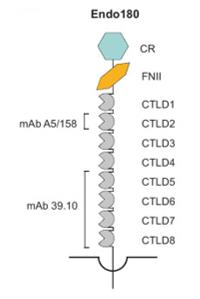 Fig. 1 Schematic of the MRC2 protein structure and mAb binding sites.1
Key structural properties of MRC2:
- Contains multiple extracellular C-type lectin domains
- Transmembrane domains are connected to intracellular signal sequences
- Collagen-binding domains mediate extracellular matrix recognition
- Endocytoid motifs are involved in the transport of substances
Functions of MRC2
The main function of the MRC2 gene-encoded protein is to mediate the endocytosis and degradation of collagen in the extracellular matrix. At the same time, it is also involved in various physiological and pathological processes.
| Function | Description |
| Collagen Endocytosis | As a specific receptor, it recognizes, binds to, and internalizes the collagen fibers of the extracellular matrix, initiating its intracellular degradation pathway. |
| Organ Reorganization | By regulating collagen turnover, it plays a central role in embryonic development, wound healing, and tissue repair processes. |
| Cancer metastasis | Overexpressed in the tumor microenvironment, it promotes matrix remodeling and creates pathways for the invasion and metastasis of cancer cells. |
| Inflammation Regulation | Expressed in immune cells such as macrophages, it participates in the removal of the matrix at the inflammatory site and the reconstruction of the tissue. |
| Fibrosis Regulation | Its dysfunction is closely related to pathological fibrosis in organs such as the liver and lungs. |
Unlike pathways such as ubiquitination degradation, the MRC2-mediated mechanism is a specific and receptor-dependent collagen clearance process, which makes it an indispensable regulator in maintaining the balance of tissue homeostasis.
Applications of MRC2 and MRC2 Antibody in Literature
1. Evans, Rachel J., et al. "Endo180 (MRC2) antibody–drug conjugate for the treatment of sarcoma." Molecular Cancer Therapeutics 22.2 (2023): 240-253. https://doi.org/10.1158/1535-7163.MCT-22-0312
The Endo180 (MRC2) receptor is widely and highly expressed in multiple subtypes of soft tissue sarcomas. Antibody-drug conjugates (ADCs) targeting Endo180 were effective in inducing tumor regression and inhibiting metastasis in preclinical models, providing a new potential strategy for the treatment of sarcomas.
2. Li, Lanlan, et al. "MRC2 promotes proliferation and inhibits apoptosis of diabetic nephropathy." Analytical Cellular Pathology 2021.1 (2021): 6619870. https://doi.org/10.1155/2021/6619870
The article indicates that MRC2 is upregulated in the renal tissues of diabetic nephropathy mice. The study found that knocking down MRC2 in mouse mesangial cells can inhibit cell proliferation and induce apoptosis. This suggests that MRC2 may become a potential molecular marker and therapeutic target for diabetic nephropathy.
3. Mills, Taylor S., et al. "MRC2 expression modulates metabolism in acute myeloid leukemia stem cells." Cancer Letters (2025): 218068. https://doi.org/10.1016/j.canlet.2025.218068
The study found that across different AML subtypes, MRC2 can effectively serve as a functional surface marker for enriching leukemia stem cells. MRC2+ leukemia cells exhibit stronger clonogenicity and tumorigenicity, and their functions involve collagen uptake and support of glycolytic metabolism.
4. Gai, Xiaohong, et al. "MRC2 expression correlates with TGFβ1 and survival in hepatocellular carcinoma." International journal of molecular sciences 15.9 (2014): 15011-15025. https://doi.org/10.3390/ijms150915011
The research found that in hepatocellular carcinoma, the expression of MRC2 was significantly higher than that in adjacent tissues, and its high expression indicated a poor prognosis after liver resection. The study confirmed that MRC2 is an independent factor for poor prognosis and mediates the TGFβ1-driven process of cancer cell migration and invasion.
5. Yang, Xu, et al. "Elevated LINC00909 promotes tumor progression of ovarian cancer via regulating the miR‐23b‐3p/MRC2 axis." Oxidative medicine and cellular longevity 2021.1 (2021): 5574130. https://doi.org/10.1155/2021/5574130
The study found that in ovarian cancer, LINC00909 binds to miR-23b-3p, thereby relieving its inhibition on the downstream target gene MRC2, and subsequently promoting the proliferation, migration and epithelial-mesenchymal transition of cancer cells. Serum LINC00909 is a potential diagnostic and prognostic biomarker.
Creative Biolabs: MRC2 Antibodies for Research
Creative Biolabs specializes in the production of high-quality MRC2 antibodies for research and industrial applications. Our portfolio includes monoclonal antibodies tailored for ELISA, Flow Cytometry, Western blot, immunohistochemistry, and other diagnostic methodologies.
- Custom MRC2 Antibody Development: Tailor-made solutions to meet specific research requirements.
- Bulk Production: Large-scale antibody manufacturing for industry partners.
- Technical Support: Expert consultation for protocol optimization and troubleshooting.
- Aliquoting Services: Conveniently sized aliquots for long-term storage and consistent experimental outcomes.
For more details on our MRC2 antibodies, custom preparations, or technical support, contact us at email.
Reference
- Evans, Rachel J., et al. "Endo180 (MRC2) antibody–drug conjugate for the treatment of sarcoma." Molecular Cancer Therapeutics 22.2 (2023): 240-253. https://doi.org/10.1158/1535-7163.MCT-22-0312
Anti-MRC2 antibodies
 Loading...
 Compare




Hot products 
- AActivation
- AGAgonist
- APApoptosis
- BBlocking
- BABioassay
- BIBioimaging
- CImmunohistochemistry-Frozen Sections
- CIChromatin Immunoprecipitation
- CTCytotoxicity
- CSCostimulation
- DDepletion
- DBDot Blot
- EELISA
- ECELISA(Cap)
- EDELISA(Det)
- ESELISpot
- EMElectron Microscopy
- FFlow Cytometry
- FNFunction Assay
- GSGel Supershift
- IInhibition
- IAEnzyme Immunoassay
- ICImmunocytochemistry
- IDImmunodiffusion
- IEImmunoelectrophoresis
- IFImmunofluorescence
- IGImmunochromatography
- IHImmunohistochemistry
- IMImmunomicroscopy
- IOImmunoassay
- IPImmunoprecipitation
- ISIntracellular Staining for Flow Cytometry
- LALuminex Assay
- LFLateral Flow Immunoassay
- MMicroarray
- MCMass Cytometry/CyTOF
- MDMeDIP
- MSElectrophoretic Mobility Shift Assay
- NNeutralization
- PImmunohistologyp-Paraffin Sections
- PAPeptide Array
- PEPeptide ELISA
- PLProximity Ligation Assay
- RRadioimmunoassay
- SStimulation
- SESandwich ELISA
- SHIn situ hybridization
- TCTissue Culture
- WBWestern Blot
