
NLRC5 Antibodies
Background
The NLRC5 gene encodes a cytoplasmic pattern recognition receptor protein belonging to the NOD-like receptor (NLR) family. This protein is mainly expressed in immune cells and, as a key regulatory factor for MHC class I gene transcription, participates in initiating and regulating adaptive immune responses. Studies have shown that NLRC5 plays a significant role in antiviral and anti-tumor immunity by recruiting transcriptional complexes into the promoter regions of MHC class I genes and enhancing their expression levels. This gene was first clearly identified as a transcriptional activator of MHC Class I genes in 2010. The clarification of its functional mechanism has deepened people's understanding of the connection between immune signal transduction and gene expression regulation, and provided new molecular targets for the treatment strategies of related immune diseases.
Structure of NLRC5
NLRC5 is an intracellular immunomodulatory protein with a molecular weight of approximately 220 kDa. Its molecular weight is relatively conserved among different mammals, mainly due to the highly conserved functional domains (including the NACHT domain, LRR domain, and CARD domain).
| Species | Human | Mouse | Rat | Rhesus monkey |
| Molecular Weight (kDa) | ~220 | ~218 | ~219 | ~220 |
| Primary Structural Differences | Containing the NACHT domain, it is a member of the NLR family and a major transcriptional activator of MHC class I genes | The function is highly homologous to human and participates in antiviral immune response | Highly conserved structure and regulation of interferon signal in the inflammation model | Sequences are highly similar to humans and are often used in preclinical studies |
This protein is composed of approximately 1866 amino acid residues and features a typical NLR family modular structure: its N-terminal CARD domain is involved in signal transduction, the central NACHT domain is responsible for oligomerization and ATP hydrolysis, while the C-terminal LRR domain senses intracellular signals. This structure enables it to form oligomers and recruit chromatin remodeling complexes to the promoter regions of target genes, specifically activating the transcription of MHC class I molecules and playing a core role in the initiation of adaptive immune responses. The active centers formed by its tertiary structure are crucial for maintaining immune homeostasis.
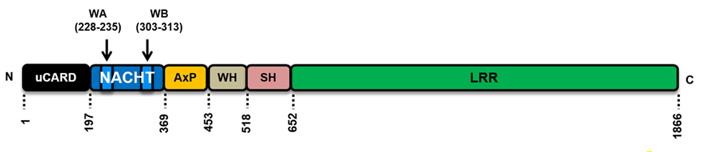 Fig. 1 Schematic representation of the human NLRC5 protein structure and domain organization.1
Key structural properties of NLRC5:
- Typical modular structure of NLR family (CARD-NACHT-LRR domain)
- NACHT structure domain protein mediated oligomerization and atpase activity
- LRR domain is responsible for ligand recognition and signal sensing
- As a cytoplasmic receptor to form an inflammasome-like complex
- Specifically regulate the transcriptional activation of MHC class I genes
Functions of NLRC5
The main function of the NLRC5 gene is to act as the transcriptional master regulator of MHC Class I genes and coordinate adaptive immune responses. In addition, it is also involved in a variety of immune regulatory processes, including the regulation of inflammatory signals and antiviral defense.
| Function | Description |
| Transcriptional activation of MHC class I genes | As transcription coactivators, direct binding and activation of MHC Class I molecules (HLA-A/B/C, etc.) is a key step in antigen presentation. |
| Adaptive immune initiation | By up-regulating the expression of MHC I, the recognition and clearance of virus-infected cells and tumor cells by CD8⁺T cells are enhanced. |
| Antiviral immune response | In viral infection (such as influenza virus, HIV) induced by interferon high expression, forming a positive feedback loop, strengthen immune surveillance. |
| Regulation of inflammatory signals | Can participate in NLR corpuscle related pathways of inflammation, causing inflammation factors such as regulation IL - 1 beta, affect the immune balance. |
| Autoimmunity is associated with tumor immune escape | The abnormal expression and autoimmune disease, closely related to tumor immune escape and transplant rejection, as potential therapeutic targets. |
Unlike most NLR proteins that mainly form inflammasomes and mediate innate immunity, the uniqueness of NLRC5 lies in its functional core being focused on gene transcriptional regulation - it specifically and efficiently initiates the expression of MHC Class I genes by recruiting histone modification enzymes and universal transcription machines to specific regions of chromatin Thus, a crucial molecular bridge is established between innate immunity and adaptive immunity.
Applications of NLRC5 and NLRC5 Antibody in Literature
- Zhang, Lu, et al. "NLRC5: a potential target for central nervous system disorders." Frontiers in Immunology 12 (2021): 704989. https://doi.org/10.3389/fimmu.2021.704989
The article indicates that NLRC5, as the largest member of the NLR family, participates in innate immunity by regulating inflammatory and immune pathways. Recent studies have found that it also plays an important role in the development of the nervous system, central nervous system infections, cerebral ischemia and neurological diseases.
- Wang, Jie-quan, et al. "Emerging roles for NLRC5 in immune diseases." Frontiers in Pharmacology 10 (2019): 1352. https://doi.org/10.3389/fphar.2019.01352
The article indicates that NLRC5 is an important intracellular pattern recognition receptor, involved in innate immunity and inflammatory regulation, and plays a key role in the progression of various immune diseases, thus being regarded as a potential therapeutic target. But at present, its internal mechanism has not been fully clarified.
- Brunschwiler, Fabienne, et al. "A Ménage à trois: NLRC5, immunity, and metabolism." Frontiers in Immunology 15 (2024): 1426620. https://doi.org/10.3389/fimmu.2024.1426620
The article indicates that NLRC5 is not only a transcriptional regulator of MHC Class I genes, but also regulates the BTN3A gene family related to immune surveillance, thereby connecting the classic "non-self" antigen recognition with the immune surveillance mechanism of abnormal metabolic cells.
- Benkő, Szilvia, et al. "NLRC5 functions beyond MHC I regulation—what do we know so far?." Frontiers in immunology 8 (2017): 150. https://doi.org/10.3389/fimmu.2017.00150
The article indicates that NLRC5 is a member of the NLR family. Besides serving as a transcriptional activator of MHC class I genes, it also participates in innate and adaptive immune responses. However, its specific role in processes such as inflammation and interferon responses remains controversial.
- Godkowicz, Magdalena, and Magdalena Druszczyńska. "NOD1, NOD2, and NLRC5 receptors in antiviral and antimycobacterial immunity." Vaccines 10.9 (2022): 1487. https://doi.org/10.3390/vaccines10091487
The article indicates that members of the NLR family, NOD1, NOD2 and NLRC5, as intracellular pattern recognition receptors, can recognize pathogens such as Mycobacterium tuberculosis and viruses, and participate in anti-infection immune responses by regulating inflammatory and immune signaling pathways.
Creative Biolabs: NLRC5 Antibodies for Research
Creative Biolabs specializes in the production of high-quality NLRC5 antibodies for research and industrial applications. Our portfolio includes monoclonal antibodies tailored for ELISA, Flow Cytometry, Western blot, immunohistochemistry, and other diagnostic methodologies.
- Custom NLRC5 Antibody Development: Tailor-made solutions to meet specific research requirements.
- Bulk Production: Large-scale antibody manufacturing for industry partners.
- Technical Support: Expert consultation for protocol optimization and troubleshooting.
- Aliquoting Services: Conveniently sized aliquots for long-term storage and consistent experimental outcomes.
For more details on our NLRC5 antibodies, custom preparations, or technical support, contact us at email.
Reference
- Benkő, Szilvia, et al. "NLRC5 functions beyond MHC I regulation—what do we know so far?." Frontiers in immunology 8 (2017): 150. https://doi.org/10.3389/fimmu.2017.00150
Anti-NLRC5 antibodies
 Loading...
 Compare




Hot products 
-
Mouse Anti-AMOT Recombinant Antibody (CBYC-A564) (CBMAB-A2552-YC)

-
Mouse Anti-ELAVL4 Recombinant Antibody (6B9) (CBMAB-1132-YC)

-
Mouse Anti-AQP2 Recombinant Antibody (E-2) (CBMAB-A3358-YC)

-
Mouse Anti-2C TCR Recombinant Antibody (V2-1556) (CBMAB-0951-LY)

-
Mouse Anti-CD46 Recombinant Antibody (CBFYC-0076) (CBMAB-C0085-FY)

-
Mouse Anti-ATM Recombinant Antibody (2C1) (CBMAB-A3970-YC)

-
Mouse Anti-BSN Recombinant Antibody (219E1) (CBMAB-1228-CN)

-
Mouse Anti-C5AR1 Recombinant Antibody (R63) (CBMAB-C9553-LY)

-
Mouse Anti-ARG1 Recombinant Antibody (CBYCL-103) (CBMAB-L0004-YC)

-
Mouse Anti-BrdU Recombinant Antibody (IIB5) (CBMAB-1038CQ)

-
Rat Anti-ADGRE4 Recombinant Antibody (V2-160163) (CBMAB-F0011-CQ)

-
Mouse Anti-FN1 Monoclonal Antibody (71) (CBMAB-1241CQ)

-
Mouse Anti-CAT Recombinant Antibody (724810) (CBMAB-C8431-LY)

-
Mouse Anti-CD8 Recombinant Antibody (C1083) (CBMAB-C1083-LY)

-
Mouse Anti-Acetyl-α-Tubulin (Lys40) Recombinant Antibody (V2-623485) (CBMAB-CP2897-LY)

-
Mouse Anti-APP Recombinant Antibody (DE2B4) (CBMAB-1122-CN)

-
Mouse Anti-GFAP Recombinant Antibody (5) (CBMAB-G0346-LY)

-
Mouse Anti-AP4E1 Recombinant Antibody (32) (CBMAB-A2996-YC)

-
Mouse Anti-CCS Recombinant Antibody (CBFYC-1093) (CBMAB-C1150-FY)

-
Rabbit Anti-Acetyl-Histone H4 (Lys16) Recombinant Antibody (V2-623415) (CBMAB-CP1021-LY)

- AActivation
- AGAgonist
- APApoptosis
- BBlocking
- BABioassay
- BIBioimaging
- CImmunohistochemistry-Frozen Sections
- CIChromatin Immunoprecipitation
- CTCytotoxicity
- CSCostimulation
- DDepletion
- DBDot Blot
- EELISA
- ECELISA(Cap)
- EDELISA(Det)
- ESELISpot
- EMElectron Microscopy
- FFlow Cytometry
- FNFunction Assay
- GSGel Supershift
- IInhibition
- IAEnzyme Immunoassay
- ICImmunocytochemistry
- IDImmunodiffusion
- IEImmunoelectrophoresis
- IFImmunofluorescence
- IGImmunochromatography
- IHImmunohistochemistry
- IMImmunomicroscopy
- IOImmunoassay
- IPImmunoprecipitation
- ISIntracellular Staining for Flow Cytometry
- LALuminex Assay
- LFLateral Flow Immunoassay
- MMicroarray
- MCMass Cytometry/CyTOF
- MDMeDIP
- MSElectrophoretic Mobility Shift Assay
- NNeutralization
- PImmunohistologyp-Paraffin Sections
- PAPeptide Array
- PEPeptide ELISA
- PLProximity Ligation Assay
- RRadioimmunoassay
- SStimulation
- SESandwich ELISA
- SHIn situ hybridization
- TCTissue Culture
- WBWestern Blot
