
SAFB Antibodies
Background
SAFB is a multifunctional nuclear protein widely expressed in eukaryotic cells and is mainly located within the cell nucleus. The protein encoded by this gene has both scaffold attachment function and RNA binding ability. It not only participates in the regulation of chromatin structure organization but also affects the post-transcriptional processing by binding RNA molecules. Research has found that SAFB plays a key role in DNA damage repair, transcriptional regulation and stress response, and its abnormal expression is closely related to the occurrence of cancer and neurological diseases. This gene was first identified in 1994. Due to its unique dual functional characteristics, it has become a typical model for studying the gene regulatory network in the nucleus, providing an important research basis for revealing the protein-nucleic acid interaction mechanism and the cellular stress response pathway.
Structure of SAFB
SAFB is a nucleoprotein with a molecular weight of approximately 95-110 kDa. Its precise molecular weight varies among different species, mainly due to amino acid composition and alternative splicing.
| Species | Human | Mouse | Rat | Bovine |
| Molecular Weight (kDa) | ~110 | ~95 | ~98 | ~105 |
| Primary Structural Differences | Contains 2 RRM structure domain and 1 RS domain structure | RRM structure domain highly conservative | RS structure domain slightly reduced | There is interspecific variation in the C-terminal sequence |
The SAFB protein contains approximately 900 amino acids and forms a modular structural framework. This protein contains two N-terminal RNA recognition motifs (RRM) and a C-terminal serine/arginine-rich domain (RS domain), mediating its interaction with nucleic acids and protein factors. SAFB specifically binds to the matrix attachment region (MAR/SAR) DNA sequence and specific RNA molecules through its RRM domain, while the RS domain is involved in protein-protein interactions and the assembly of transcriptional regulatory complexes. This unique structural combination enables SAFB to perform multiple functions in chromatin organization, transcriptional regulation and RNA processing.
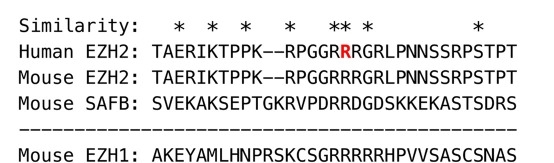 Fig. 1 Ratio of protein abundance between WT and EZH2 KO nuclear extracts of PRC2 members and SAFB.1
Key structural properties of SAFB:
- Modular domain architecture
- Mediate the assembly of protein-nucleic acid complexes through hydrophobic and electrostatic interactions
- RNA recognition motifs (RRM) are responsible for specifically binding nucleic acids
- Serine/Arginine-rich domain (RS domain) is involved in protein interaction and transcriptional regulation
Functions of SAFB
The main function of SAFB is to act as a nuclear matrix attachment factor and a transcriptional regulatory factor. However, it is also widely involved in a variety of cellular processes, including DNA damage repair, RNA processing and cellular stress response.
| Function | Description |
| Bracket attachment function | Anchoring chromatin to the nuclear matrix helps maintain high-level chromosomal structure and delineate chromatin functional domains. |
| Transcriptional regulation | Can be used as transcription child direct inhibition of gene expression, also can through the interaction with other proteins to regulate specific signaling pathways (such as estrogen response) transcription activity. |
| RNA processing | By binding to RNA molecules, it participates in post-transcriptional processing such as splicing, transport and metabolism of pre-mRNA. |
| DNA damage response | In double-stranded DNA breakup quickly gathered themselves together, and of genes involved in assembly and repair complex cell stress response mechanism. |
| Cell fate determination | By integrating transcriptional and RNA processing signals, it influences the fate decision-making processes of cells such as proliferation, differentiation and apoptosis. |
SAFB interacts with various nucleic acids and proteins through its modular domains (such as RRM and RS domains), and this versatility makes it a core node for maintaining genomic stability within the nucleus and precisely regulating gene expression.
Applications of SAFB and SAFB Antibody in Literature
1. Forcella, Pascal, et al. "SAFB regulates hippocampal stem cell fate by targeting Drosha to destabilize Nfib mRNA." Elife 13 (2024): e74940. https://doi.org/10.7554/eLife.74940
This study demonstrates that SAFB inhibits Nfib expression in neural stem cells by binding to Nfib mRNA and enhancing DroSHA-mediated transcript cleavage, thereby blocking oligodendrocyte generation and promoting neuronal differentiation. This mechanism reveals the key role of SAFB in the fate regulation of adult hippocampal neural stem cells.
2. Watanabe, Kazunori, and Takashi Ohtsuki. "Inhibition of HSF1 and SAFB granule formation enhances apoptosis induced by heat stress." International journal of molecular sciences 22.9 (2021): 4982. https://doi.org/10.3390/ijms22094982
This study reveals that inhibiting the formation of SAFB particles can impede the upregulation of heat shock proteins HSP27 and HSP70, exacerbating heat stress-induced apoptosis, indicating that the assembly of SAFB particles plays a key regulatory role in the cell's heat resistance capacity.
3. Pu, Yan, et al. "SKA1 promotes tumor metastasis via SAFB-mediated transcription repression of DUSP6 in clear cell renal cell carcinoma." Aging (Albany NY) 14.23 (2022): 9679. https://doi.org/10.18632/aging.204418
Studies have shown that SKA1 promotes the metastasis of clear cell renal cell carcinoma by specifically binding to SAFB and inhibiting the transcription of DUSP6. The SKA1/SAFB interaction provides a new perspective on the mechanism of tumor metastasis and suggests it as a potential therapeutic target.
4. Cherney, Rachel E., et al. "A monoclonal antibody raised against human EZH2 cross-reacts with the RNA-binding protein SAFB." Biology Open 12.6 (2023): bio059955. https://doi.org/10.1242/bio.059955
Research has found that the EZH2 antibody commonly used in ChIP will cross-react with the RNA-binding protein SAFB under specific conditions, and this binding is independent of the PRC2 complex. This result reveals the significance of orthogonal verification when studying the interaction between chromatin and RNA.
5. Szaluś-Jordanow, Olga, et al. "A primary multiple pleomorphic rhabdomyosarcoma of the heart in an adult dog." BMC Veterinary Research 19.1 (2023): 137. https://doi.org/10.1155/2015/395816
The research revealed through iCLIP technology that SAFB1, as a coinhibitor of estrogen receptors, can directly bind to coding and non-coding Rnas, and its binding sites are enriched in purine-rich sequences. In breast cancer cells, there exists a mutual regulatory compensation mechanism for the expression of SAFB1 and SAFB2.
Creative Biolabs: SAFB Antibodies for Research
Creative Biolabs specializes in the production of high-quality SAFB antibodies for research and industrial applications. Our portfolio includes monoclonal antibodies tailored for ELISA, Flow Cytometry, Western blot, immunohistochemistry, and other diagnostic methodologies.
- Custom SAFB Antibody Development: Tailor-made solutions to meet specific research requirements.
- Bulk Production: Large-scale antibody manufacturing for industry partners.
- Technical Support: Expert consultation for protocol optimization and troubleshooting.
- Aliquoting Services: Conveniently sized aliquots for long-term storage and consistent experimental outcomes.
For more details on our SAFB antibodies, custom preparations, or technical support, contact us at email.
Reference
- Cherney, Rachel E., et al. "A monoclonal antibody raised against human EZH2 cross-reacts with the RNA-binding protein SAFB." Biology Open 12.6 (2023): bio059955. https://doi.org/10.1242/bio.059955
Anti-SAFB antibodies
 Loading...
 Compare



Hot products 
-
Mouse Anti-CASP8 Recombinant Antibody (CBYY-C0987) (CBMAB-C2424-YY)

-
Mouse Anti-GFAP Recombinant Antibody (24) (CBMAB-G2927-LY)

-
Mouse Anti-C5AR1 Recombinant Antibody (R63) (CBMAB-C9553-LY)

-
Mouse Anti-CASP7 Recombinant Antibody (10-01-62) (CBMAB-C2005-LY)

-
Rat Anti-ABCC11 Recombinant Antibody (V2-179001) (CBMAB-A0236-YC)

-
Mouse Anti-FN1 Monoclonal Antibody (D6) (CBMAB-1240CQ)

-
Mouse Anti-CD24 Recombinant Antibody (HIS50) (CBMAB-C10123-LY)

-
Mouse Anti-CSPG4 Recombinant Antibody (CBFYM-1050) (CBMAB-M1203-FY)

-
Rabbit Anti-BAD (Phospho-Ser136) Recombinant Antibody (CAP219) (CBMAB-AP536LY)

-
Mouse Anti-CA9 Recombinant Antibody (CBXC-2079) (CBMAB-C0131-CQ)

-
Mouse Anti-FAS2 Monoclonal Antibody (1D4) (CBMAB-0071-CN)

-
Mouse Anti-BRCA2 Recombinant Antibody (CBYY-1728) (CBMAB-2077-YY)

-
Rat Anti-C5AR1 Recombinant Antibody (8D6) (CBMAB-C9139-LY)

-
Rat Anti-4-1BB Recombinant Antibody (V2-1558) (CBMAB-0953-LY)

-
Rabbit Anti-AKT2 (Phosphorylated S474) Recombinant Antibody (V2-556130) (PTM-CBMAB-0605LY)

-
Mouse Anti-BIRC5 Recombinant Antibody (6E4) (CBMAB-CP2646-LY)

-
Rabbit Anti-Acetyl-Histone H4 (Lys16) Recombinant Antibody (V2-623415) (CBMAB-CP1021-LY)

-
Mouse Anti-AKR1C3 Recombinant Antibody (V2-12560) (CBMAB-1050-CN)

-
Rabbit Anti-AP2M1 (Phosphorylated T156) Recombinant Antibody (D4F3) (PTM-CBMAB-0610LY)

-
Mouse Anti-CHRNA9 Recombinant Antibody (8E4) (CBMAB-C9161-LY)

- AActivation
- AGAgonist
- APApoptosis
- BBlocking
- BABioassay
- BIBioimaging
- CImmunohistochemistry-Frozen Sections
- CIChromatin Immunoprecipitation
- CTCytotoxicity
- CSCostimulation
- DDepletion
- DBDot Blot
- EELISA
- ECELISA(Cap)
- EDELISA(Det)
- ESELISpot
- EMElectron Microscopy
- FFlow Cytometry
- FNFunction Assay
- GSGel Supershift
- IInhibition
- IAEnzyme Immunoassay
- ICImmunocytochemistry
- IDImmunodiffusion
- IEImmunoelectrophoresis
- IFImmunofluorescence
- IGImmunochromatography
- IHImmunohistochemistry
- IMImmunomicroscopy
- IOImmunoassay
- IPImmunoprecipitation
- ISIntracellular Staining for Flow Cytometry
- LALuminex Assay
- LFLateral Flow Immunoassay
- MMicroarray
- MCMass Cytometry/CyTOF
- MDMeDIP
- MSElectrophoretic Mobility Shift Assay
- NNeutralization
- PImmunohistologyp-Paraffin Sections
- PAPeptide Array
- PEPeptide ELISA
- PLProximity Ligation Assay
- RRadioimmunoassay
- SStimulation
- SESandwich ELISA
- SHIn situ hybridization
- TCTissue Culture
- WBWestern Blot
