
SOCS3 Antibodies
Background
SOCS3 is a cytoplasmic protein present in the cells of vertebrates, mainly functioning as a negative regulator of cytokine signal transduction. This protein inhibits excessive immune responses through the JAK-STAT signaling pathway, thereby maintaining immune balance and regulating inflammation. In the development of metabolic, hematopoietic, and immune diseases, SOCS3 precisely controls the cell's response to external stimuli by targeting the degradation of signaling proteins. Its encoding gene was first identified in 1997 and, as a member of the SOCS protein family, has become a key molecule for studying immune homeostasis and disease mechanisms. Based on a typical SH2 domain and SOCS box structure, the elucidation of its regulatory mechanism has deepened our understanding of signal transduction, protein interactions, and pathological processes, providing molecular targets for related therapeutic strategies.
Structure of SOCS3
SOCS3 is a relatively small intracellular protein with a molecular weight of approximately 23 kDa. This molecular weight may vary slightly among different species due to differences in amino acid sequences. The following is a comparison of molecular weights for some species:
| Species | Human | Mouse | Rat |
| Molecular Weight (kDa) | 23 | 22.8 | 22.9 |
| Primary Structural Differences | Containing the SH2 domain and the SOCS box | Highly homologous, functionally conserved | The sequence is highly similar to that of humans |
This protein is composed of approximately 225 amino acids. Its primary structure forms a compact spherical structure through the SH2 domain and the C-terminal SOCS box, which can interact with various signaling proteins. The core function of SOCS3 is to directly bind to cytokine receptors or JAK kinases through its SH2 domain, thereby targeting the recruitment of the E3 ubiquitin ligase complex and mediating the ubiquitination degradation of signaling molecules, thereby achieving negative feedback inhibition of the JAK-STAT signaling pathway. This structural mechanism enables it to play a crucial "braking" role in regulating immune responses, inflammation, and cell growth.
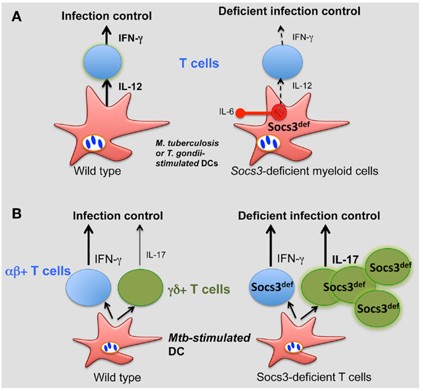 Fig. 1 Role of SOCS3 in the control of infection.1
Key structural properties of SOCS3:
- SH2 domain
- SOCS domain
- Kinase Inhibition Region (KIR)
Functions of SOCS3
The main function of the SOCS3 gene is to act as a negative feedback regulator of the JAK-STAT signaling pathway, controlling the response of cells to cytokines and growth factors. Its specific functions are as follows:
| Function | Description |
| Signal Suppression | By binding to activated cytokine receptors or JAK kinases through the SH2 domain, it directly inhibits their signal transduction activity. |
| Targeted Degradation | By utilizing the C-terminal SOCS domain to recruit the E3 ubiquitin ligase complex, it mediates the ubiquitination marking of signaling proteins and their degradation by the proteasome. |
| Immune Regulation | In immune cells such as macrophages and lymphocytes, negative regulation of pro-inflammatory signals (such as IL-6, IFN-γ) is carried out to prevent excessive immune responses. |
| Metabolic Regulation | It participates in the regulation of the leptin and insulin signaling pathways in the liver and adipose tissues, and is associated with obesity and insulin resistance. |
| Hematopoietic Regulation | Precisely regulate the growth factor signals in hematopoietic stem cells and progenitor cells to maintain the homeostasis of the hematopoietic system. |
Unlike the linear activation patterns of many signaling proteins, the expression of SOCS3 is rapidly induced by the JAK-STAT pathway, thereby forming an "immediate, self-limiting negative feedback loop". This characteristic makes it a crucial "molecular brake" for maintaining immune homeostasis and preventing excessive signal activation.
Applications of SOCS3 and SOCS3 Antibody in Literature
1. Carow, Berit, and Martin E. Rottenberg. "SOCS3, a major regulator of infection and inflammation." Frontiers in immunology 5 (2014): 58. https://doi.org/10.3389/fimmu.2014.00058
The article indicates that SOCS3 regulates cytokine signaling through mechanisms such as inhibiting the JAK-STAT3 pathway. It plays a dual role in infections and autoimmune diseases, being able to either prevent or exacerbate the disease progression, and is crucial for maintaining immune homeostasis.
2. Zheng, Xia, et al. "Prognostic significance of SOCS3 in patients with solid tumors: a meta-analysis." Frontiers in Surgery 8 (2022): 802143. https://doi.org/10.3389/fsurg.2021.802143
The meta-analysis of 1551 patients with solid tumors in this study revealed that high expression of SOCS3 was significantly associated with better disease-free survival and overall survival, and could predict tumor grade, vascular invasion, and the risk of distant metastasis. SOCS3 can serve as a potential prognostic biomarker.
3. Klepsch, Oliver, et al. "Intragenic regulation of SOCS3 isoforms." Cell Communication and Signaling 17.1 (2019): 70. https://doi.org/10.1186/s12964-019-0379-6
The article indicates that there are two isoforms of SOCS3, both of which can effectively inhibit the IL-6 signaling pathway. However, the short isoform has a longer half-life. The relative expression of the two isoforms is influenced by the regulatory elements of the mRNA itself, and is unrelated to the PKR stress kinase signal.
4. Klepsch, Oliver, et al. "Intragenic regulation of SOCS3 isoforms." Cell Communication and Signaling 17.1 (2019): 70. https://doi.org/10.3389/fimmu.2023.1088542
The article indicates that the expression of SOCS3 is significantly elevated in lung metastases of colon cancer and is positively correlated with the M2 type macrophage marker CD163. Its high expression is associated with poor prognosis and immune cell infiltration, suggesting that SOCS3 may be a potential target for tumor progression and immunotherapy.
5. Liu, Yufeng, et al. "Wogonin upregulates SOCS3 to alleviate the injury in Diabetic Nephropathy by inhibiting TLR4-mediated JAK/STAT/AIM2 signaling pathway." Molecular Medicine 30.1 (2024): 78. https://doi.org/10.1186/s10020-024-00845-4
The article indicates that Han chuanxin can effectively inhibit the TLR4 and JAK/STAT pathways by upregulating the expression of SOCS3, thereby alleviating the renal inflammation and fibrosis damage induced by high blood sugar, and demonstrating a renal protective effect in diabetic nephropathy.
Creative Biolabs: SOCS3 Antibodies for Research
Creative Biolabs specializes in the production of high-quality SOCS3 antibodies for research and industrial applications. Our portfolio includes monoclonal antibodies tailored for ELISA, Flow Cytometry, Western blot, immunohistochemistry, and other diagnostic methodologies.
- Custom SOCS3 Antibody Development: Tailor-made solutions to meet specific research requirements.
- Bulk Production: Large-scale antibody manufacturing for industry partners.
- Technical Support: Expert consultation for protocol optimization and troubleshooting.
- Aliquoting Services: Conveniently sized aliquots for long-term storage and consistent experimental outcomes.
For more details on our SOCS3 antibodies, custom preparations, or technical support, contact us at email.
Reference
- Carow, Berit, and Martin E. Rottenberg. "SOCS3, a major regulator of infection and inflammation." Frontiers in immunology 5 (2014): 58. Distributed under Open Access license CC BY 3.0, without modification. https://doi.org/10.3389/fimmu.2014.00058
Anti-SOCS3 antibodies
 Loading...
 Compare




Hot products 
-
Mouse Anti-ALB Recombinant Antibody (V2-55272) (CBMAB-H0819-FY)

-
Mouse Anti-APC Recombinant Antibody (CBYC-A661) (CBMAB-A3036-YC)

-
Mouse Anti-ABIN2 Recombinant Antibody (V2-179106) (CBMAB-A0349-YC)

-
Mouse Anti-CD24 Recombinant Antibody (SN3) (CBMAB-C1037-CQ)

-
Mouse Anti-BAX Recombinant Antibody (CBYY-0216) (CBMAB-0217-YY)

-
Mouse Anti-AQP2 Recombinant Antibody (G-3) (CBMAB-A3359-YC)

-
Mouse Anti-CCDC25 Recombinant Antibody (CBLC132-LY) (CBMAB-C9786-LY)

-
Mouse Anti-APP Recombinant Antibody (5C2A1) (CBMAB-A3314-YC)

-
Mouse Anti-NSUN6 Recombinant Antibody (D-5) (CBMAB-N3674-WJ)

-
Mouse Anti-H1-0 Recombinant Antibody (CBFYH-0565) (CBMAB-H1451-FY)

-
Rabbit Anti-ATF4 Recombinant Antibody (D4B8) (CBMAB-A3872-YC)

-
Mouse Anti-CCN2 Recombinant Antibody (CBFYC-2383) (CBMAB-C2456-FY)

-
Mouse Anti-C5B-9 Recombinant Antibody (CBFYA-0216) (CBMAB-X0304-FY)

-
Mouse Anti-AAV9 Recombinant Antibody (V2-634029) (CBMAB-AP023LY)

-
Mouse Anti-GSDMA Recombinant Antibody (CBLG1-2983) (CBMAB-G5128-LY)

-
Mouse Anti-ATP1B1 Recombinant Antibody (E4) (CBMAB-0463-LY)

-
Mouse Anti-CD33 Recombinant Antibody (P67.6) (CBMAB-C10189-LY)

-
Mouse Anti-CFL1 (Phospho-Ser3) Recombinant Antibody (CBFYC-1770) (CBMAB-C1832-FY)

-
Mouse Anti-ALX1 Recombinant Antibody (96k) (CBMAB-C0616-FY)

-
Mouse Anti-ARID3A Antibody (A4) (CBMAB-0128-YC)

- AActivation
- AGAgonist
- APApoptosis
- BBlocking
- BABioassay
- BIBioimaging
- CImmunohistochemistry-Frozen Sections
- CIChromatin Immunoprecipitation
- CTCytotoxicity
- CSCostimulation
- DDepletion
- DBDot Blot
- EELISA
- ECELISA(Cap)
- EDELISA(Det)
- ESELISpot
- EMElectron Microscopy
- FFlow Cytometry
- FNFunction Assay
- GSGel Supershift
- IInhibition
- IAEnzyme Immunoassay
- ICImmunocytochemistry
- IDImmunodiffusion
- IEImmunoelectrophoresis
- IFImmunofluorescence
- IGImmunochromatography
- IHImmunohistochemistry
- IMImmunomicroscopy
- IOImmunoassay
- IPImmunoprecipitation
- ISIntracellular Staining for Flow Cytometry
- LALuminex Assay
- LFLateral Flow Immunoassay
- MMicroarray
- MCMass Cytometry/CyTOF
- MDMeDIP
- MSElectrophoretic Mobility Shift Assay
- NNeutralization
- PImmunohistologyp-Paraffin Sections
- PAPeptide Array
- PEPeptide ELISA
- PLProximity Ligation Assay
- RRadioimmunoassay
- SStimulation
- SESandwich ELISA
- SHIn situ hybridization
- TCTissue Culture
- WBWestern Blot
