
TSKS Antibodies
Background
The TSKS gene encodes a serine/threonine kinase substrate protein that is mainly expressed in the testis and skeletal muscle. It participates in the regulation of sperm formation and male reproductive function by interacting with testicular specific serine/threonine kinases. The protein produced by this gene plays a key role in the development of sperm tails and structural assembly. Abnormal function of this gene may lead to abnormal sperm morphology or motility disorders, thereby affecting fertility. The TSKS gene and its encoded protein, as important molecules in reproductive biology, provide crucial clues for studying the molecular mechanisms of male infertility and may become potential targets for related diagnosis or intervention.
Structure of TSKS
TSKS is a serine/threonine kinase substrate protein with a molecular weight of approximately 50-55 kDa. Its molecular weight varies slightly among different species due to differences in amino acid sequences.
| Species | Human | Mouse | Rat |
| Molecular Weight (kDa) | About 55 | About 53 | About 54 |
| Primary Structural Differences | Interact with TSSK kinase to regulate spermatogenesis | High expression mainly in the testes, involved in spermatogenesis | Germ cell-specific expression, functionally conserved |
This protein contains multiple potential phosphorylation sites, and its primary structure forms specific functional domains that mediate interactions with testicular specific kinases such as TSSK. Its core function relies on a conserved substrate binding region, which receives phosphorylation signals through spatial conformation adjustments, thereby playing a key role in sperm tail assembly and morphogenesis.
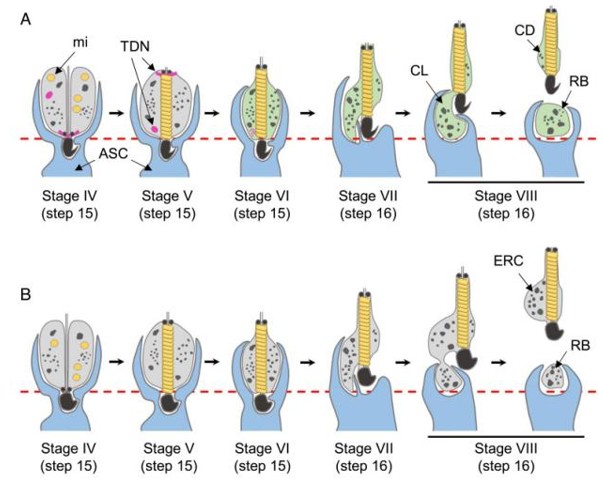 Fig. 1 TSKS functions in spermiation.1
Key structural properties of TSKS:
- Contains a conserved serine/threonine enriched region
- With multiple potential phosphorylation recognition site
- Interact with TSSK family kinases through specific domains
Functions of TSKS
The main function of the TSKS gene and its encoded protein is to participate in spermatogenesis and the regulation of male reproduction. In addition, it also involves processes such as cytoskeletal organization.
| Function | Description |
| Regulation of spermatogenesis | As a substrate of TSSK kinase, its phosphorylation state is crucial for the differentiation and maturation of sperm cells. |
| Structural support for germ cells | Participate in the structure of the sperm tail (flagella) assembly and to maintain stability, affect sperm movement. |
| Signal transduction regulation | Through the phosphorylation - to phosphorylation circulation, transduction role in testis specific signaling pathways. |
| Maintenance of fertility | Functional abnormalities are directly related to sperm morphological defects and male infertility, and are one of the key molecules of fertility. |
| Cytoskeletal association | The interaction with cytoskeletal components may be involved in the morphological construction of germ cells. |
Like many kinase substrates, the function of the TSKS protein is highly spatiotemporal specific, and its activity strictly depends on the binding and phosphorylation events with corresponding kinases at specific stages of spermatogenesis, which ensures the precise regulation of the reproductive process.
Applications of TSKS and TSKS Antibody in Literature
1. Shimada, Keisuke, et al. "TSKS localizes to nuage in spermatids and regulates cytoplasmic elimination during spermiation." Proceedings of the National Academy of Sciences 120.11 (2023): e2221762120. https://doi.org/10.1073/pnas.2221762120
Research has found that the TSKS protein and its kinase TSSK2 are located in the sperm centriole during spermatogenesis, especially enriched during the flagellum formation stage. This kinase-substrate is crucial for sperm development, and its functional deficiency can lead to male infertility.
2. Xu, Bingfang, et al. "Targeted deletion of Tssk1 and 2 causes male infertility due to haploinsufficiency." Developmental biology 319.2 (2008): 211-222.https://doi.org/10.1016/j.ydbio.2008.03.047
Research has found that knockout of TSSK1/2 kinase leads to infertility in male mice, abnormal sperm morphology and apoptosis. Its substrate TSKS and kinase persist in sperm and form complexes. The N-terminal and Ser281 phosphorylation sites are crucial for function, indicating that this kinase-substrate pair is indispensable in sperm formation.
3. Xu, Bingfang, et al. "TSKS concentrates in spermatid centrioles during flagellogenesis." Developmental biology 319.2 (2008): 201-210. https://doi.org/10.1016/j.ydbio.2008.03.043
Research has found that the TSKS protein and its kinase TSSK2 are located in the sperm centriole during spermatogenesis, especially enriched during the flagellum formation stage. This kinase-substrate is crucial for sperm development, and its functional deficiency can lead to male infertility.
4. Li, Xin, et al. "Signatures of EMT, immunosuppression, and inflammation in primary and recurrent human cutaneous squamous cell carcinoma at single-cell resolution." Theranostics 12.17 (2022): 7532. https://doi.org/10.7150/thno.77528
This study revealed the immunosuppressive microenvironment characteristics of recurrent cutaneous squamous cell carcinoma (cSCC) through single-cell sequencing: CD8⁺T cell depletion, SPP1⁺TAMs enrichment and angiogenesis promotion. Tumor-specific keratinocytes (TSKs) exhibit epithelial-mesenchymal transition, which may be related to the interaction of IL7R⁺CAFs. The research provides a new target for the prevention and treatment of cSCC recurrence.
5. MacLeod, Graham, et al. "PPP1CC2 can form a kinase/phosphatase complex with the testis-specific proteins TSSK1 and TSKS in the mouse testis." Reproduction 147.1 (2014): 1-12. https://doi.org/10.1530/REP-13-0224
This study reveals that during spermatogenesis in male mice, phosphatase PPP1CC2 and kinase TSSK1 form a complex through the common substrate TSKS. The assembly of this complex is regulated by the phosphorylation of the RVxF motif of TSKS, and its abnormal function can lead to morphological defects of sperm mitochondrial sheaths and male infertility.
Creative Biolabs: TSKS Antibodies for Research
Creative Biolabs specializes in the production of high-quality TSKS antibodies for research and industrial applications. Our portfolio includes monoclonal antibodies tailored for ELISA, Flow Cytometry, Western blot, immunohistochemistry, and other diagnostic methodologies.
- Custom TSKS Antibody Development: Tailor-made solutions to meet specific research requirements.
- Bulk Production: Large-scale antibody manufacturing for industry partners.
- Technical Support: Expert consultation for protocol optimization and troubleshooting.
- Aliquoting Services: Conveniently sized aliquots for long-term storage and consistent experimental outcomes.
For more details on our TSKS antibodies, custom preparations, or technical support, contact us at email.
Reference
- Shimada, Keisuke, et al. "TSKS localizes to nuage in spermatids and regulates cytoplasmic elimination during spermiation." Proceedings of the National Academy of Sciences 120.11 (2023): e2221762120. https://doi.org/10.1073/pnas.2221762120
Anti-TSKS antibodies
 Loading...
 Compare




Hot products 
-
Mouse Anti-ATG5 Recombinant Antibody (9H197) (CBMAB-A3945-YC)

-
Mouse Anti-GIPC2 Recombinant Antibody (10) (CBMAB-G0476-LY)

-
Mouse Anti-ACKR3 Recombinant Antibody (V2-261265) (CBMAB-C1023-LY)

-
Mouse Anti-CFL1 Recombinant Antibody (CBFYC-1771) (CBMAB-C1833-FY)

-
Mouse Anti-ADGRE5 Recombinant Antibody (V2-360335) (CBMAB-C2088-CQ)

-
Mouse Anti-FPR2 Recombinant Antibody (1D6) (CBMAB-F2628-CQ)

-
Mouse Anti-ELAVL4 Recombinant Antibody (6B9) (CBMAB-1132-YC)

-
Mouse Anti-AAV9 Recombinant Antibody (V2-634029) (CBMAB-AP023LY)

-
Mouse Anti-ACTN4 Recombinant Antibody (V2-6075) (CBMAB-0020CQ)

-
Mouse Anti-ADGRL2 Recombinant Antibody (V2-58519) (CBMAB-L0166-YJ)

-
Rat Anti-C5AR1 Recombinant Antibody (8D6) (CBMAB-C9139-LY)

-
Mouse Anti-ATM Recombinant Antibody (2C1) (CBMAB-A3970-YC)

-
Mouse Anti-ASH1L Monoclonal Antibody (ASH5H03) (CBMAB-1372-YC)

-
Mouse Anti-CDKL5 Recombinant Antibody (CBFYC-1629) (CBMAB-C1689-FY)

-
Mouse Anti-ALPL Antibody (B4-78) (CBMAB-1009CQ)

-
Mouse Anti-NSUN6 Recombinant Antibody (D-5) (CBMAB-N3674-WJ)

-
Mouse Anti-CCN2 Recombinant Antibody (CBFYC-2383) (CBMAB-C2456-FY)

-
Mouse Anti-APOH Recombinant Antibody (4D9A4) (CBMAB-A3249-YC)

-
Mouse Anti-BIRC7 Recombinant Antibody (88C570) (CBMAB-L0261-YJ)

-
Mouse Anti-CCT6A/B Recombinant Antibody (CBXC-0168) (CBMAB-C5570-CQ)

- AActivation
- AGAgonist
- APApoptosis
- BBlocking
- BABioassay
- BIBioimaging
- CImmunohistochemistry-Frozen Sections
- CIChromatin Immunoprecipitation
- CTCytotoxicity
- CSCostimulation
- DDepletion
- DBDot Blot
- EELISA
- ECELISA(Cap)
- EDELISA(Det)
- ESELISpot
- EMElectron Microscopy
- FFlow Cytometry
- FNFunction Assay
- GSGel Supershift
- IInhibition
- IAEnzyme Immunoassay
- ICImmunocytochemistry
- IDImmunodiffusion
- IEImmunoelectrophoresis
- IFImmunofluorescence
- IGImmunochromatography
- IHImmunohistochemistry
- IMImmunomicroscopy
- IOImmunoassay
- IPImmunoprecipitation
- ISIntracellular Staining for Flow Cytometry
- LALuminex Assay
- LFLateral Flow Immunoassay
- MMicroarray
- MCMass Cytometry/CyTOF
- MDMeDIP
- MSElectrophoretic Mobility Shift Assay
- NNeutralization
- PImmunohistologyp-Paraffin Sections
- PAPeptide Array
- PEPeptide ELISA
- PLProximity Ligation Assay
- RRadioimmunoassay
- SStimulation
- SESandwich ELISA
- SHIn situ hybridization
- TCTissue Culture
- WBWestern Blot
