
UTY Antibodies
Background
UTY gene is a histone demethylase encoding gene located on the Y chromosome, which plays an important role in male sex determination and spermatogenesis. This gene affects chromatin structure and gene expression by regulating histone modification status, thereby participating in key biological processes such as cell differentiation and embryonic development. Because the UTY gene is specific to the Y chromosome, its mutations are associated with a variety of male-specific diseases, including infertility and certain cancers. In 1997, the UTY gene was first identified by the Lahn and Page team while studying the evolution of the Y chromosome. Due to its unique gender-related functions and epigenetic regulatory mechanisms, it has become an important model in reproductive biology and gender difference research. In-depth research on this gene not only reveals the special position of the Y chromosome in the evolution of mammals, but also provides a new perspective for understanding the molecular mechanisms of gender-related diseases.
Structure of UTY
The molecular weight of the protein encoded by the UTY gene is approximately 135 kDa, and there are certain differences among different species, mainly due to variations in functional domains and amino acid sequences.
| Species | Human | Mouse | Rat | Chimpanzee |
| Molecular Weight (kDa) | 135 | 134 | 136 | 135 |
| Primary Structural Differences | Contains UTY and UTX homology area | Retain histone demethylase activity | Functional domains are highly conserved | Similar to human UTY height |
The UTY protein is composed of multiple functional domains, including the Jumonji-C (JmjC) domain, which endows it with histone demethylase activity and can regulate the epigenetic modification of target genes. Its tertiary structure forms a stable spatial conformation, enabling the JmjC domain to bind to α-ketoglutarate and Fe2+, thereby catalyzing the demethylation of histone H3K27me2/me3. In addition, the UTY protein also contains multiple zinc finger structures, which are involved in DNA binding and protein interactions, influencing biological processes such as male sex determination and spermatogenesis.
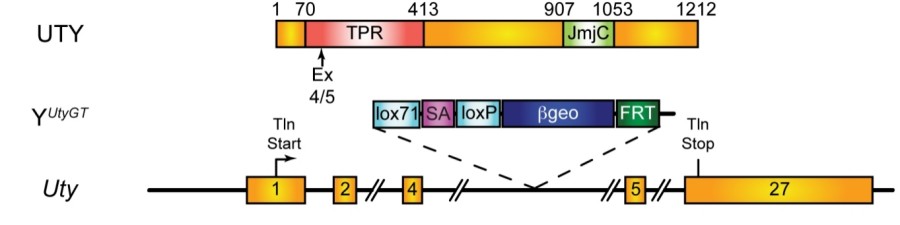 Fig. 1 Schematic of mouse mutation in Uty.1
Key structural properties of UTY:
- The Jumonji-C (JmjC) domain
- Zinc finger domains
- Conservative UTY/UTX homologous region
- Verified location Signal (NLS)
Functions of UTY
The core function of the UTY gene is to regulate gene expression as a histone demethylase, and it also plays a significant role in male development and diseases.
| Function | Description |
| Epigenetic regulation | Catalytic demethylation of histone H3K27me2/me3 through the JmjC domain activates or inhibits the expression of target genes. |
| Gender determination | On the Y chromosome specific expression, to participate in the male germ cell differentiation and testicular development. |
| Immune regulation | Regulate the functions of T cells and NK cells, and influence autoimmune diseases and tumor immune responses. |
| Cancer association | Mutations or abnormal expressions occur in some leukemia and prostate cancers, which may affect the progression of the disease. |
| Complements the functionality of UTX | In cells with X chromosome deletion, it can partially replace the function of the UTX gene to maintain cell survival. |
Compared with the X chromosome homologous gene UTX, UTY has substrate specificity and sex dimorphism in its expression pattern, which makes it play an irreplaceable role in male-specific physiological and pathological processes. Mutations in this gene are closely related to male infertility and certain hematological malignancies.
Applications of UTY and UTY Antibody in Literature
1. Shpargel, Karl B., et al. "UTX and UTY demonstrate histone demethylase-independent function in mouse embryonic development." Science Advances(2012): e1002964. https://doi.org/10.1371/journal.pgen.1002964
The article indicates that UTX (KDM6A) and UTY are homologous genes, but UTY loses its H3K27 demethylation activity in mice. Utx deficiency leads to the death of female mouse embryos, while XUtx-Y+ male mice can survive, indicating that UTY can still functionally compensate in the absence of enzyme activity. Double deletion (XUtx- YUty-) recreates the female lethal phenotype, demonstrating that there is a non-catalytically dependent functional redundancy in the development of both.
2. Tran, Nhien, Aaron Broun, and Kai Ge. "Lysine demethylase KDM6A in differentiation, development, and cancer." Molecular and cellular biology 40.20 (2020): e00341-20. https://doi.org/10.1128/MCB.00341-20
The article indicates that KDM6A (UTX) is a histone H3K27 demethylase, which is partially redundant in function with UTY and its activity is essential in a specific cellular environment. It affects gene expression by regulating enhancers and works in synergy with MLL3/4, playing a key role in development and cancer. Mutations can lead to Kabuki syndrome.
3. Gorashi, Rayyan M., et al. "Y chromosome–linked UTY modulates sex differences in valvular fibroblast methylation in response to nanoscale extracellular matrix cues." Science Advances 11.11 (2025): eads5717. https://doi.org/10.1101/2024.05.13.593760
The article indicates that male aortic stenosis (AVS) is more prone to calcification, while female aortic stenosis is mainly characterized by fibrosis. Research has found that Y-chromosome histone demethylase (UTY) specifically promotes the differentiation of male valvular interstitial cells into osteoblast-like cells in response to nano-matrix signals, driving the calcification process. This reveals a new role of UTY in the calcification of male AVS.
4. Ahn, woo, et al. "Target sequencing and CRISPR/Cas editing reveal simultaneous loss of UTX and UTY in urothelial bladder cancer." Oncotarget 7.39 (2016): 63252. https://doi.org/10.18632/oncotarget.11207
The article indicates that UTX is a high-frequency mutant gene in bladder cancer, and its Y chromosome homologous gene UTY is often accompanied by copy number deletion in male patients. Research has found that single knockout of UTX or UTY promotes the proliferation of bladder cancer cells, while double knockout has a stronger effect, indicating that there is a dose compensation effect in the tumor suppression function between the two. UTY may serve as a functional compensation homologous gene for male UTX.
5. Nailwal, Mili, and Jenabhai Bhathibhai Chauhan. "Computational analysis of high risk missense variant in human UTY gene: a candidate gene of AZFa sub-region." Journal of Reproduction & Infertility 18.3 (2017): 298. https://pmc.ncbi.nlm.nih.gov/articles/PMC5641439/
Through bioinformatics analysis, the research found that the E18D missense variation (nsSNP) of the UTY gene may affect protein function and stability. This variation was predicted as a harmful mutation by multiple tools and may interfere with the role of UTY in histone demethylation and spermatogenesis. The protein-protein interaction network shows that UTY interacts with 10 kinds of proteins.
Creative Biolabs: UTY Antibodies for Research
Creative Biolabs specializes in the production of high-quality UTY antibodies for research and industrial applications. Our portfolio includes monoclonal antibodies tailored for ELISA, Flow Cytometry, Western blot, immunohistochemistry, and other diagnostic methodologies.
- Custom UTY Antibody Development: Tailor-made solutions to meet specific research requirements.
- Bulk Production: Large-scale antibody manufacturing for industry partners.
- Technical Support: Expert consultation for protocol optimization and troubleshooting.
- Aliquoting Services: Conveniently sized aliquots for long-term storage and consistent experimental outcomes.
For more details on our UTY antibodies, custom preparations, or technical support, contact us at email.
Reference
- Shpargel, Karl B., et al. "UTX and UTY demonstrate histone demethylase-independent function in mouse embryonic development." Science Advances(2012): e1002964. https://doi.org/10.1371/journal.pgen.1002964
Anti-UTY antibodies
 Loading...
 Compare




Hot products 
- AActivation
- AGAgonist
- APApoptosis
- BBlocking
- BABioassay
- BIBioimaging
- CImmunohistochemistry-Frozen Sections
- CIChromatin Immunoprecipitation
- CTCytotoxicity
- CSCostimulation
- DDepletion
- DBDot Blot
- EELISA
- ECELISA(Cap)
- EDELISA(Det)
- ESELISpot
- EMElectron Microscopy
- FFlow Cytometry
- FNFunction Assay
- GSGel Supershift
- IInhibition
- IAEnzyme Immunoassay
- ICImmunocytochemistry
- IDImmunodiffusion
- IEImmunoelectrophoresis
- IFImmunofluorescence
- IGImmunochromatography
- IHImmunohistochemistry
- IMImmunomicroscopy
- IOImmunoassay
- IPImmunoprecipitation
- ISIntracellular Staining for Flow Cytometry
- LALuminex Assay
- LFLateral Flow Immunoassay
- MMicroarray
- MCMass Cytometry/CyTOF
- MDMeDIP
- MSElectrophoretic Mobility Shift Assay
- NNeutralization
- PImmunohistologyp-Paraffin Sections
- PAPeptide Array
- PEPeptide ELISA
- PLProximity Ligation Assay
- RRadioimmunoassay
- SStimulation
- SESandwich ELISA
- SHIn situ hybridization
- TCTissue Culture
- WBWestern Blot
