
ABCA1 Antibodies
Background
The ABCA1 gene encodes a transmembrane transport protein located on the cell membrane, which is mainly expressed in the liver, macrophages and brain tissue, etc. This protein participates in the initiation stage of high-density lipoprotein synthesis by mediating the outflow of intracellular cholesterol and phospholipids to apolipoprotein A-I, thereby playing A core role in maintaining cellular lipid homeostasis and reverse cholesterol transport. This gene was first identified in 1994. Its loss-in-function mutation can lead to Tangier's disease, which is clinically characterized by abnormal accumulation of cholesterol esters in tissues and severe deficiency of HDL. As a key breakthrough point in lipid metabolism research, the study of the structure and function of ABCA1 not only reveals the molecular mechanism of lipid excretion in cells, but also provides an important target for the prevention and treatment of atherosclerotic diseases and neurodegenerative diseases.
Structure of ABCA1
ABCA1 is a large transmembrane protein with a molecular weight of approximately 254 kDa. This weight may vary among different species or different splicing variants.
| Species | Human | Mouse | Bovine |
| Molecular Weight (kDa) | 254 | 250 | 255 |
| Primary Structural Differences | Contains two across a membrane structure domain and nucleotide domain combination structure | High homology with human, functional conservation | The sequences of transmembrane regions are highly similar |
This protein is composed of a series of domains as its basic framework: each of the two transmembrane domains is made up of six α -helices, which are used to form lipid transport channels; Two intracellular nucleotide-binding domains provide energy for cholesterol excretion by hydrolyzing ATP. Its large extracellular domain is crucial for the recognition and binding of apolipoprotein A-I.
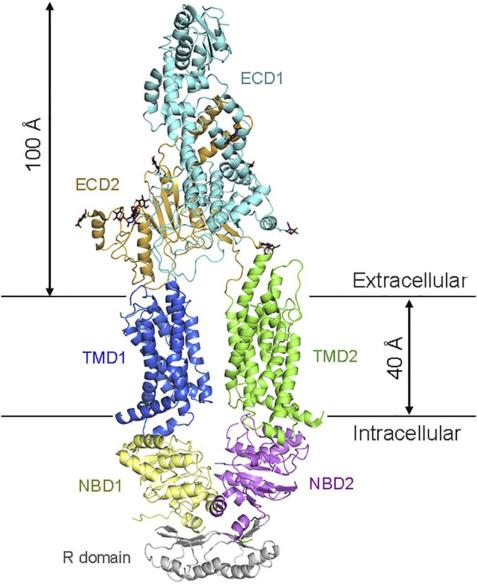 Fig. 1 Structure of human ABCA1 determined by single-particle cryoelectron microscopy.1
Key structural properties of ABCA1:
- Large multi-domain transmembrane proteins
- Lipid transport channels are formed by two transmembrane domains
- Two nucleotide binding domains hydrolyze ATP to provide power
- Specific extracellular domain mediates the recognition and binding of apolipoprotein A-I
Functions of ABCA1
The core function of ABCA1 is to mediate the outflow of cholesterol from cells to initiate the production of high-density lipoprotein. In addition, it is also involved in a variety of physiological and pathological processes, including immune responses and neuroprotection.
| Function | Description |
| Cholesterol leakage | Transport cholesterol and phospholipids within the cell to the extracellular space to provide core lipids for the nascent HDL particles. |
| HDL biogenesis | Binding to apolipoprotein A-I initiates the initial step of reverse cholesterol transport to form pre-β-HDL. |
| Anti-atherosclerosis | Promote the clearance of cholesterol within foam cells such as macrophages and slow down the formation of atherosclerotic plaques. |
| Immune regulation | By regulating the composition of lipid rafts in cell membranes, it affects the signal transduction and inflammatory response of immune cells. |
| Lipid homeostasis of the nervous system | Cholesterol balance is maintained in the blood-brain barrier and other parts of the brain, and its dysfunction is related to neurodegenerative diseases. |
Unlike passive diffusion, ABCA1-mediated cholesterol efflux is an active transport process powered by ATP, which ensures that cells can effectively maintain lipid homeostasis under various metabolic pressures.
Applications of ABCA1 and ABCA1 Antibody in Literature
1. Cao, Lei, et al. "E3 ubiquitin ligase Listerin regulates macrophage cholesterol efflux and atherosclerosis by targeting ABCA1." The Journal of Clinical Investigation 135.16 (2025). https://doi.org/10.1172/JCI186509
This study reveals that the E3 ligase Listerin stabilizes ABCA1, promotes cholesterol efflux from macrophages and inhibits foam cell formation by catalyzing the ubiquitination of the K63 site of ABCA1 and preventing its degradation by lysosomes, thereby providing a new target for the prevention and treatment of atherosclerosis.
2. Phillips, Michael C. "Is ABCA1 a lipid transfer protein?." Journal of lipid research 59.5 (2018): 749-763. https://doi.org/10.1194/jlr.R082313
This study reveals that ABCA1, as a plasma membrane phospholipid transporter, creates binding sites for apolipoprotein apoA-I by flipping phospholipids to the outer lobe of the cell membrane, thereby jointly mediating the outflow of phospholipids and free cholesterol to form new HDL particles.
3. Chen, Weiwei, et al. "Tumour‐associated macrophage‐derived DOCK7‐enriched extracellular vesicles drive tumour metastasis in colorectal cancer via the RAC1/ABCA1 axis." Clinical and Translational Medicine 14.2 (2024): e1591. https://doi.org/ 10.1002/ctm2.1591
This study reveals that tumor-associated macrophages (Tams) deliver DOCK7 through extracellular vesicles, activate the RAC1/AKT/FOXO1 signaling axis in CRC cells, and upregulate ABCA1 expression. This promotes the outflow of cholesterol and enhances the fluidity of cell membranes, thereby facilitating the metastasis of colorectal cancer. This mechanism suggests that DOCK7 can serve as a potential therapeutic target.
4. Ito, Marie, et al. "ABCA1 deficiency contributes to podocyte pyroptosis priming via the APE1/IRF1 axis in diabetic kidney disease." Scientific reports 13.1 (2023): 9616. https://doi.org/10.1038/s41598-023-35499-5
This study reveals that the absence of ABCA1 expression in podocytes can lead to the accumulation of APE1 protein, which then activates transcription factors (such as IRF1) in the reduced state, upregulates the expression of inflammasome-related genes such as caspase-4, and ultimately initiates pyroptosis, exacerbating the pathological process of diabetic nephropathy.
5. Yoon, Ha Young, et al. "ABCA1 69C> T polymorphism and the risk of type 2 diabetes mellitus: a systematic review and updated meta-analysis." Frontiers in Endocrinology 12 (2021): 639524. https://doi.org/10.3389/fendo.2021.639524
This meta-analysis confirmed that the 69C>T polymorphism of the ABCA1 gene is associated with the risk of type 2 diabetes. Individuals carrying the C allele (CC/CT genotype), especially in Asian populations, have a significantly higher risk of developing the disease than those carrying the TT genotype.
Creative Biolabs: ABCA1 Antibodies for Research
Creative Biolabs specializes in the production of high-quality ABCA1 antibodies for research and industrial applications. Our portfolio includes monoclonal antibodies tailored for ELISA, Flow Cytometry, Western blot, immunohistochemistry, and other diagnostic methodologies.
- Custom ABCA1 Antibody Development: Tailor-made solutions to meet specific research requirements.
- Bulk Production: Large-scale antibody manufacturing for industry partners.
- Technical Support: Expert consultation for protocol optimization and troubleshooting.
- Aliquoting Services: Conveniently sized aliquots for long-term storage and consistent experimental outcomes.
For more details on our ABCA1 antibodies, custom preparations, or technical support, contact us at email.
Reference
- Phillips, Michael C. "Is ABCA1 a lipid transfer protein?." Journal of lipid research 59.5 (2018): 749-763. https://doi.org/10.1194/jlr.R082313
Anti-ABCA1 antibodies
 Loading...
 Compare




Hot products 
-
Mouse Anti-EIF4G1 Recombinant Antibody (2A9) (CBMAB-A2544-LY)

-
Mouse Anti-ADGRE2 Recombinant Antibody (V2-261270) (CBMAB-C0813-LY)

-
Mouse Anti-BACE1 Recombinant Antibody (61-3E7) (CBMAB-1183-CN)

-
Mouse Anti-DLG1 Monolconal Antibody (4F3) (CBMAB-0225-CN)

-
Mouse Anti-ADRB2 Recombinant Antibody (V2-180026) (CBMAB-A1420-YC)

-
Rabbit Anti-ADRA1A Recombinant Antibody (V2-12532) (CBMAB-1022-CN)

-
Rabbit Anti-ABL1 (Phosphorylated Y245) Recombinant Antibody (V2-505716) (PTM-CBMAB-0465LY)

-
Rat Anti-AChR Recombinant Antibody (V2-12500) (CBMAB-0990-CN)

-
Mouse Anti-GFAP Recombinant Antibody (24) (CBMAB-G2927-LY)

-
Rabbit Anti-ABL1 (Phosphorylated Y185) Recombinant Antibody (V2-443434) (PTM-CBMAB-0001YC)

-
Rabbit Anti-DLK1 Recombinant Antibody (9D8) (CBMAB-D1061-YC)

-
Mouse Anti-ARIH1 Recombinant Antibody (C-7) (CBMAB-A3563-YC)

-
Mouse Anti-CRTAM Recombinant Antibody (CBFYC-2235) (CBMAB-C2305-FY)

-
Mouse Anti-AKT1 Recombinant Antibody (V2-180546) (CBMAB-A2070-YC)

-
Mouse Anti-FN1 Monoclonal Antibody (71) (CBMAB-1241CQ)

-
Rat Anti-ADAM10 Recombinant Antibody (V2-179741) (CBMAB-A1103-YC)

-
Mouse Anti-AQP2 Recombinant Antibody (E-2) (CBMAB-A3358-YC)

-
Mouse Anti-ALB Recombinant Antibody (V2-363290) (CBMAB-S0173-CQ)

-
Mouse Anti-ACTN4 Recombinant Antibody (V2-6075) (CBMAB-0020CQ)

-
Mouse Anti-AAV-5 Recombinant Antibody (V2-503416) (CBMAB-V208-1402-FY)

- AActivation
- AGAgonist
- APApoptosis
- BBlocking
- BABioassay
- BIBioimaging
- CImmunohistochemistry-Frozen Sections
- CIChromatin Immunoprecipitation
- CTCytotoxicity
- CSCostimulation
- DDepletion
- DBDot Blot
- EELISA
- ECELISA(Cap)
- EDELISA(Det)
- ESELISpot
- EMElectron Microscopy
- FFlow Cytometry
- FNFunction Assay
- GSGel Supershift
- IInhibition
- IAEnzyme Immunoassay
- ICImmunocytochemistry
- IDImmunodiffusion
- IEImmunoelectrophoresis
- IFImmunofluorescence
- IGImmunochromatography
- IHImmunohistochemistry
- IMImmunomicroscopy
- IOImmunoassay
- IPImmunoprecipitation
- ISIntracellular Staining for Flow Cytometry
- LALuminex Assay
- LFLateral Flow Immunoassay
- MMicroarray
- MCMass Cytometry/CyTOF
- MDMeDIP
- MSElectrophoretic Mobility Shift Assay
- NNeutralization
- PImmunohistologyp-Paraffin Sections
- PAPeptide Array
- PEPeptide ELISA
- PLProximity Ligation Assay
- RRadioimmunoassay
- SStimulation
- SESandwich ELISA
- SHIn situ hybridization
- TCTissue Culture
- WBWestern Blot
