
GST Tag Antibodies
Background
GST Tag is a kind of small molecule polypeptide tag widely used in the expression and purification of recombinant proteins. This tag is co-expressed with the target protein through gene fusion and can specifically bind to glutathione affinity chromatography media, thereby achieving rapid and efficient protein purification. Its discovery originated from the research on the glutathione metabolic pathway in the 1980s and has now become one of the most commonly used purification tools in the field of molecular biology. The proteins obtained through GST Tag not only maintain their natural conformation and biological activity, but also can be used to study protein-protein interactions, enzymatic functions and immune detection analyses, providing important technical support for biomedical research.
Structure of GST Tag
The GST tag protein is a commonly used purified tag protein with a molecular weight of approximately 26 kDa. Its size remains highly consistent across different expression systems because its gene sequence has been artificially optimized and designed, thus having a high degree of conservation. This protein is composed of 211 amino acids and adopts a typical spherical folding structure, forming a stable glutathione binding pocket. Its active center specifically binds to glutathione through sulfur bonds, and this mechanism is the structural basis for achieving efficient affinity purification. The secondary structure of the GST tag is mainly composed of alternating α -helix and β -fold, which provides a soluble and correctly folded spatial environment for the target protein.
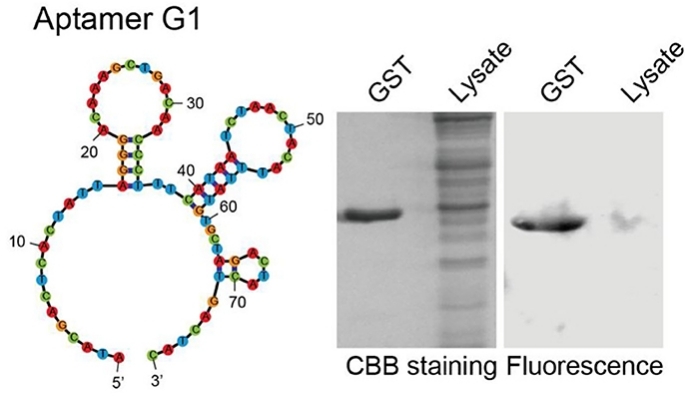 Fig. 1 Specific recognition of GST-tagged protein by aptamer G1.1
Key structural properties of GST Tag:
- The globular structure composed of 211 amino acids
- With conservative glutathione combined with active site
- Protein purification is achieved through specific affinity binding
Functions of GST Tag
The main function of GST Tag is to serve as an efficient affinity tag in the purification of recombinant proteins. However, its application has also expanded to multiple fields of molecular biology research.
| Function | Description |
| Protein purification | By taking advantage of its specific and reversible binding to immobilized glutathione, the target recombinant protein is rapidly separated and purified through affinity chromatography technology. |
| Enhanced solubility | When expressed in fusion with the target protein, it often enhances the solubility and stability of the target protein in host cells (such as Escherichia coli), and prevents the formation of inclusion bodies. |
| Detection and Capture | The fusion protein can be conveniently detected, quantified and immunoprecipitated (IP) by using ready-made anti-GST antibodies through techniques such as Western Blot (WB) and ELISA. |
| Research on Interaction | As a known "bait" protein, it is used in pull-down experiments to identify or verify the interaction with other "prey" proteins or nucleic acids. |
| Fixed platform | The purified GST fusion protein can be directly bound to glutathione-coated plates or microspheres for enzyme activity analysis or the construction of directional immobilized biosensors. |
The purification principle is based on the highly specific molecular recognition between GST and glutathione. This binding has high affinity and can be eluted under mild non-denatatory conditions, thereby maintaining the natural activity and conformation of the target protein.
Applications of GST Tag and GST Tag Antibody in Literature
1. Scheich, Christoph, Volker Sievert, and Konrad Büssow. "An automated method for high-throughput protein purification applied to a comparison of His-tag and GST-tag affinity chromatography." BMC biotechnology 3.1 (2003): 12. https://doi.org/10.1186/1472-6750-3-12
This article introduces an automatic method for parallel purification of GST-labeled proteins, which can efficiently process 96 samples within 3 hours without the need for centrifugation or magnetic beads, and has a relatively low cost. Compared with His tags, GST tags have a lower purification yield but comparable purity, making them suitable for high-throughput protein functional studies.
2. Zhao, ghua, and Junjie Hu. "Self-association of purified reconstituted ER luminal spacer Climp63." Frontiers in Cell and Developmental Biology 8 (2020): 500. https://doi.org/10.3389/fcell.2020.00500
In this study, the intracavitary domain (LD) of the endoplasmic reticulum protein Climp63 was purified using GST tags, and it was found that LD was prone to aggregation after GST removal. GST-LD can form oligomers, and its interaction with full-length proteins can be competed for by soluble LD, demonstrating that Climp63 exerts the endoplasmic reticulum lumen spacing function through direct autoassociation.
3. Reuten, Raphael, et al. "Maltose-binding protein (MBP), a secretion-enhancing tag for mammalian protein expression systems." PloS one 11.3 (2016): e0152386. https://doi.org/10.1371/journal.pone.0152386
This study compared the expression effects of various protein tags in eukaryotic systems and found that prokaryotic MBP tags significantly outperformed commonly used tags such as GST and Fc in promoting protein solubility and yield, and could reduce cell death and abnormal aggregation. They are suitable for secretion expression and functional research.
4. Zhou, Lixian, et al. "Expression of melittin in fusion with GST in Escherichia coli and its purification as a pure peptide with good bacteriostatic efficacy." Acs Omega 5.16 (2020): 9251-9258. https://doi.org/10.1021/acsomega.0c00085
In this study, GST tags were used to express and purify melittin (MET) in Escherichia coli. After enzymatic digestion and purification, highly active unlabeled recombinant MET was obtained, with a yield of 3.5 mg/ L. The antibacterial effect was comparable to that of commercial MET, providing a feasible method for large-scale production.
5. Ma, Li, et al. "Identification of linear epitopes in SjSP-13 of Schistosoma japonicum using a GST-peptide fusion protein microplate array." Parasites & Vectors 12.1 (2019): 507. https://doi.org/10.1186/s13071-019-3767-2
In this study, a microplate array was constructed using GST tag fusion peptides, and two linear B-cell epitopes of Schistosoma japonicum antigen JSP -13 were successfully identified. The diagnostic specificity reached 100%, providing high-potential markers for serological detection.
Creative Biolabs: GST Tag Antibodies for Research
Creative Biolabs specializes in the production of high-quality GST Tag antibodies for research and industrial applications. Our portfolio includes monoclonal antibodies tailored for ELISA, Flow Cytometry, Western blot, immunohistochemistry, and other diagnostic methodologies.
- Custom GST Tag Antibody Development: Tailor-made solutions to meet specific research requirements.
- Bulk Production: Large-scale antibody manufacturing for industry partners.
- Technical Support: Expert consultation for protocol optimization and troubleshooting.
- Aliquoting Services: Conveniently sized aliquots for long-term storage and consistent experimental outcomes.
For more details on our GST Tag antibodies, custom preparations, or technical support, contact us at email.
Reference
- Wang, Yao, Zhe Li, and Hanyang Yu. "Aptamer-based Western blot for selective protein recognition." Frontiers in chemistry 8 (2020): 570528. https://doi.org/10.3389/fchem.2020.570528
Anti-GST Tag antibodies
 Loading...
 Compare




Hot products 
-
Mouse Anti-ADGRE2 Recombinant Antibody (V2-261270) (CBMAB-C0813-LY)

-
Rat Anti-FABP3 Recombinant Antibody (CBXF-2299) (CBMAB-F1612-CQ)

-
Mouse Anti-CRTAM Recombinant Antibody (CBFYC-2235) (CBMAB-C2305-FY)

-
Mouse Anti-DISP2 Monoclonal Antibody (F66A4B1) (CBMAB-1112CQ)

-
Mouse Anti-ASTN1 Recombinant Antibody (H-9) (CBMAB-1154-CN)

-
Rat Anti-EMCN Recombinant Antibody (28) (CBMAB-E0280-FY)

-
Rabbit Anti-ALK (Phosphorylated Y1278) Recombinant Antibody (D59G10) (PTM-CBMAB-0035YC)

-
Mouse Anti-CCDC25 Recombinant Antibody (CBLC132-LY) (CBMAB-C9786-LY)

-
Mouse Anti-ACLY Recombinant Antibody (V2-179314) (CBMAB-A0610-YC)

-
Mouse Anti-ALB Recombinant Antibody (V2-180650) (CBMAB-A2186-YC)

-
Mouse Anti-BACE1 Recombinant Antibody (CBLNB-121) (CBMAB-1180-CN)

-
Mouse Anti-C1QC Recombinant Antibody (CBFYC-0600) (CBMAB-C0654-FY)

-
Mouse Anti-CASQ1 Recombinant Antibody (CBFYC-0863) (CBMAB-C0918-FY)

-
Mouse Anti-ANXA7 Recombinant Antibody (A-1) (CBMAB-A2941-YC)

-
Mouse Anti-ARSA Recombinant Antibody (CBYC-A799) (CBMAB-A3679-YC)

-
Mouse Anti-Acetyl SMC3 (K105/K106) Recombinant Antibody (V2-634053) (CBMAB-AP052LY)

-
Mouse Anti-CD46 Recombinant Antibody (CBFYC-0076) (CBMAB-C0085-FY)

-
Mouse Anti-GNA12 Recombinant Antibody (CBFYH-0402) (CBMAB-H1272-FY)

-
Mouse Anti-AQP2 Recombinant Antibody (E-2) (CBMAB-A3358-YC)

-
Mouse Anti-CAPZB Recombinant Antibody (CBYY-C0944) (CBMAB-C2381-YY)

- AActivation
- AGAgonist
- APApoptosis
- BBlocking
- BABioassay
- BIBioimaging
- CImmunohistochemistry-Frozen Sections
- CIChromatin Immunoprecipitation
- CTCytotoxicity
- CSCostimulation
- DDepletion
- DBDot Blot
- EELISA
- ECELISA(Cap)
- EDELISA(Det)
- ESELISpot
- EMElectron Microscopy
- FFlow Cytometry
- FNFunction Assay
- GSGel Supershift
- IInhibition
- IAEnzyme Immunoassay
- ICImmunocytochemistry
- IDImmunodiffusion
- IEImmunoelectrophoresis
- IFImmunofluorescence
- IGImmunochromatography
- IHImmunohistochemistry
- IMImmunomicroscopy
- IOImmunoassay
- IPImmunoprecipitation
- ISIntracellular Staining for Flow Cytometry
- LALuminex Assay
- LFLateral Flow Immunoassay
- MMicroarray
- MCMass Cytometry/CyTOF
- MDMeDIP
- MSElectrophoretic Mobility Shift Assay
- NNeutralization
- PImmunohistologyp-Paraffin Sections
- PAPeptide Array
- PEPeptide ELISA
- PLProximity Ligation Assay
- RRadioimmunoassay
- SStimulation
- SESandwich ELISA
- SHIn situ hybridization
- TCTissue Culture
- WBWestern Blot
