
HK3 Antibodies
Background
The HK3 gene encodes hexokinase 3 and mainly functions as a key enzyme initiating the intracellular glycolytic pathway. This protein not only maintains the basic energy metabolism of cells by catalyzing glucose phosphorylation to generate glucose-6-phosphate, but also plays an important role in regulating blood glucose homeostasis and cell growth. Unlike HK1 and HK2, which are mainly highly expressed in muscles, HK3 is widely distributed in various tissues, especially in white blood cells. Its activity changes are closely related to immune regulation and certain metabolic diseases. This gene was systematically identified in the mammalian genome in the 1970s. Its protein structure was gradually analyzed through subsequent research, revealing its unique catalytic domain and allosteric regulation mechanism. Due to its special position in connecting energy metabolism and cellular function, HK3 has become an important molecular target for the study of metabolic regulation, immune response and related disease mechanisms.
Structure of HK3
HK3 (hexokinase 3) is a protein with a molecular weight of approximately 100 kDa. This value may fluctuate slightly among different species due to sequence differences.
| Species | Human | Mouse | Rat |
| Molecular Weight (kDa) | About 100 | About 99 | About 100 |
| Primary Structural Differences | Has a catalytic domain and regulation structure | There are differences in the N-terminal sequence | Highly homologous to humans |
This protein is composed of multiple domains and presents a compact spherical conformation. Its core is a highly conserved catalytic domain responsible for binding to and phosphorylating glucose. The functional activity of a protein depends on the specific active pockets formed in its tertiary structure. This pocket stabilizes the substrate through specific amino acid residues (such as ATP-bound lysine and aspartic acid), while a unique N-terminal domain distinct from HK1 and HK2 is involved in its allosteric regulation and subcellular localization.
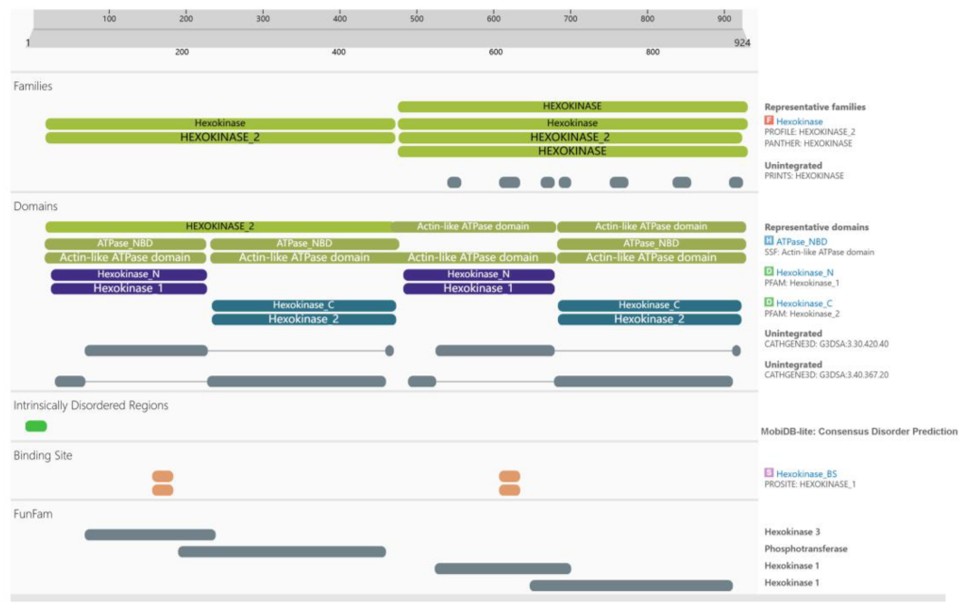 Fig. 1 Predicted protein domains and functional sites of HK3 from InterPro analysis.1
Key structural properties of HK3:
- Dual-domain spherical configuration
- Conservative catalytic active center
- Unique N-terminal regulatory region
Functions of HK3
The main function of HK3 (hexokinase 3) is to catalyze the first step of glycolysis, but its activity is also involved in regulating multiple physiological and pathological processes such as cell proliferation, apoptosis and oxidative stress response.
| Function | Description |
| Glucose phosphorylation | Catalyze the irreversible phosphorylation of glucose to glucose-6-phosphate, which is the rate-limiting step in all downstream pathways of cellular glycolysis and glucose metabolism. |
| Regulation of energy metabolism | By controlling the rate at which glucose enters metabolism, it directly affects the generation of ATP, providing energy for the basic activities of cells. |
| Cell growth and survival | The active and the expression level is related to cell cycle progression and the rapid proliferation of cells, such as some tumor cells often rise, support the biosynthesis of demand. |
| Association with oxidative stress | The generated glucose-6-phosphate is the substrate of the pentose phosphate pathway. The NADPH produced by this pathway helps maintain the REDOX balance of cells and resist damage from reactive oxygen species. |
| Immune cell function | In immune cells such as macrophages, the expression of HK3 is related to the activation status and inflammatory response of the cells, affecting their immune function. |
HK3 has a relatively high affinity for glucose (Km value), which enables it to approach its maximum activity at physiological glucose concentrations, thus ensuring that cells can continuously and efficiently take up and utilize glucose, especially in metabolically active tissues.
Applications of HK3 and HK3 Antibody in Literature
1. Zhang, Wei, et al. "Hexokinase HK3-mediated O-GlcNAcylation of EP300: a key regulator of PD-L1 expression and immune evasion in ccRCC." Cell Death & Disease 15.8 (2024): 613. https://doi.org/10.1038/s41419-024-06921-1
This study reveals that HK3 enhances the stability and activity of EP300 protein by mediating O-GlcNAc glycosylation, and then collaborates with the transcription factor TFAP2A to promote PD-L1 expression, driving immune escape in clear cell renal cell carcinoma. This mechanism provides a new strategy for enhancing the efficacy of immunotherapy.
2. Li, Shupeng, et al. "HK3 stimulates immune cell infiltration to promote glioma deterioration." Cancer Cell International 23.1 (2023): 227. https://doi.org/10.1186/s12935-023-03039-w
Research has found that the expression of HK3 in glioma increases with the degree of malignancy and can independently predict a poor prognosis. HK3 significantly promotes the infiltration of immune cells such as M2 macrophages in the tumor microenvironment, providing a new target for understanding the immune metabolic regulation of glioma.
3. Wu, Xin, et al. "Dual roles of HK3 in regulating the network between tumor cells and tumor-associated macrophages in neuroblastoma." Cancer Immunology, Immunotherapy 73.7 (2024): 122. https://doi.org/10.1007/s00262-024-03702-9
Research has found that high expression of HK3 in neuroblastoma predicts a poor prognosis. It drives the malignant behavior of tumor cells through the PI3K/AKT-CXCL14 axis and recruits polarized M2-type tumor-associated macrophages to form a tumor-promoting cycle, making it a potential therapeutic target.
4. Qin, Yingying, et al. "ESR1, HK3 and BRSK1 gene variants are associated with both age at natural menopause and premature ovarian failure." Orphanet journal of rare diseases 7.1 (2012): 5. https://doi.org/10.1186/1750-1172-7-5
This study, through genetic analysis of the Han Chinese population, for the first time discovered that the HK3 gene locus rs2278493 is significantly associated with early-onset ovarian insufficiency (POF), suggesting that this gene may be involved in the shared genetic mechanism of ovarian reserve and follicular aging.
5. Tuo, Zhan, et al. "HK3 is correlated with immune infiltrates and predicts response to immunotherapy in non‐small cell lung cancer." Clinical and translational medicine 10.1 (2020): 319-330. https://doi.org/10.1002/ctm2.6
The article indicates that the high expression of HK3 in non-small cell lung cancer is closely related to the tumor immune microenvironment and inflammatory activity. Its expression level can predict the efficacy of PD-1 antibody, suggesting that HK3 is a key metabolic regulatory factor affecting the response to immunotherapy.
Creative Biolabs: HK3 Antibodies for Research
Creative Biolabs specializes in the production of high-quality HK3 antibodies for research and industrial applications. Our portfolio includes monoclonal antibodies tailored for ELISA, Flow Cytometry, Western blot, immunohistochemistry, and other diagnostic methodologies.
- Custom HK3 Antibody Development: Tailor-made solutions to meet specific research requirements.
- Bulk Production: Large-scale antibody manufacturing for industry partners.
- Technical Support: Expert consultation for protocol optimization and troubleshooting.
- Aliquoting Services: Conveniently sized aliquots for long-term storage and consistent experimental outcomes.
For more details on our HK3 antibodies, custom preparations, or technical support, contact us at email.
Reference
- Luo, Ping, et al. "Identification of HK3 as a Potential Key Biomarker in the Progression of Temporomandibular Joint Osteoarthritis via RNA Sequencing." Biology 14.11 (2025): 1492. https://doi.org/10.3390/biology14111492
Anti-HK3 antibodies
 Loading...
 Compare




Hot products 
- AActivation
- AGAgonist
- APApoptosis
- BBlocking
- BABioassay
- BIBioimaging
- CImmunohistochemistry-Frozen Sections
- CIChromatin Immunoprecipitation
- CTCytotoxicity
- CSCostimulation
- DDepletion
- DBDot Blot
- EELISA
- ECELISA(Cap)
- EDELISA(Det)
- ESELISpot
- EMElectron Microscopy
- FFlow Cytometry
- FNFunction Assay
- GSGel Supershift
- IInhibition
- IAEnzyme Immunoassay
- ICImmunocytochemistry
- IDImmunodiffusion
- IEImmunoelectrophoresis
- IFImmunofluorescence
- IGImmunochromatography
- IHImmunohistochemistry
- IMImmunomicroscopy
- IOImmunoassay
- IPImmunoprecipitation
- ISIntracellular Staining for Flow Cytometry
- LALuminex Assay
- LFLateral Flow Immunoassay
- MMicroarray
- MCMass Cytometry/CyTOF
- MDMeDIP
- MSElectrophoretic Mobility Shift Assay
- NNeutralization
- PImmunohistologyp-Paraffin Sections
- PAPeptide Array
- PEPeptide ELISA
- PLProximity Ligation Assay
- RRadioimmunoassay
- SStimulation
- SESandwich ELISA
- SHIn situ hybridization
- TCTissue Culture
- WBWestern Blot
