
OLIG2 Antibodies
Background
The OLIG2 gene encodes a transcription factor containing the basic helical-ring-helix (bHLH) domain, which is mainly expressed during the development of the central nervous system. This protein plays a core regulatory role in the fate determination, differentiation and spatial pattern formation of glial cells (especially oligodendrocytes) and specific neuronal subtypes. OLIG2 not only promotes the generation of oligodendrocyte precursor cells and myelin formation by precisely coordinating downstream gene networks, but also plays a key role in the development of motor neurons. Since its discovery in the late 1990s, research on OLIG2 has greatly deepened people's understanding of the molecular mechanisms of cell lineage differentiation in the nervous system and related diseases (such as glioma and demyelinating lesions), and has become an important research object in the field of neurodevelopment and regenerative medicine.
Structure of OLIG2
The OLIG2 gene encodes a relatively small transcription factor protein with a molecular weight of approximately 32 kDa. There are certain differences in the molecular weight of this protein among different species, mainly due to the minor changes in its amino acid sequence.
| Species | Human | Mouse | Rat | Zebrafish |
| Molecular Weight (kDa) | 32 | 31.8 | 31.9 | About 33 |
| Primary Structural Differences | Contains the bHLH domain, which is the functional core | Highly homologous to humans | Highly similar to mice | Homologous genes exist, functionally conserved |
This protein is composed of approximately 330 amino acids, and its functional core lies in a conserved basic helical-ring-helix (bHLH) domain. This domain, through the dimerization interface formed by its α -helix, enables two OLIG2 protein molecules to combine and form a dimer. This dimer specifically recognizes and binds to the E-box sequence (CANNTG) of the promoter region of the target gene through its "basic" region, thereby precisely regulating the downstream gene network related to the development and differentiation of glial cells (especially oligodendrocytes) and specific motor neurons, playing a pivotal role in the formation of central nervous system patterns.
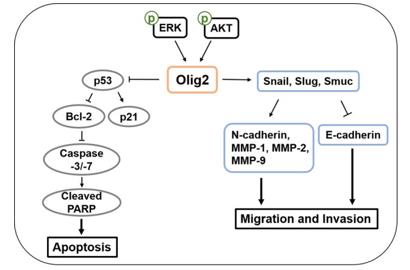 Fig. 1 Olig2 regulates apoptosis, migration and invasion of melanoma cells.1
Key structural properties of OLIG2:
- Conservative basic helical ring-helical (bHLH) domain
- Regions containing basic amino acids are responsible for DNA recognition binding
- α-helical mediated dimerization interface to form functional units
Functions of OLIG2
The core function of the OLIG2 gene is to act as a transcription factor and regulate the development of the nervous system. However, it is also involved in a variety of pathophysiological processes, including glioma occurrence and glial responses after injury.
| Function | Description |
| Glial fate determination | During embryonic development, OLIG2 is expressed in specific neural precursor cells, driving their differentiation into oligodendrocytes (responsible for myelin formation) and specific types of astrocytes. |
| Myelin formation regulation | By activating the downstream gene network, OLIG2 continuously promotes the maturation of oligodendrocyte precursor cells and myelin synthesis, which is crucial for the normal electrical signal conduction of the central nervous system. |
| Regulation of myelin formation | By activating the downstream gene network, OLIG2 continuously promotes the maturation of oligodendrocyte precursor cells and myelin synthesis, which is crucial for the normal electrical signal conduction of the central nervous system. |
| Glioma occurrence and maintenance | OLIG2 is abnormally highly expressed in many high-grade gliomas, such as glioblastoma, and can drive the proliferation, self-renewal and drug resistance of tumor stem cell-like cells, promoting the malignant progression of tumors. |
| Injury response and regeneration | After central nervous system injury, the expression changes of OLIG2 can affect the response of oligodendrocyte precursor cells and play a complex role in inhibiting regeneration or promoting limited repair. |
Unlike function-specific proteins such as hemoglobin, the "action curve" of OLIG2 as a transcriptional regulatory factor is highly context-dependent. Its biological effects are strictly dependent on the developmental stage, cell type, transcriptional chaperones and epigenetic environment, which determines that it can precisely regulate completely different cell fates and pathological processes in different spatiotemporal backgrounds.
Applications of OLIG2 and OLIG2 Antibody in Literature
1. Myers, Bianca L., et al. "Transcription factors ASCL1 and OLIG2 drive glioblastoma initiation and co-regulate tumor cell types and migration." Nature communications 15.1 (2024): 10363. https://doi.org/10.1038/s41467-024-54750-9
The article indicates that in the mouse glioblastoma model, ASCL1 and OLIG2 are co-dysregulated and functionally redundant, which are essential for tumor formation. Both regulate tumor cell types and migration degrees through intermodulation and downstream target genes. Among them, high ASCL1 levels drive high migratory neural stem cell/astroglial cell subpopulations, characterized by upregulation of genes such as ribosomal proteins and oxidative phosphorylation, which are associated with metastasis and drug resistance.
2. Lee, Ji Eun, et al. "Olig2 regulates p53-mediated apoptosis, migration and invasion of melanoma cells." Scientific reports 11.1 (2021): 7778. https://doi.org/10.1038/s41598-021-87438-x
The article indicates that Olig2 is overexpressed in melanoma. Its down-regulation promotes apoptosis by activating p53 and caspase-3/7, and hinders tumor migration and invasion by inhibiting the activities of EMT and MMP. Olig2 may act downstream of the MEK/ERK and PI3K/AKT pathways, influencing the progression of melanoma.
3. Tatsumi, Kouko, et al. "Olig2-astrocytes express neutral amino acid transporter SLC7A10 (Asc-1) in the adult brain." Molecular Brain 14.1 (2021): 163. https://doi.org/10.1186/s13041-021-00874-8
The article indicates that based on public databases and laser microcutting verification, Olig2-positive astrocytes in the brains of adult mice are a subpopulation enriched with transport protein genes, among which the expression of the SLC7A10 gene is significantly higher than that of GFAP-positive astrocytes. Immunohistochemistry revealed that the SLC7A10 protein was co-located in the fine protrusions of Olig2-positive cells, suggesting that it plays a specific role in Olig2 astrocytes.
4. Liu, Huiqing, et al. "Olig2 SUMOylation protects against genotoxic damage response by antagonizing p53 gene targeting." Cell Death & Differentiation 27.11 (2020): 3146-3161. https://doi.org/10.1038/s41418-020-0569-1
The article indicates that Olig2 enhances its transcriptional activity through the synergistic effect of Sumoylation modification (K27/K76/K112) and phosphorylation, thereby inhibiting p53-mediated cell cycle arrest and apoptosis. This mechanism hinders the binding of p53 to target genes and is a key factor for gliomas to resist DNA damage and temozolomide chemotherapy.
5. Wei, Haichao, et al. "OLIG2 regulates lncRNAs and its own expression during oligodendrocyte lineage formation." BMC biology 19.1 (2021): 132. https://doi.org/10.1186/s12915-021-01057-6
This study, by integrating the genome-wide binding and epigenetic data of OLIG2, reveals its regulatory mechanism in the three stages of oligodendrocyte differentiation. OLIG2 not only regulates 613 potentially related lncrnas and 48 lncrnas that are highly expressed in the lineage, influencing cell development; It can also self-regulate through the 3'utr of its own mRNA, providing an in-depth explanation of the regulatory network at the transcriptional and post-transcriptional levels.
Creative Biolabs: OLIG2 Antibodies for Research
Creative Biolabs specializes in the production of high-quality OLIG2 antibodies for research and industrial applications. Our portfolio includes monoclonal antibodies tailored for ELISA, Flow Cytometry, Western blot, immunohistochemistry, and other diagnostic methodologies.
- Custom OLIG2 Antibody Development: Tailor-made solutions to meet specific research requirements.
- Bulk Production: Large-scale antibody manufacturing for industry partners.
- Technical Support: Expert consultation for protocol optimization and troubleshooting.
- Aliquoting Services: Conveniently sized aliquots for long-term storage and consistent experimental outcomes.
For more details on our OLIG2 antibodies, custom preparations, or technical support, contact us at email.
Reference
- Lee, Ji Eun, et al. "Olig2 regulates p53-mediated apoptosis, migration and invasion of melanoma cells." Scientific reports 11.1 (2021): 7778. https://doi.org/10.1038/s41598-021-87438-x
Anti-OLIG2 antibodies
 Loading...
 Compare


Hot products 
-
Mouse Anti-ADAM12 Recombinant Antibody (V2-179752) (CBMAB-A1114-YC)

-
Rabbit Anti-AP2M1 (Phosphorylated T156) Recombinant Antibody (D4F3) (PTM-CBMAB-0610LY)

-
Mouse Anti-FLT1 Recombinant Antibody (11) (CBMAB-V0154-LY)

-
Mouse Anti-CCDC25 Recombinant Antibody (CBLC132-LY) (CBMAB-C9786-LY)

-
Mouse Anti-BIRC7 Recombinant Antibody (88C570) (CBMAB-L0261-YJ)

-
Mouse Anti-AP4E1 Recombinant Antibody (32) (CBMAB-A2996-YC)

-
Mouse Anti-C4B Recombinant Antibody (CBYY-C2996) (CBMAB-C4439-YY)

-
Mouse Anti-GGT1 Recombinant Antibody (1F9) (CBMAB-G3273-LY)

-
Mouse Anti-2C TCR Recombinant Antibody (V2-1556) (CBMAB-0951-LY)

-
Mouse Anti-APC Recombinant Antibody (CBYC-A661) (CBMAB-A3036-YC)

-
Mouse Anti-GFP Recombinant Antibody (28) (CBMAB-G3038-LY)

-
Mouse Anti-ALDOA Recombinant Antibody (A2) (CBMAB-A2316-YC)

-
Mouse Anti-ASB9 Recombinant Antibody (1D8) (CBMAB-A0529-LY)

-
Mouse Anti-GSDMA Recombinant Antibody (CBLG1-2983) (CBMAB-G5128-LY)

-
Mouse Anti-AKT1 (Phosphorylated S473) Recombinant Antibody (V2-505430) (PTM-CBMAB-0067LY)

-
Mouse Anti-FN1 Monoclonal Antibody (D6) (CBMAB-1240CQ)

-
Mouse Anti-ACLY Recombinant Antibody (V2-179314) (CBMAB-A0610-YC)

-
Mouse Anti-ALX1 Recombinant Antibody (96k) (CBMAB-C0616-FY)

-
Mouse Anti-CD247 Recombinant Antibody (6B10.2) (CBMAB-C1583-YY)

-
Mouse Anti-CD24 Recombinant Antibody (SN3) (CBMAB-C1037-CQ)

- AActivation
- AGAgonist
- APApoptosis
- BBlocking
- BABioassay
- BIBioimaging
- CImmunohistochemistry-Frozen Sections
- CIChromatin Immunoprecipitation
- CTCytotoxicity
- CSCostimulation
- DDepletion
- DBDot Blot
- EELISA
- ECELISA(Cap)
- EDELISA(Det)
- ESELISpot
- EMElectron Microscopy
- FFlow Cytometry
- FNFunction Assay
- GSGel Supershift
- IInhibition
- IAEnzyme Immunoassay
- ICImmunocytochemistry
- IDImmunodiffusion
- IEImmunoelectrophoresis
- IFImmunofluorescence
- IGImmunochromatography
- IHImmunohistochemistry
- IMImmunomicroscopy
- IOImmunoassay
- IPImmunoprecipitation
- ISIntracellular Staining for Flow Cytometry
- LALuminex Assay
- LFLateral Flow Immunoassay
- MMicroarray
- MCMass Cytometry/CyTOF
- MDMeDIP
- MSElectrophoretic Mobility Shift Assay
- NNeutralization
- PImmunohistologyp-Paraffin Sections
- PAPeptide Array
- PEPeptide ELISA
- PLProximity Ligation Assay
- RRadioimmunoassay
- SStimulation
- SESandwich ELISA
- SHIn situ hybridization
- TCTissue Culture
- WBWestern Blot
