
TIRAP Antibodies
Background
TIRAP is a type of adaptor protein, primarily functioning as a key mediator in the Toll-like receptor (TLR) signaling pathway, and participates in the initiation of innate immune responses. The protein encoded by this gene plays a role in the signal transduction of TLR2 and TLR4, by recruiting downstream signaling molecules to activate immune-related pathways such as NF-κB, thereby regulating inflammatory responses and host defense mechanisms. Studies have shown that the dysfunction of TIRAP is associated with the susceptibility to various infectious diseases and autoimmune disorders. Its structural characteristics and signaling mechanism have been widely elucidated, providing an important model for understanding the precise regulation of the immune receptor signaling network and becoming a potential target for intervention strategies for related diseases.
Structure of TIRAP
TIRAP is a type of adaptor protein, with a molecular weight of approximately 25-28 kDa. The exact size may vary slightly depending on post-translational modifications or subtypes.
| Species | Human | Mouse | Rat |
| Molecular Weight (kDa) | ~25-28 | ~25-28 | ~25-28 |
| Primary Structural Differences | Containing the N-terminal death domain and the C-terminal TIR domain | The structure is highly similar to that of humans | The structure is highly similar to that of humans |
The TIRAP protein is composed of approximately 221 amino acids and its spatial structure is constituted by two main functional domains. The N-terminal region contains a death domain that mediates protein-protein interactions with receptors or downstream molecules. The C-terminal region contains a highly conserved TIR domain, which is the core for its participation in Toll-like receptor signal transduction. Through homotypic interaction, it binds to the TIR domain of the upstream receptor and downstream adaptor protein MyD88, thereby initiating the downstream signal cascade reaction.
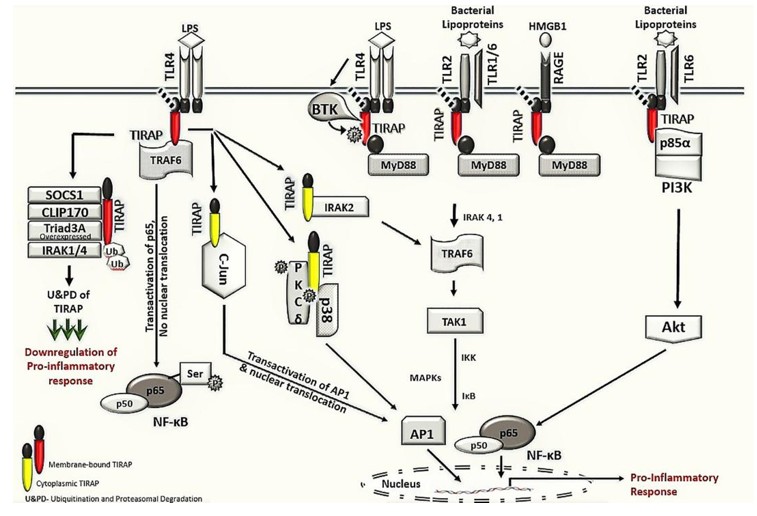 Fig. 1 TIRAP interacting machinery in the activation of inflammatory signaling.1
Key structural properties of TIRAP:
- Double-domain configuration
- Death domains mediate protein-protein interactions
- The TIR domain is responsible for signal transduction
Functions of TIRAP
The main function of TIRAP is to act as a key adaptor protein in the innate immune signaling pathway. However, it is also involved in regulating other cellular processes, including the initiation of the inflammatory response and the maintenance of immune homeostasis.
| Function | Description |
| Signal Transduction | As a specific adaptor protein for TLR2 and TLR4 receptors, it connects the upstream receptors with the downstream adaptor protein MyD88, initiating the signal cascade reaction. |
| Inflammation Initiation | By recruiting and activating downstream kinases, it ultimately leads to the activation of transcription factors such as NF-κB, inducing the expression of pro-inflammatory cytokines and chemokines. |
| Immune Response Regulation | Specifically transmits signals from cell membrane TLRs (such as TLR2/4), which is crucial for recognizing bacterial components and triggering early host defense. |
| Signal Specificity | Its function is receptor-selective, mainly mediating the signals of TLR2 and TLR4, and not participating in the signaling pathways of TLR3, TLR7/9, etc. that rely on other adaptor proteins, ensuring the accuracy of the immune response. |
| Disease Association | The functional mutations or abnormal expressions of this gene are associated with the differences in an individual's susceptibility to specific bacterial infections and the risk of certain autoimmune diseases. |
Unlike MyD88, which forms a universal signaling hub, TIRAP plays a more specific role. It is like a particular "connector", precisely transferring the danger signals from specific pathogens on the cell membrane (such as bacterial lipopolysaccharides and lipoproteins) to the general inflammatory response pathways within the cell.
Applications of TIRAP and TIRAP Antibody in Literature
1. Rajpoot, Sajjan, et al. "TIRAP in the mechanism of inflammation." Frontiers in Immunology 12 (2021): 697588. https://doi.org/10.3389/fimmu.2021.697588
The article indicates that TIRAP, as a crucial adaptor protein, not only mediates TLR-MyD88 signaling, but also interacts with various intracellular signaling molecules through its TIR domain, regulating acute and chronic inflammatory responses. This domain, as the core interface for protein interactions, is a potential therapeutic target for inflammatory diseases.
2. Lannoy, Valérie, et al. "TIRAP, TRAM, and toll‐like receptors: the untold story." Mediators of Inflammation 2023.1 (2023): 2899271. https://doi.org/10.1155/2023/2899271
The article indicates that Toll-like receptors regulate innate immunity through MyD88-dependent/non-dependent pathways. Besides MyD88, adaptor proteins TIRAP and TRAM are also crucial for the signal transduction and functions of most TLRs, jointly mediating the complete immune response.
3. Belhaouane, Imène, et al. "Tirap controls Mycobacterium tuberculosis phagosomal acidification." PLoS Pathogens 19.3 (2023): e1011192. https://doi.org/10.1371/journal.ppat.1011192
The research has found that the TIRAP adaptor protein plays a crucial role in the development of tuberculosis. Its functional deficiency or reduced expression can actually enhance the host's ability to resist infection by Mycobacterium tuberculosis. This is mainly achieved by preventing the acidification and rupture of phagosomes and by blocking the Cish-dependent signaling pathway, providing a new target for anti-tuberculosis treatment.
4. Rajpoot, Sajjan, et al. "TIRAP-mediated activation of p38 MAPK in inflammatory signaling." Scientific Reports 12.1 (2022): 5601. https://doi.org/10.1038/s41598-022-09528-8
This study, through molecular docking and kinetic simulation, revealed the crucial role of the phosphorylation at the tyrosine residue Y86 of the TIRAP adaptor protein in its binding to p38 MAPK. This phosphorylation can enhance the binding affinity between the two, providing a structural basis for targeting this interaction for the treatment of chronic inflammation.
5. Belhaouane, Imène, et al. "Paradoxical roles of the MAL/Tirap adaptor in pathologies." Frontiers in Immunology 11 (2020): 569127. https://doi.org/10.3389/fimmu.2020.569127
The article indicates that the key adaptor protein MAL (TIRAP) of TLRs plays a crucial role in the immune response, and its functional deficiency may lead to disease susceptibility or resistance. This article reviews the role of MAL in different pathological signaling pathways and its dual impact on the immune response.
Creative Biolabs: TIRAP Antibodies for Research
Creative Biolabs specializes in the production of high-quality TIRAP antibodies for research and industrial applications. Our portfolio includes monoclonal antibodies tailored for ELISA, Flow Cytometry, Western blot, immunohistochemistry, and other diagnostic methodologies.
- Custom TIRAP Antibody Development: Tailor-made solutions to meet specific research requirements.
- Bulk Production: Large-scale antibody manufacturing for industry partners.
- Technical Support: Expert consultation for protocol optimization and troubleshooting.
- Aliquoting Services: Conveniently sized aliquots for long-term storage and consistent experimental outcomes.
For more details on our TIRAP antibodies, custom preparations, or technical support, contact us at email.
Reference
- Rajpoot, Sajjan, et al. "TIRAP in the mechanism of inflammation." Frontiers in Immunology 12 (2021): 697588. Distributed under Open Access license CC BY 4.0, without modification. https://doi.org/10.3389/fimmu.2021.697588
Anti-TIRAP antibodies
 Loading...
 Compare




Hot products 
- AActivation
- AGAgonist
- APApoptosis
- BBlocking
- BABioassay
- BIBioimaging
- CImmunohistochemistry-Frozen Sections
- CIChromatin Immunoprecipitation
- CTCytotoxicity
- CSCostimulation
- DDepletion
- DBDot Blot
- EELISA
- ECELISA(Cap)
- EDELISA(Det)
- ESELISpot
- EMElectron Microscopy
- FFlow Cytometry
- FNFunction Assay
- GSGel Supershift
- IInhibition
- IAEnzyme Immunoassay
- ICImmunocytochemistry
- IDImmunodiffusion
- IEImmunoelectrophoresis
- IFImmunofluorescence
- IGImmunochromatography
- IHImmunohistochemistry
- IMImmunomicroscopy
- IOImmunoassay
- IPImmunoprecipitation
- ISIntracellular Staining for Flow Cytometry
- LALuminex Assay
- LFLateral Flow Immunoassay
- MMicroarray
- MCMass Cytometry/CyTOF
- MDMeDIP
- MSElectrophoretic Mobility Shift Assay
- NNeutralization
- PImmunohistologyp-Paraffin Sections
- PAPeptide Array
- PEPeptide ELISA
- PLProximity Ligation Assay
- RRadioimmunoassay
- SStimulation
- SESandwich ELISA
- SHIn situ hybridization
- TCTissue Culture
- WBWestern Blot
