
KDM6B Antibodies
Background
KDM6B is a specific epigenetic regulatory enzyme that specifically catalyzes the demethylation of histone H3 at the 27th lysine (H3K27me3). It is mainly distributed in various tissues of mammals and plays a crucial role in embryonic development, immune response, and cell differentiation. This protein removes transcriptional inhibitory modifications to activate the expression of downstream target genes, thereby influencing cell fate determination and inflammatory responses. KDM6B is particularly important in the formation of neural crest and skeletal development, and its abnormal expression is closely related to various tumors, autoimmune diseases, and developmental defects. In 2007, its demethylase activity was independently discovered by multiple research teams, and since then, it has rapidly become a research hotspot in the field of epigenetics. Its structure contains a highly conserved JmjC domain, which is catalyzed by the participation of iron ions and α-ketoglutarate. The elucidation of the mechanism of this enzyme not only deepens our understanding of the dynamic regulation of histone modifications but also provides a theoretical basis for the development of drugs targeting epigenetic modifications.
Structure of KDM6B
The molecular weight of the KDM6B protein is approximately 180 kDa and it varies among different species. This protein mainly catalyzes the demethylation of trimethylation of lysine at position 27 of histone H3 through the JmjC domain.
| Species | Human | Mouse | Zebrafish | Fruit fly | Nematode |
| Molecular Weight (kDa) | 180 | 177 | 185 | 170 | 168 |
| Primary Structural Differences | Containing JmjC, TPR, and ARID domains | Highly similar to others | Conservation of the ARID domain | Retain only the JmjC domain | Only the JmjC core region |
The full-length KDM6B contains approximately 1400 amino acids and has multiple functional domains. Its JmjC domain is located at the C-terminal end and relies on Fe²⁺and α-ketoglutarate to carry out demethylation reactions; the N-terminal TPR domain mediates protein interactions, while the ARID domain is involved in DNA binding. The entire protein removes the H3K27me3 modification, thereby relieving the inhibition on gene transcription. The TPR domain helps recruit to specific genomic regions, the ARID enhances substrate recognition specificity, and the active pocket at the center of the JmjC domain precisely accommodates the modified substrate and completes the catalysis.
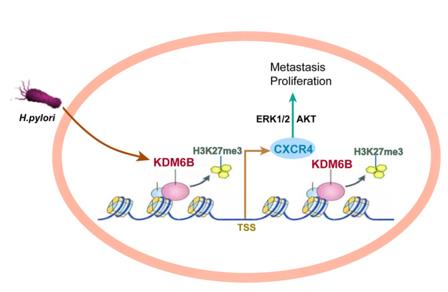 Fig. 1 Mechanism of KDM6M in Gastric Cancer Development.1
Key structural properties of KDM6B:
- The catalytic domain of JmjC is dependent on iron ions and α-ketoglutarate
- TPR domains mediate protein interactions with a variety of transcription factors
- ARID domains enhance substrate DNA binding specificity
Functions of KDM6B
The main function of KDM6B is to catalyze the demethylation of histone H3K27me3, thereby activating gene transcription. In addition, this protein is involved in various biological processes such as cell differentiation, inflammatory response, and tumor suppression.
| Function | Description |
| Histone demethylation | Specifically removes the H3K27me3 modification, relieving the transcriptional inhibition mediated by the Polycomb complex. |
| Cell differentiation regulation | Activates lineage-specific genes in embryonic stem cells and in the development of nerves and bones. |
| Inflammation and immune response | Affects the balance between pro-inflammatory and anti-inflammatory responses by regulating macrophage polarization and T cell differentiation. |
| Tumor suppression or promotion | Function is tissue-dependent: suppresses tumors in some cases, and promotes progression through abnormal high expression in other tumors. |
| Hypoxia adaptation | Induces expression under hypoxic conditions, assisting cells in coping with oxidative stress. |
The recognition of substrates by KDM6B is highly specific. Its JmjC domain strictly distinguishes between methylation and acetylation modifications, and also shows preferences for different methylation states (trimethylation vs. dimethylation). This substrate selectivity determines its unique position in the regulation of epigenetic transcription.
Applications of KDM6B and KDM6B Antibody in Literature
1. Liu, Fen, et al. "KDM6B promotes gastric carcinogenesis and metastasis via upregulation of CXCR4 expression." Cell Death & Disease 13.12 (2022): 1068. https://doi.org/10.1038/s41419-022-05458-5
The article indicates that KDM6B is upregulated in gastric cancer and is associated with poor prognosis. It can remove the H3K27me3 modification in the CXCR4 promoter region through its enzymatic activity, thereby upregulating CXCR4 expression and promoting the proliferation and metastasis of gastric cancer cells. Helicobacter pylori can induce the expression of KDM6B. Therefore, KDM6B is a potential oncogenic factor and therapeutic target for gastric cancer.
2. Jiang, Yuhang, et al. "KDM6B-mediated histone demethylation of LDHA promotes lung metastasis of osteosarcoma." Theranostics 11.8 (2021): 3868. https://doi.org/10.7150/thno.53347
The study reveals that the histone demethylase KDM6B is highly expressed in osteosarcoma and is associated with poor prognosis. KDM6B upregulates the expression of LDHA by removing the H3K27me3 modification in the promoter region of the LDHA gene, thereby promoting tumor metastasis. Targeted inhibition of KDM6B can significantly inhibit the migration and lung metastasis of osteosarcoma cells, suggesting its potential as a therapeutic target.
3. Xun, Jing, et al. "Cancer-derived exosomal miR-138-5p modulates polarization of tumor-associated macrophages through inhibition of KDM6B." Theranostics 11.14 (2021): 6847. https://doi.org/10.7150/thno.51864
The study found that breast cancer cells deliver miR-138-5p via exosomes to tumor-associated macrophages, inhibiting the expression of KDM6B in these cells. This process hinders the polarization of macrophages towards the M1 type and promotes the polarization towards the M2 type, thereby accelerating lung metastasis of the tumor. The level of circulating exosomal miR-138-5p is positively correlated with the progression of breast cancer, suggesting its potential as a prognostic marker and therapeutic target.
4. Gao, Yuen, Mohammad B. Aljazi, and Jin He. "Kdm6b haploinsufficiency causes ASD/ADHD-like behavioral deficits in mice." Frontiers in behavioral neuroscience 16 (2022): 905783. https://doi.org/10.3389/fnbeh.2022.905783
Studies have shown that insufficient dosage of KDM6B can lead to autism-like social impairments and attention deficit hyperactivity disorder-like behaviors in mice, such as excessive activity and impulsivity. This finding reveals the potential causal link between KDM6B gene mutations and neurodevelopmental disorders, providing an animal model for the study of related mechanisms.
5. Wu, Qiong, et al. "Evi1 governs Kdm6b-mediated histone demethylation to regulate the Laptm4b-driven mTOR pathway in hematopoietic progenitor cells." The Journal of Clinical Investigation 134.24 (2024). https://doi.org/10.1172/JCI173403
In this study, by inducing overexpression of EVI1 in mouse hematopoietic stem cells, a myelodysplastic syndrome model was established. It was revealed that this model upregulated KDM6B to remove the H3K27me3 modification of the target gene LAPTM4B, activating the mTOR pathway to promote malignant proliferation. This signaling axis was also present in patient samples, providing a new target for the treatment of related leukemia.
Creative Biolabs: KDM6B Antibodies for Research
Creative Biolabs specializes in the production of high-quality KDM6B antibodies for research and industrial applications. Our portfolio includes monoclonal and polyclonal antibodies tailored for ELISA, Flow Cytometry, Western blot, immunohistochemistry, and other diagnostic methodologies.
- Custom KDM6B Antibody Development: Tailor-made solutions to meet specific research requirements.
- Bulk Production: Large-scale antibody manufacturing for industry partners.
- Technical Support: Expert consultation for protocol optimization and troubleshooting.
- Aliquoting Services: Conveniently sized aliquots for long-term storage and consistent experimental outcomes.
For more details on our KDM6B antibodies, custom preparations, or technical support, contact us at info@creative-biolabs.com.
Reference
- Liu, Fen, et al. "KDM6B promotes gastric carcinogenesis and metastasis via upregulation of CXCR4 expression." Cell Death & Disease 13.12 (2022): 1068. Distributed under Open Access license CC BY 4.0, without modification. https://doi.org/10.1038/s41419-022-05458-5
Anti-KDM6B antibodies
 Loading...
 Compare




Hot products 
- AActivation
- AGAgonist
- APApoptosis
- BBlocking
- BABioassay
- BIBioimaging
- CImmunohistochemistry-Frozen Sections
- CIChromatin Immunoprecipitation
- CTCytotoxicity
- CSCostimulation
- DDepletion
- DBDot Blot
- EELISA
- ECELISA(Cap)
- EDELISA(Det)
- ESELISpot
- EMElectron Microscopy
- FFlow Cytometry
- FNFunction Assay
- GSGel Supershift
- IInhibition
- IAEnzyme Immunoassay
- ICImmunocytochemistry
- IDImmunodiffusion
- IEImmunoelectrophoresis
- IFImmunofluorescence
- IGImmunochromatography
- IHImmunohistochemistry
- IMImmunomicroscopy
- IOImmunoassay
- IPImmunoprecipitation
- ISIntracellular Staining for Flow Cytometry
- LALuminex Assay
- LFLateral Flow Immunoassay
- MMicroarray
- MCMass Cytometry/CyTOF
- MDMeDIP
- MSElectrophoretic Mobility Shift Assay
- NNeutralization
- PImmunohistologyp-Paraffin Sections
- PAPeptide Array
- PEPeptide ELISA
- PLProximity Ligation Assay
- RRadioimmunoassay
- SStimulation
- SESandwich ELISA
- SHIn situ hybridization
- TCTissue Culture
- WBWestern Blot
