
MTTP Antibodies
Background
The MTTP gene encodes the microsomal triglyceride transfer protein, which is mainly present in liver and small intestinal cells, forming a lipid transfer complex located in the endoplasmic reticulum lumen. Its function is to assist in the binding of apolipoprotein B to lipids, thereby promoting the assembly and secretion of very low-density lipoproteins and chylomicrons, which is crucial for lipid metabolism and transportation. This gene was first identified in 1993, and its mutation can cause a rare autosomal recessive genetic disorder - beta-lipoprotein deficiency, with clinical manifestations of lipid absorption disorder and neurological dysfunction. In-depth studies on the MTTP gene and its protein products have greatly advanced our understanding of the assembly mechanism of lipoproteins, metabolic syndrome, and the molecular basis of related cardiovascular diseases.
Structure of MTTP
The protein encoded by the MTTP (microsomal triglyceride transfer protein) gene has a relatively large molecular weight, with the molecular weight of its mature subunit being approximately 97 kDa. Due to the existence of different splicing variants and post-translational modifications, its molecular weight may vary slightly among different species and tissues.
| Species | Human | Mouse | Rat | Bovine |
| Molecular Weight (kDa) | ~97 | ~96 | ~97 | ~97 |
| Primary Structural Differences | Lipid binding and transfer, stability of apolipoprotein B | Highly similar to humans, used for metabolic models | Common liver research models | Functionally conservative |
This protein is composed of approximately 894 amino acid residues and has a complex spherical structure. Its primary structure includes an N-terminal β-barrel domain and a C-terminal α-helix domain. The key functional structure is a large lipid-binding cavity that can accommodate and transfer neutral lipids such as triglycerides and phospholipids. Its mechanism of action depends on the formation of a heterodimer with protein disulfide isomerase (PDI). PDI not only helps it fold correctly, but its "CGHC" active site also directly participates in and regulates the lipid transfer activity of MTTP, jointly completing the assembly of lipoprotein particles.
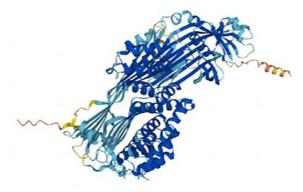 Fig. 1 The 3D protein structure of MTTP.1
Key structural properties of MTTP:
- Large spherical lipid-binding cavity structure
- Hydrophobic cavity for holding and transferring neutral lipids (e.g., triglycerides, phospholipids)
- Form a functional heterodimer with protein disulfide isomerase (PDI)
Functions of MTTP
The main function of MTTP (microsomal triglyceride transfer protein) is to assemble and secrete lipoproteins in the endoplasmic reticulum lumen. Additionally, it is involved in a variety of crucial metabolic and cellular processes.
| Function | Description |
| Lipid Transport | It binds and transfers neutral lipids (triglycerides, cholesterol esters) and phospholipids within the endoplasmic reticulum lumen, which is the initial step in the assembly of lipoprotein particles. |
| Stabilization of Apolipoprotein B | It binds to newly synthesized apolipoprotein B (apoB) to prevent its degradation by proteases in the endoplasmic reticulum, which is crucial for the formation of very low-density lipoproteins and chylomicrons. |
| Lipoprotein Assembly | It catalyzes the binding of lipids to apoB, forming a water-soluble core of the lipoprotein particle, enabling it to be secreted into the bloodstream. |
| Fat Absorption and Storage | Promotes the absorption of dietary fats in the small intestine, regulates the secretion of endogenous triglycerides in the liver, and directly affects plasma lipid levels. |
| Disease Association | The loss of its function leads to the absence of beta-lipoproteinemia, while excessive activity is closely associated with the development of hyperlipidemia, atherosclerosis, and non-alcoholic fatty liver disease. |
The activity of MTTP is the rate-limiting step in lipoprotein secretion. Its function is tissue-specific (liver vs. intestine), and is precisely regulated by transcriptional levels and post-translational modifications.
Applications of MTTP and MTTP Antibody in Literature
1. Wang, Wenjia, et al. "Pan-cancer analysis reveals MTTP as a prognostic and immunotherapeutic biomarker in human tumors." Frontiers in Immunology 16 (2025): 1549965. https://doi.org/10.3389/fimmu.2025.1549965
This comprehensive cancer study has for the first time systematically revealed that MTTP is highly expressed in various tumors and is associated with poor prognosis. It is closely related to the tumor immune microenvironment and immune checkpoints. The study confirmed that MTTP promotes the progression of gastric cancer by regulating macrophages and inhibits ferroptosis, providing a new potential target for tumor immunotherapy.
2. Wang, Xiaoxia, et al. "Association between MTTP genotype (-493G/T) polymorphism and hepatic steatosis in hepatitis C: a systematic review and meta-analysis." Lipids in health and disease 22.1 (2023): 154. https://doi.org/10.1186/s12944-023-01916-x
The article indicates that for patients with hepatitis C, this study, through a meta-analysis, found that in the hepatitis C virus genotype 3, the dominant mutation of the T allele at the -493G/T site of the MTTP gene significantly increases the risk of liver steatosis.
3. Zhang, Qiumo, et al. "Adipocyte‐derived exosomal MTTP suppresses ferroptosis and promotes chemoresistance in colorectal cancer." Advanced Science 9.28 (2022): 2203357. https://doi.org/10.1002/advs.202203357
This study reveals that in obese patients with colorectal cancer, fat-derived exosomes, by delivering the MTTP protein, form a complex with PRAP1 to inhibit ferroptosis, thereby inducing chemotherapy resistance to oxaliplatin. Targeting MTTP can reverse this resistance.
4. Peng, Hubert, et al. "PRAP1 is a novel lipid-binding protein that promotes lipid absorption by facilitating MTTP-mediated lipid transport." Journal of Biological Chemistry 296 (2021): 100052. https://doi.org/10.1074/jbc.RA120.015002
This study found that PRAP1 forms a ternary complex with MTTP, directly binding and assisting in the transport of triglycerides. It is crucial for the assembly and secretion of lipoproteins as well as the absorption of lipids in the intestine. Defects or mutations in PRAP1 can resist obesity and fatty liver induced by high-fat diet.
5. Ustkoyuncu, Pembe Soylu, et al. "Novel MTTP gene mutation in a case of abetalipoproteinemia with central hypothyroidism." Journal of Clinical Research in Pediatric Endocrinology 12.4 (2020): 427. https://doi.org/10.4274/jcrpe.galenos.2019.2019.0144
This study identified a case of hypobetalipoproteinemia caused by a novel homozygous mutation of the MTTP gene [c.506A>T]. This disease is characterized by extremely low blood lipids and polychromatic erythrocytes. This case is the first reported case with concurrent central hypothyroidism.
Creative Biolabs: MTTP Antibodies for Research
Creative Biolabs specializes in the production of high-quality MTTP antibodies for research and industrial applications. Our portfolio includes monoclonal antibodies tailored for ELISA, Flow Cytometry, Western blot, immunohistochemistry, and other diagnostic methodologies.
- Custom MTTP Antibody Development: Tailor-made solutions to meet specific research requirements.
- Bulk Production: Large-scale antibody manufacturing for industry partners.
- Technical Support: Expert consultation for protocol optimization and troubleshooting.
- Aliquoting Services: Conveniently sized aliquots for long-term storage and consistent experimental outcomes.
For more details on our MTTP antibodies, custom preparations, or technical support, contact us at email.
Reference
- Wang, Wenjia, et al. "Pan-cancer analysis reveals MTTP as a prognostic and immunotherapeutic biomarker in human tumors." Frontiers in Immunology 16 (2025): 1549965. Distributed under Open Access license CC BY 4.0, without modification.https://doi.org/10.3389/fimmu.2025.1549965
Anti-MTTP antibodies
 Loading...
 Compare




Hot products 
- AActivation
- AGAgonist
- APApoptosis
- BBlocking
- BABioassay
- BIBioimaging
- CImmunohistochemistry-Frozen Sections
- CIChromatin Immunoprecipitation
- CTCytotoxicity
- CSCostimulation
- DDepletion
- DBDot Blot
- EELISA
- ECELISA(Cap)
- EDELISA(Det)
- ESELISpot
- EMElectron Microscopy
- FFlow Cytometry
- FNFunction Assay
- GSGel Supershift
- IInhibition
- IAEnzyme Immunoassay
- ICImmunocytochemistry
- IDImmunodiffusion
- IEImmunoelectrophoresis
- IFImmunofluorescence
- IGImmunochromatography
- IHImmunohistochemistry
- IMImmunomicroscopy
- IOImmunoassay
- IPImmunoprecipitation
- ISIntracellular Staining for Flow Cytometry
- LALuminex Assay
- LFLateral Flow Immunoassay
- MMicroarray
- MCMass Cytometry/CyTOF
- MDMeDIP
- MSElectrophoretic Mobility Shift Assay
- NNeutralization
- PImmunohistologyp-Paraffin Sections
- PAPeptide Array
- PEPeptide ELISA
- PLProximity Ligation Assay
- RRadioimmunoassay
- SStimulation
- SESandwich ELISA
- SHIn situ hybridization
- TCTissue Culture
- WBWestern Blot
