
GLP1R Antibodies
Background
The GLP1R gene encodes the glucagon-like peptide-1 receptor, which is a G protein-coupled receptor mainly distributed in pancreatic β cells, the gastrointestinal tract and brain tissue. This receptor plays a core role in the regulation of blood glucose homeostasis by specifically binding to glucagon-like peptide-1 (GLP-1), which can stimulate insulin secretion, inhibit glucagon release and delay gastric emptying. Since its clonal identification in 1992, GLP1R has become a key target for the development of drugs for type 2 diabetes, and its related research has directly promoted the development and application of GLP-1 receptor agonists. The continuous exploration of the signal transduction mechanism and tissue-specific functions of this receptor not only deepens people's understanding of the metabolic regulatory network, but also provides a new molecular perspective for cross-disciplinary research such as cardiovascular protection and neural regulation.
Structure of GLP1R
The glucagon-like peptide 1 receptor encoded by the GLP1R gene is a G protein-coupled receptor with a molecular weight of approximately 59 kDa. There are certain differences in this molecular weight among different species, mainly due to the degree of receptor glycosylation modification and the minor changes in the amino acid sequence of the extracellular region.
| Species | Human | Mouse | Rat | Pig |
| Molecular Weight (kDa) | ~59 | ~58 | ~58 | ~60 |
| Primary Structural Differences | Typical 7-fold transmembrane structure with a long N-terminal extracellular domain | Highly conserved across the membrane area | Ligand binding domain high homology with others | Species-specific glycosylation sites exist in the extracellular domain |
This receptor protein is composed of approximately 463 amino acid residues and presents a classic seven-transmembrane topological structure. The core of its function lies in that the N-terminal extracellular domain can specifically recognize and bind to GLP-1 peptide hormones, and then activate the downstream Gαs protein signaling pathway through conformational changes in the transmembrane region. Several conserved amino acid residues (such as arginine and glutamic acid) on the extracellular second ring of the receptor play a decisive role in ligand binding affinity, while the intracellular third ring directly participates in the coupling and signal transduction of G proteins. This ingenious structural arrangement enables it to efficiently regulate insulin secretion and blood glucose homeostasis.
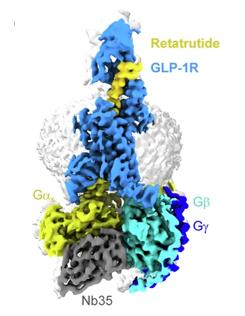 Fig. 1 Cryo-EM maps of retatrutide-bound GLP-1R.1
Key structural properties of GLP1R:
- Classical seven-fold transmembrane (7TM) helical bundle structure
- The larger N-terminal extracellular domain, responsible for specific recognition of GLP-1
- Ligand binding pocket by transmembrane helical and extracellular ring together
Functions of GLP1R
The main function of the glucagon-like peptide-1 receptor (GLP-1R) encoded by the GLP1R gene is to mediate the physiological effects of glucagon-like peptide-1 (GLP-1). It plays a core role in a variety of physiological and pharmacological processes, including the regulation of blood glucose homeostasis, appetite control, and protection of the cardiovascular system.
| Function | Description |
| Stimulate insulin secretion | After receptor activation, it promotes the secretion of insulin by pancreatic β cells in a glucose concentration-dependent manner through the cAMP-PKA signaling pathway. |
| Inhibit the release of glucagon | Inhibition of glucagon secretion in pancreatic alpha cells and reduction of hepatic glycogenolysis. |
| Delay gastric emptying | Role in the gastrointestinal tract and the central nervous system, slow down in the stomach emptying rate, increase satiety. |
| Central anorexia | Activate the receptors related to brain regions such as the hypothalamus to generate satiety signals and reduce food intake. |
| Cardiovascular protective effect | In myocardial cells and vascular endothelial cells, it has multiple effects such as improving myocardial function, inhibiting inflammation and anti-fibrosis. |
The signal transduction of GLP-1R presents the characteristics of high efficiency and strict regulation. Unlike the extensive physiological effects of certain receptors, the signal transduction of GLP-1R is highly dependent on the concentration and tissue distribution of its specific ligand GLP-1, which enables it to respond precisely and promptly to postprandial blood glucose changes and play the role of an "intelligent sensor" in maintaining metabolic homeostasis.
Applications of GLP1R and GLP1R Antibody in Literature
1. Li, Wenzhuo, et al. "Structural insights into the triple agonism at GLP-1R, GIPR and GCGR manifested by retatrutide." Cell Discovery 10.1 (2024): 77. https://doi.org/10.1038/s41421-024-00700-0
The study employed cryo-electron microscopy to analyze the structure of the binding of the novel hypoglycemic and bariatric drug retalutide to GLP-1R, GIPR and GCGR, and to clarify its triple activation mechanism, providing a structural basis for optimizing the treatment of diabetes and obesity.
2. Ungvari, Zoltan, et al. "Prognostic impact of glucagon-like peptide-1 receptor (GLP1R) expression on cancer survival and its implications for GLP-1R agonist therapy: an integrative analysis across multiple tumor types." Geroscience (2025): 1-15. https://doi.org/10.1007/s11357-024-01494-5
This study reveals the dual prognostic role of GLP1R expression levels in different cancers. High expression can improve the survival of patients with bladder cancer, breast cancer, etc., but is associated with adverse prognoses such as cervical cancer and lung cancer, while having no significant effect in some cancers, suggesting its potential as an individualized cancer risk diagnosis and treatment marker.
3. Normand, Émilie, et al. "Association between the GLP1R A316T Mutation and Adolescent Idiopathic Scoliosis in French Canadian and Italian Cohorts." Genes 15.4 (2024): 481. https://doi.org/10.3390/genes15040481
Studies have shown that the GLP1R A316T gene polymorphism increases the risk of adolescent idiopathic scoliosis (AIS), but is not related to the severity, progression or body mass index of the disease. This discovery points to the potential role of GLP1R in the pathogenesis of AIS.
4. Hall, Elin, et al. "DNA methylation of the glucagon-like peptide 1 receptor (GLP1R) in human pancreatic islets." BMC medical genetics 14.1 (2013): 76. https://doi.org/10.1186/1471-2350-14-76
Research has found that the DNA methylation level at a specific CpG site of the GLP1R gene is negatively correlated with the expression of this gene in the islets of patients with type 2 diabetes, and positively correlated with BMI and HbA1c, suggesting that DNA methylation may be involved in the down-regulation of GLP1R in diabetes.
5. Farokhnia, Mehdi, et al. "Differential association between the GLP1R gene variants and brain functional connectivity according to the severity of alcohol use." Scientific reports 12.1 (2022): 13027. https://doi.org/10.1038/s41598-022-17190-3
Research shows that GLP1R gene variations (rs6923761 and rs1042044) are associated with brain functional connectivity. Among heavy drinkers, carrying the variant alleles is linked to enhanced internal connectivity in key brain networks such as the saliency network and the default network, suggesting that GLP1R may be involved in the neural mechanisms of alcohol dependence.
Creative Biolabs: GLP1R Antibodies for Research
Creative Biolabs specializes in the production of high-quality GLP1R antibodies for research and industrial applications. Our portfolio includes monoclonal antibodies tailored for ELISA, Flow Cytometry, Western blot, immunohistochemistry, and other diagnostic methodologies.
- Custom GLP1R Antibody Development: Tailor-made solutions to meet specific research requirements.
- Bulk Production: Large-scale antibody manufacturing for industry partners.
- Technical Support: Expert consultation for protocol optimization and troubleshooting.
- Aliquoting Services: Conveniently sized aliquots for long-term storage and consistent experimental outcomes.
For more details on our GLP1R antibodies, custom preparations, or technical support, contact us at email.
Reference
- Li, Wenzhuo, et al. "Structural insights into the triple agonism at GLP-1R, GIPR and GCGR manifested by retatrutide." Cell Discovery 10.1 (2024): 77. https://doi.org/10.1038/s41421-024-00700-0
Anti-GLP1R antibodies
 Loading...
 Compare




Hot products 
-
Mouse Anti-CDK7 Recombinant Antibody (CBYY-C1783) (CBMAB-C3221-YY)

-
Mouse Anti-AK4 Recombinant Antibody (V2-180419) (CBMAB-A1891-YC)

-
Mouse Anti-AOC3 Recombinant Antibody (CBYY-0014) (CBMAB-0014-YY)

-
Mouse Anti-CTNND1 Recombinant Antibody (CBFYC-2414) (CBMAB-C2487-FY)

-
Mouse Anti-CORO1A Recombinant Antibody (4G10) (V2LY-1206-LY806)

-
Mouse Anti-GST Recombinant Antibody (CBLG1-1938) (CBMAB-G5371-LY)

-
Mouse Anti-ADAM29 Recombinant Antibody (V2-179787) (CBMAB-A1149-YC)

-
Mouse Anti-ESR1 Recombinant Antibody (Y31) (CBMAB-1208-YC)

-
Mouse Anti-GluRIIA Monoclonal Antibody (8B4D2) (CBMAB-0305-CN)

-
Mouse Anti-AMOT Recombinant Antibody (CBYC-A564) (CBMAB-A2552-YC)

-
Mouse Anti-GP1BA Recombinant Antibody (6D1) (CBMAB-0271-CN)

-
Mouse Anti-BPGM Recombinant Antibody (CBYY-1806) (CBMAB-2155-YY)

-
Mouse Anti-4-Hydroxynonenal Recombinant Antibody (V2-502280) (CBMAB-C1055-CN)

-
Mouse Anti-CCL18 Recombinant Antibody (64507) (CBMAB-C7910-LY)

-
Mouse Anti-FLT1 Recombinant Antibody (11) (CBMAB-V0154-LY)

-
Mouse Anti-ARHGDIA Recombinant Antibody (CBCNA-009) (CBMAB-R0415-CN)

-
Mouse Anti-CD59 Recombinant Antibody (CBXC-2097) (CBMAB-C4421-CQ)

-
Mouse Anti-AHCYL1 Recombinant Antibody (V2-180270) (CBMAB-A1703-YC)

-
Mouse Anti-ELAVL4 Recombinant Antibody (6B9) (CBMAB-1132-YC)

-
Mouse Anti-BRCA2 Recombinant Antibody (CBYY-0790) (CBMAB-0793-YY)

- AActivation
- AGAgonist
- APApoptosis
- BBlocking
- BABioassay
- BIBioimaging
- CImmunohistochemistry-Frozen Sections
- CIChromatin Immunoprecipitation
- CTCytotoxicity
- CSCostimulation
- DDepletion
- DBDot Blot
- EELISA
- ECELISA(Cap)
- EDELISA(Det)
- ESELISpot
- EMElectron Microscopy
- FFlow Cytometry
- FNFunction Assay
- GSGel Supershift
- IInhibition
- IAEnzyme Immunoassay
- ICImmunocytochemistry
- IDImmunodiffusion
- IEImmunoelectrophoresis
- IFImmunofluorescence
- IGImmunochromatography
- IHImmunohistochemistry
- IMImmunomicroscopy
- IOImmunoassay
- IPImmunoprecipitation
- ISIntracellular Staining for Flow Cytometry
- LALuminex Assay
- LFLateral Flow Immunoassay
- MMicroarray
- MCMass Cytometry/CyTOF
- MDMeDIP
- MSElectrophoretic Mobility Shift Assay
- NNeutralization
- PImmunohistologyp-Paraffin Sections
- PAPeptide Array
- PEPeptide ELISA
- PLProximity Ligation Assay
- RRadioimmunoassay
- SStimulation
- SESandwich ELISA
- SHIn situ hybridization
- TCTissue Culture
- WBWestern Blot
